
Plants
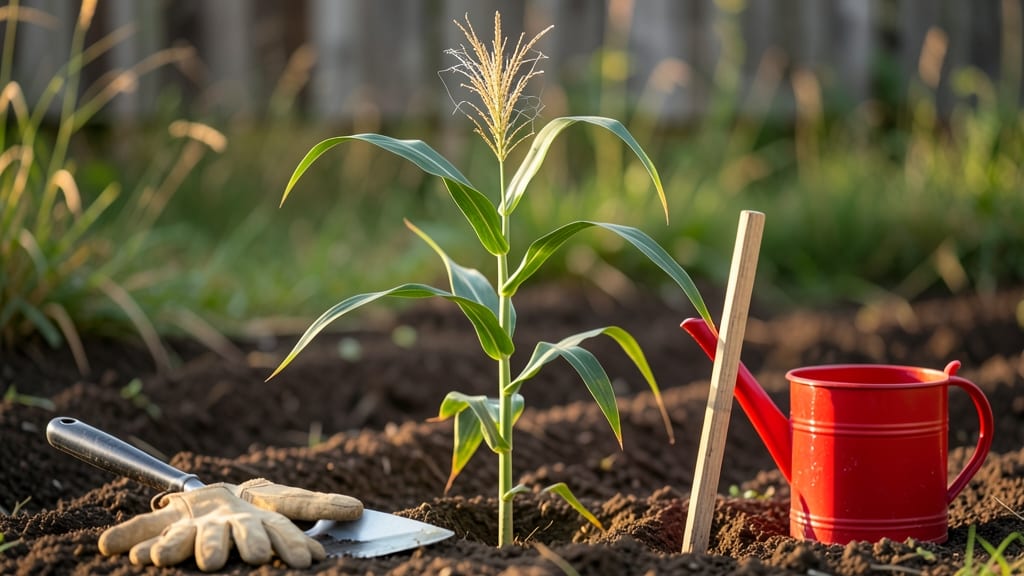
Timing your 🌽 corn planting in Mississippi right could mean the difference between a bumper crop and a disappointing harvest. With the state's varied climate—from the steamy Delta to the breezy Gulf Coast—getting those seeds in the ground at the perfect moment is everything.
Most gardeners in USDA Zone 8a know the golden window is mid-April to early May, but what if you're in the cooler hills or the hotter coastal plains?
The right timing ensures your corn matures before summer's brutal heat or late frosts creep back in, giving you those sweet, juicy ears you're craving.
I’ll break down exactly when to plant based on your microclimate, plus pro tips for adjusting if Mother Nature throws curveballs. Whether you're growing sweet corn for the table or field corn for livestock, these insights will help you maximize your yield without the guesswork.
Ready to turn your garden into a cornfield goldmine? Let’s dive into the best planting strategies tailored just for Mississippi’s unique growing conditions.
Mississippi corn planting dates by climate Zone: Delta vs. Coast vs. hills
Mississippi’s three distinct climate zones—Delta, Gulf Coast, and North Mississippi—each demand unique corn planting strategies. The Delta’s heat (USDA Zone 7b-8a) allows earlier planting, while the Gulf Coast’s humidity (Zone 8a) requires careful timing to avoid fungal diseases.
Meanwhile, the North’s cooler temps (Zone 7a) need later starts to avoid frost damage.
For all zones, soil temperature is critical—corn thrives when soil reaches 60°F or warmer. Use a soil thermometer to confirm readiness, as planting too early in cold soil leads to poor germination.
The last average frost date varies: March 15 in the North, March 1 in the Delta, and February 15 on the Coast.
Sweet corn varieties, like Silver Queen or Peaches and Cream, need 80-90 days to mature, while field corn (e.g., Pioneer 39F53) takes 100-120 days. Planting too late risks immature harvests before the first frost (typically November 15), so adjust your variety choice based on your zone.
Here’s how to align your planting with Mississippi’s microclimates for maximum yield:
The Delta’s earlier window lets you squeeze in two plantings: one in March and a second in early June for a late-summer harvest. Meanwhile, the Gulf Coast’s longer frost-free season (up to 240 days) allows for successive plantings every 2 weeks until July.
In the North, stick to one primary planting in April and choose early-maturing varieties to avoid frost.
For field corn (used for silage or grain), plant 1-2 weeks earlier than sweet corn in all zones. Field corn tolerates higher heat and drought better, making it ideal for the Delta’s intense summers. Use varieties like Pioneer 33B64 or DeKalb DKC 62-88 for these conditions.
Mississippi State University Extension recommends using black plastic mulch in cooler zones to warm soil faster. Lay it down 2-3 weeks before planting to create a microclimate that speeds germination. This is especially useful in the North, where soil warms slowly.
Always check the Mississippi Automated Weather Network (MAWN) for real-time frost alerts. Their frost-free date calculator (available online) adjusts for your exact location, accounting for elevation and local microclimates that can shift frost dates by 1-2 weeks.
Pro tip: Plant a test row 1 week before your main planting to gauge soil conditions. If the test row germinates well, your full planting is ready. If not, wait another week—rushing corn in cold soil is a common mistake that leads to poor stands and stunted plants.
🌽
How to adjust planting dates for unpredictable Mississippi weather
Mississippi’s weather can be as unpredictable as a summer storm—one day it’s perfect for planting, the next you’re battling late frosts or scorching heat. The key to success?
Flexibility. If your soil temperature drops below 50°F or a heatwave hits early, don’t panic. Here’s how to tweak your planting schedule to protect your crop.
First, always check the Mississippi State University Extension frost maps before planting. In the Delta region, late frosts can linger until mid-April, while the Gulf Coast may see frost as late as March 30.
Wait until 2-3 weeks after the last frost to plant, but if frost warnings pop up, cover young seedlings with row fabric or a cloche.
If drought strikes, switch to drought-tolerant varieties like ‘Pioneer Brand 39T24’ and plant in raised beds to improve drainage. Mulch with straw or black plastic to retain moisture and warm the soil faster.
For the Piedmont region, where summers arrive early, opt for early-maturing hybrids (60–75 days) to avoid heat stress.
Another trick? Use cover crops like clover or rye in fall to improve soil warmth. Till them in 2–3 weeks before planting to boost soil temperature by 5–10°F.
This works especially well in cooler microclimates, like the Tupelo Plateau, where nights can still dip into the 40s in May.
For gardeners in southern Mississippi, where heat arrives early, consider a second planting in late June for a fall harvest. Choose short-season varieties (50–60 days) like ‘Silver Queen’ to escape summer’s peak temperatures. Just be prepared to water deeply—corn wilts fast in 90°F+ heat.
Finally, keep an eye on NOAA’s Climate Prediction Center for long-range forecasts. If a heatwave is predicted, delay planting until temperatures drop below 95°F during the day. Your corn will thank you with plump, sweet ears instead of stunted, dry ones.