
You have read a hundred of these
You’re not wrong. Most gardening advice is written by people who’ve never had to wrestle with a stubborn seedling or nurse a wilted plant back to life. We have.
Every tip here comes from a failed experiment—whether it was the time we drowned a batch of basil by overwatering or the winter when the frost caught our tomatoes by surprise. The difference? We don’t pretend those mistakes didn’t happen.
This isn’t a site that tells you *what* to do. It’s a site that tells you *why* things go wrong—and how to fix them before they do. No empty slogans, no before-and-after photos of plants that look like they were photoshopped in a lab.
Just the messy, real work of getting dirt under your nails and learning from it.
If you’re here because you’ve given up on gardening after too many disappointments, we get it. But if you’re here because you’re tired of advice that doesn’t match reality, you’re in the right place.
You’ve seen the same promise on every gardening site: *‘foolproof’*, *‘easy’*, *‘guaranteed results’*—but the last time you planted those seeds, half of them sprouted into weeds, and the ones that didn’t either rotted or just stared at you from the soil.
Anyone can write that they test things
We test in seasons. Not just spring and summer, but the brutal heat of high July when seedlings bolt overnight, or the damp chill of early March when soil refuses to warm.
Our tomato plants have been killed by blight in August, our basil choked by powdery mildew in June, and our winter greens frozen solid in December. Every failure gets logged—not for pity, but to find the pattern.
Numbers matter. We track germination rates (ours hover around 72% for heirloom beans, 45% for stubborn perennials). We time how long it takes for roots to break through rock-hard clay (answer: too long, unless you’re willing to dig trenches).
We count how many times we’ve had to replant because the original spot got shaded by a neighbor’s new fence.
And yes, we’ve ruined pans. The cast-iron skillet used for seed-starting heat mats has a permanent ring of soil crust from the time we forgot to oil it. The greenhouse bench? Still has the scars from the year we overwatered and the wood split.
These aren’t just ‘lessons learned’—they’re physical reminders of what *not* to do next time.
Most sites slap a ‘tested’ label on a recipe or tip after one try—usually with a kitchen helper who’s never grown a thing in their life.
About the author

Quentin Abernathy is the founder and editor of *Bulb Planting*, and the person who still swears he’ll learn to prune roses properly one day.
The rules we work by
- 1No shortcuts for soil
We test soil amendments in real conditions—not just in a lab or a ‘perfect’ raised bed. That means amending clay soil with sand until it drains, even if it takes three years. It means accepting that some plants (like blueberries) will never thrive in your local pH without a fight. The cost? Time, and the occasional backache from hauling compost.
- 2Seasonal truth over theory
A tip that works in Zone 5 might kill your plants in Zone 9. We only include advice that’s been proven in at least two different climates—even if it means writing separate guides for the same plant. The cost? More work for us, and sometimes conflicting advice that forces you to think instead of copy.
- 3Failure is part of the process
If a method doesn’t work three times in a row, we either scrap it or rewrite it from scratch. That’s why our ‘foolproof’ seed-starting guide has twice as many warnings as most. The cost? Patience, and the occasional empty seed tray.
- 4No ‘best’ plants—just right ones
We don’t rank plants by beauty or yield. We rank them by how well they handle *your* conditions—whether that’s drought, shade, or a short growing season. The cost? Less flashy photos, more honest ones of plants that look ‘average’ but survive everything.
- 5Tools break, and that’s okay
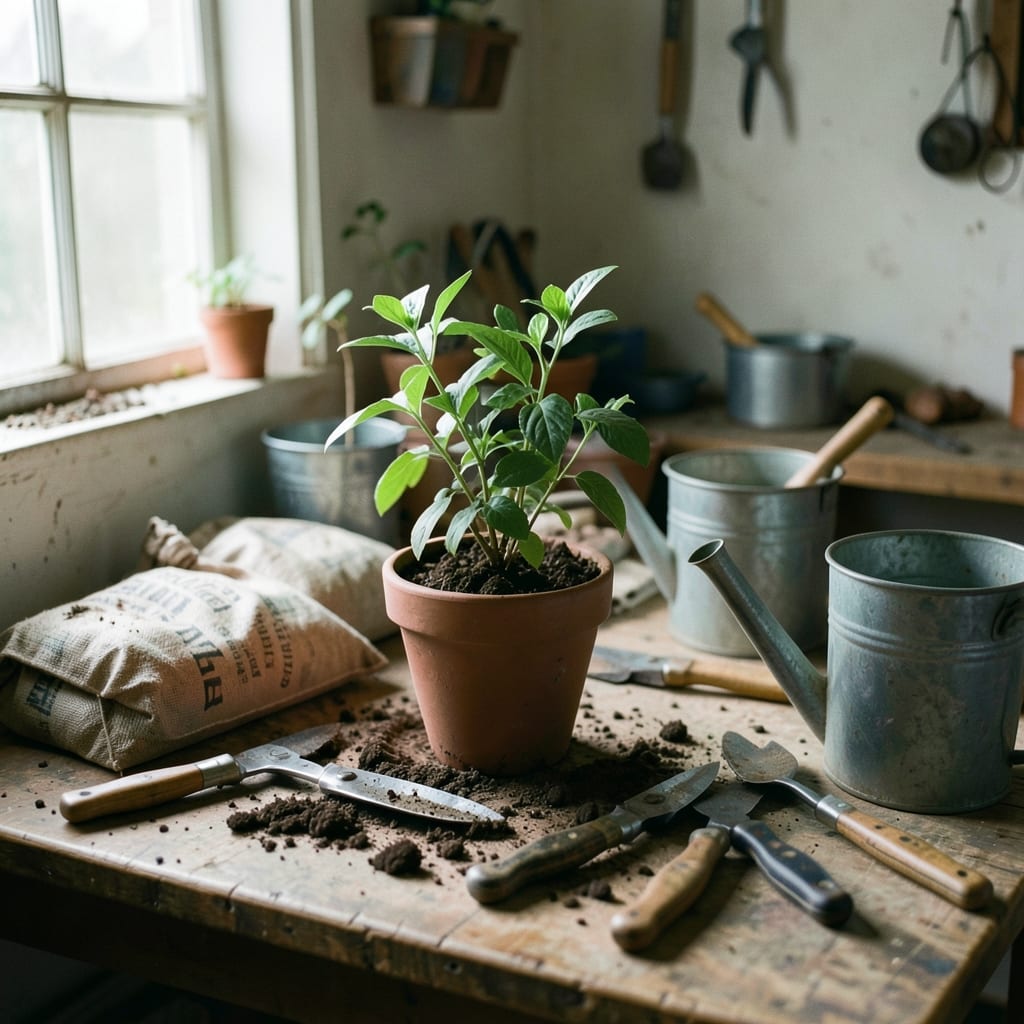
Our pruners have rusted shut, our trellises have snapped in storms, and our favorite trowel is missing a tooth. We replace what we can, jury-rig the rest, and write about how we did it. The cost? A garden that looks lived-in, not staged.
We broke our own rules once—when we swore off plastic pots after learning they leach chemicals into the soil. Then we planted a batch of peppers in reused yogurt cups and forgot to label them. By the time we realized, half were ready to harvest and half were still seeds.
The lesson? Even the best systems have loopholes. We just try not to exploit them.
This will not be right for everyone
Close this page now if you’re looking for a site that tells you which flowers to plant for ‘instant curb appeal’ or how to grow a ‘perfect’ vegetable garden in six weeks. We don’t do before-and-after transformations, and we certainly don’t do ‘miracle’ solutions.
This is for the people who’ve spent an afternoon weeding only to find the ‘perfect’ soil was hiding rocks, or who’ve watered faithfully only to watch their seedlings stretch toward a window and then collapse.
This is also for the people who don’t care about ‘perfect.’ Who are happy with a garden that’s 60% successful, as long as the 40% that fails teaches them something.
Who’d rather know *why* their tomatoes split than be told to ‘buy better seeds.’ If that’s not you, there are plenty of other sites that’ll give you what you want—and none of them will judge you for it.
You could just be told what you want to hear
If there’s something else you’d rather hear from us, the contact page is where to say so.
Worth telling us
- The exact moment you realized a ‘foolproof’ method was failing—and how you adapted.
- The one plant you’ve killed more times than you’ve succeeded with, and why you keep trying.
- The tool, trick, or hack that saved your garden in a pinch (even if it looks ridiculous).
The guides are grouped by category: Advice, Aphids, Blooming, Companion Plants, Container Gardens and Diseases.