
Plants
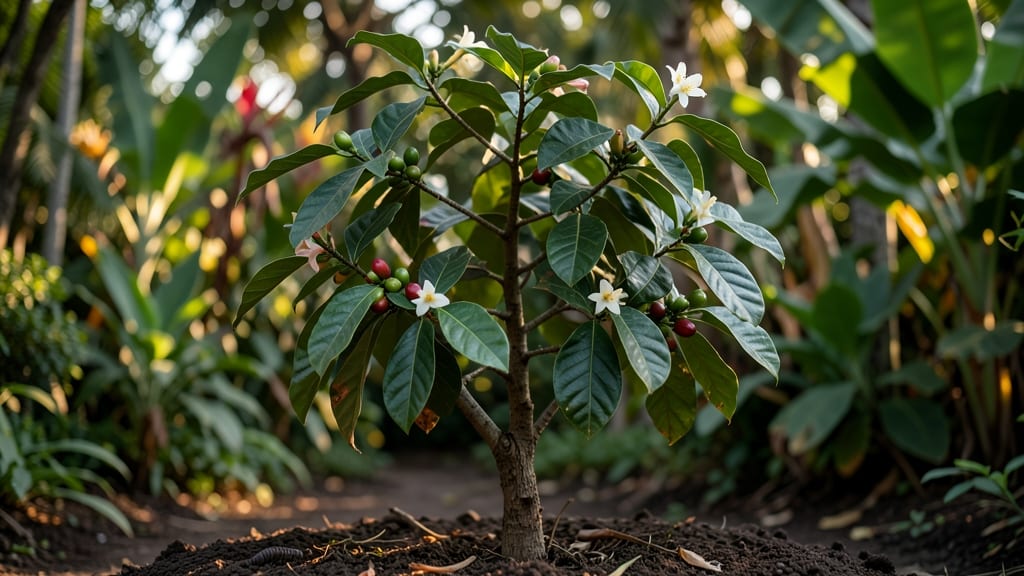
If you're dreaming of growing your own ☕ coffee plant and wondering how tall a coffee plant can grow, the answer might surprise you.
A mature coffee plant can reach anywhere from 10 to 30 feet tall, depending on whether you're cultivating it outdoors in tropical regions or keeping it indoors in a container.
For outdoor coffee plants in USDA zones 10-12, the sky's the limit—literally. Without pruning, these tropical shrubs can tower over your backyard, resembling small trees. But don't worry if space is limited; with the right care, you can manage their height and still enjoy fresh coffee beans.
Indoor coffee plants, on the other hand, stay much smaller—typically between 3 to 6 feet in containers—but they still need proper care to thrive. Whether you're growing a dwarf variety or a standard one, understanding how to control their height will help you create the perfect coffee-growing setup.
In this guide, I'll break down everything you need to know about coffee plant height, from natural growth patterns to pruning tips for managing size. Let’s get started!


Natural height limits of coffee plants: outdoor growth explained
Coffee plants are tropical evergreens that thrive in USDA zones 10-12, where they can reach their full height potential. In ideal outdoor conditions, these plants grow into shrub-like trees with a multi-stemmed structure, often forming dense canopies.
The height varies significantly between Arabica and Robusta varieties, as well as environmental factors like climate and soil quality.
Understanding these natural height limits helps you plan your garden layout or small-scale coffee farm. For example, a mature Arabica plant typically reaches 10-15 feet tall, while Robusta varieties can grow even taller, sometimes exceeding 30 feet in tropical conditions.
These differences are crucial for space planning and harvest accessibility.
🌱
| Variety | Mature Height | Growth Rate | Key Notes |
|---|---|---|---|
| Arabica (Coffea arabica) | 10–15 ft | 1–2 ft/year | Preferred in high-altitude regions; delicate but high-quality beans |
| Robusta (Coffea canephora) | 15–30 ft | 2–3 ft/year | Hardier; thrives in lowland tropical climates |
| Dwarf Varieties (e.g., 'Nana') | 6–10 ft | 1 ft/year | Ideal for containers or small gardens; slower growth |
| Semi-Dwarf Varieties | 10–15 ft | 1.5–2 ft/year | Balanced growth; easier to manage than standard types |
Climate plays a critical role in determining how tall your coffee plant will grow. In tropical rainforests, where temperatures stay warm year-round and humidity is high, coffee plants grow faster and taller.
For example, in Brazil or Colombia, Robusta varieties can reach 30 feet within 5-7 years with optimal care. Conversely, in cooler subtropical zones, like parts of Hawaii or Puerto Rico, growth slows, and plants may max out at 15-20 feet.
Soil quality also influences height. Coffee plants thrive in well-draining, acidic soil with a pH of 6.0-6.5. Poor soil can stunt growth, leading to shorter, less productive plants.
If you're growing coffee in containers, use a lightweight, airy potting mix blended with perlite or orchid bark to prevent root rot while supporting healthy growth.
Another factor is pruning practices. In commercial farms, coffee plants are often pruned to control height and improve air circulation, which reduces disease risk.
Without pruning, a Robusta plant in the wild could theoretically grow even taller, but this isn't practical for home gardeners due to space constraints and maintenance challenges.
For home growers in frost-free zones, consider planting dwarf or semi-dwarf varieties if space is limited. These varieties stay under 15 feet and are easier to manage while still producing high-quality coffee cherries.
Just ensure they receive full sun (6+ hours daily) and consistent moisture to encourage healthy growth.
If you're planning an outdoor coffee garden, leave 10-15 feet of space between plants to accommodate their mature size. This spacing ensures adequate airflow, reduces competition for nutrients, and makes harvesting and pruning much easier.
In smaller yards, container-growing is a great alternative, allowing you to control height through pruning and pot size.
🌿
Indoor coffee plant growth: how tall can they get in pots?
Growing a coffee plant indoors is a rewarding way to enjoy fresh ☕ beans without needing a sprawling backyard. However, indoor coffee plants rarely reach their outdoor height potential—typically staying between 3 to 6 feet tall when grown in containers.
The key to managing their size lies in pot selection, pruning, and light exposure, all of which directly impact growth.
Unlike their outdoor counterparts, which can soar to 10-30 feet, indoor coffee plants thrive in dwarf or semi-dwarf varieties like Bourbon or Pacas. These varieties are naturally compact, making them ideal for home growers.
But even with dwarf varieties, root-bound conditions can stunt growth or lead to leggy, weak plants if not managed properly.
Here’s the critical factor: pot size limits height. A coffee plant in a 5-gallon container may max out at 4-5 feet, while a 15-gallon pot could support a 6-foot plant. However, larger pots require more frequent watering and pruning to prevent unchecked growth. Balance is everything!
⚠️ Warning: Root-Bound Risks
If your coffee plant’s roots circle the pot, it signals stunted growth and nutrient starvation. Signs include yellowing leaves or roots growing out of drainage holes. Repot every 2-3 years in a container just 2-3 inches larger in diameter to encourage healthy upward growth.
Light is another game-changer. Indoor coffee plants need 6+ hours of bright, indirect light daily—a south-facing window is ideal. Without enough light, they’ll grow tall and leggy (up to 8 feet in extreme cases) but produce fewer beans. Supplement with grow lights if natural light is insufficient.
Pruning isn’t just for height control—it also boosts fruit production. Trim back leggy stems in early spring to encourage bushier growth. Focus on removing overly long branches and dead or yellowing leaves. This keeps your plant compact while maximizing yield potential.
For home growers, the sweet spot is a 4-6 foot indoor coffee plant, easily manageable in a living space. With the right pot size, pruning, and light, you can enjoy a productive, space-saving coffee plant that fits seamlessly into your home—without sacrificing flavor or yield.