
Watering
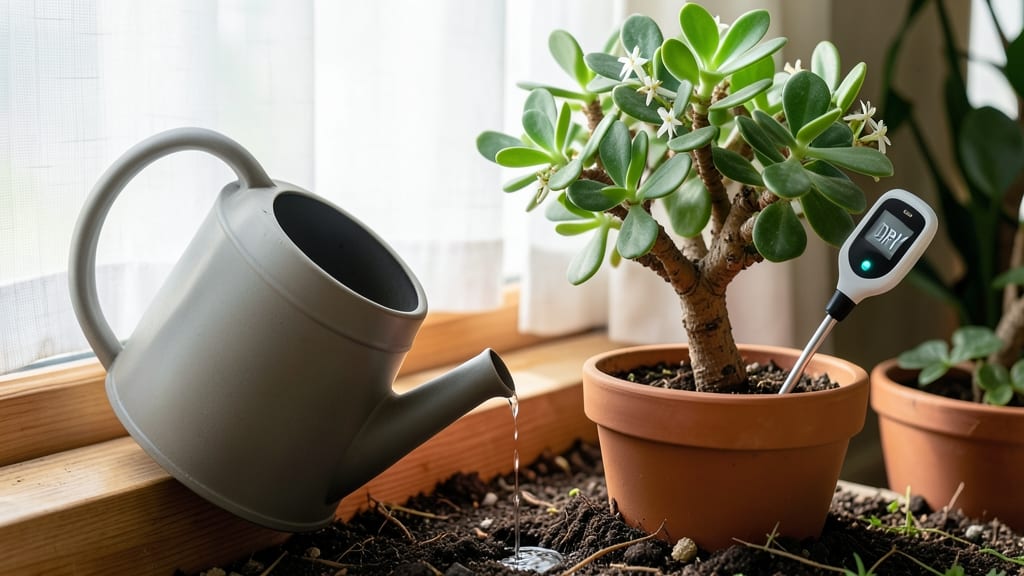
Ever wondered why your jade plant how much water it needs keeps struggling despite your best efforts? The answer lies in one simple mistake most beginners make—watering it too much.
This drought-loving succulent thrives on neglect, not attention, and getting the watering routine right could mean the difference between a lush, happy plant and one that slowly wilts away.
If you're tired of guessing whether your jade plant needs a drink or a break, you're in the right place. I’ll break down the exact watering schedule tailored to your plant’s needs, whether it’s basking in indoor light or soaking up outdoor sunshine.
No more second-guessing—just clear, actionable steps to keep those thick, vibrant leaves plump and healthy.
Here’s the secret: jade plants store water in their stems, so they can go weeks without a sip. But when you do water, it’s all about deep soaks followed by letting the soil dry completely.
We’ll cover how often to water in every season, what to look for when checking soil moisture, and how to spot the telltale signs of overwatering before it’s too late.
Let’s dive into the perfect watering routine that’ll have your jade plant thriving for years—without the risk of root rot or sad, wrinkled leaves. You’ve got this!
Jade plant watering schedule: how often to water by season and pot size
Jade plants (Crassula ovata) are succulents with thick, water-storing leaves, meaning they thrive on a "drought-tolerant" watering schedule. The key is to mimic their natural desert environment—water deeply but infrequently.
As someone who’s lost three jade plants to overwatering, I’ve learned the hard way: soggy soil is the silent killer of these resilient plants. Let’s break down the science-backed schedule tailored to your season and pot size to keep your jade plant happy and healthy.
First, check soil moisture before watering. Stick your finger 1-2 inches deep into the soil—if it feels dry, it’s time to water. If it’s still damp, wait another week. Jade plants store water in their leaves, so they prefer thirst over hydration.
For indoor plants, this usually translates to every 2-3 weeks in spring/fall and every 3-4 weeks in winter. Outdoor plants in summer may need weekly watering, but only if the top inch of soil is bone-dry.
Pot size dramatically affects watering needs. A small 4-inch pot dries out faster than a large 10-inch container, so adjust your schedule accordingly. For example, a small pot might need water every 10-14 days, while a large pot could go 3-4 weeks without water.
Always use terracotta pots—they breathe better than plastic and help prevent root rot. Pro tip: Bottom watering (placing the pot in a tray of water for 10 minutes) ensures even moisture without over-saturating the soil.
Seasonal changes are critical.
In spring and fall, when growth is active but not frenzied, water every 2-3 weeks. Summer is the exception: outdoor jade plants may need weekly watering due to heat stress, but indoor plants still follow the 2-week rule. Winter is the most critical—reduce watering to once a month or even less.
Jade plants enter dormancy, and overwatering during this time is a fast track to mushy stems and root rot.
🌱 Visual Cue: Always water until water drains freely from the drainage holes. This ensures the roots get a deep soak without sitting in standing water. After watering, empty the saucer underneath the pot within 30 minutes to prevent soggy roots.
Jade Plant Watering Summary
| Season | Watering Frequency | Pot Size Adjustment | Soil Test |
|---|---|---|---|
| Spring | Every 2-3 weeks | Small pot: +1 day; Large pot: -1 week | Finger test 1-2" deep |
| Summer (Indoor) | Every 2 weeks | Outdoor: Weekly if topsoil is dry | Check top inch daily in heatwaves |
| Fall | Every 3 weeks | Large pots may need less | Finger test 2" deep |
| Winter | Monthly (or less) | Avoid watering if leaves are plump | Only water if soil is completely dry |
💧 Pro Tip: Use a moisture meter for accuracy, especially in winter.
Light levels also influence water needs. A jade plant basking in bright indirect light will dry out faster than one in a shady corner. If you notice wrinkled leaves, it’s a sign of underwatering—but only water if the soil is dry.
Conversely, yellowing leaves or mushy stems mean you’re overwatering. Adjust your schedule based on your plant’s location and light exposure. For example, a jade plant near a south-facing window may need water 5-7 days earlier than one in a north-facing room.
Humidity plays a sneaky role too. Dry air (common in winter due to heating) speeds up moisture loss, so you might need to water slightly more often in winter if your home is arid.
Conversely, high humidity (like in a greenhouse or bathroom) slows drying, so extend the time between waterings. Always pair your watering schedule with observing your plant’s leaves—they’re the best barometer of health.
One common mistake is watering on a strict calendar without checking soil conditions. Instead, water only when the soil is completely dry. For example, if your jade plant is in a terracotta pot in a sunny window, it might need water every 10 days in summer.
But if it’s in a plastic pot in a dim corner, it could go 4 weeks without water. The key is flexibility—adjust based on your plant’s environment and response.
🌿 Final Rule: If you’re unsure whether to water, wait one more day. Jade plants are forgiving when it comes to underwatering but quickly decline when overwatered. With this schedule, your jade plant will stay plump, green, and thriving for years—no root rot in sight!
Jade plant watering schedule: how often to water by season and pot size
Your jade plant’s watering needs change with the seasons and its pot size, but the golden rule stays the same: water deeply and infrequently.
In spring and summer, your plant enters its active growth phase and needs more frequent hydration, while fall and winter slow its metabolism, requiring minimal water. Even then, the key is to let the soil dry out completely between waterings—typically 2-3 inches deep—before adding more moisture.
Pot size matters because larger pots hold more soil, which stays moist longer. A small 4-inch pot might need water every 2-3 weeks, while a large 10-inch pot could go 4-6 weeks without water.
Always check soil moisture by sticking your finger 1-2 inches deep—if it feels dry, it’s time to water. If it’s still damp, wait another week.
| Season | Watering Frequency | Pot Size (Small/Medium/Large) | Soil Check |
|---|---|---|---|
| Spring | Every 2-3 weeks | Small: 2 weeks | Medium: 3 weeks | Large: 4 weeks | Dry 1-2 inches deep |
| Summer | Weekly (outdoors) or Every 2 weeks (indoors) | Small: 1-2 weeks | Medium: 2-3 weeks | Large: 3-4 weeks | Dry 2-3 inches deep |
| Fall | Every 3-4 weeks | Small: 3 weeks | Medium: 4 weeks | Large: 5-6 weeks | Dry 2 inches deep |
| Winter | Monthly (sparingly) | Small: 4-6 weeks | Medium: 6-8 weeks | Large: 8-10 weeks | Dry 3+ inches deep |
Outdoor jade plants in summer heat may need more frequent watering—up to weekly—but always ensure the soil dries out completely between sessions. If your plant is in a terracotta pot, it’ll dry faster than a plastic one, so adjust accordingly.
Pro tip: Water in the morning to reduce evaporation and fungal risks.
One common mistake is assuming your jade plant needs more water because its leaves look wrinkled. While this can signal thirst, it’s often a sign of underwatering—but it’s better to wait another week to confirm.
Overwatering, on the other hand, leads to yellowing leaves or mushy stems, which are red flags for root rot. Always prioritize dry soil over a strict schedule.
For container gardening, choose pots with drainage holes and use a succulent-specific mix with perlite or sand. This combo ensures excess water drains quickly, preventing soggy roots.
If you’re unsure whether to water, lift the pot—if it feels light, it’s likely dry enough. Trust your plant’s signals over a calendar!
Remember, jade plants are drought-tolerant and can bounce back from occasional neglect, but they won’t recover from consistent overwatering.
Stick to this schedule, and your jade plant will reward you with thick, glossy leaves and even the occasional pink or white flower—a true sign of a happy, well-cared-for succulent. 🌱