
How To
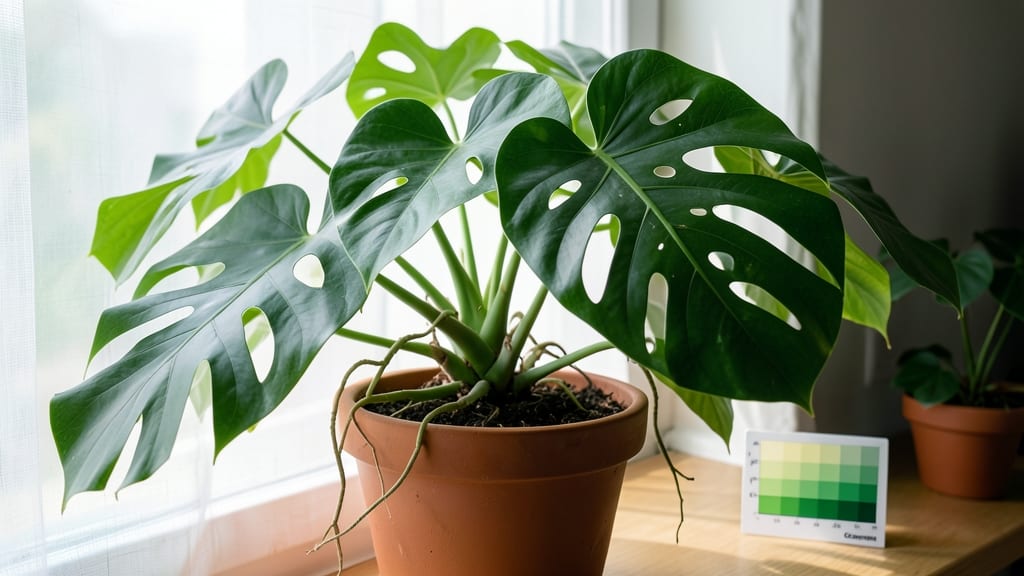
If your monstera plant needs how much light to thrive, you’re probably guessing wrong about its needs—especially when those leaves turn dull or stretch awkwardly toward the window. The truth? These tropical vines crave bright, indirect sunlight—but too much direct exposure can turn their leaves into crispy brown snacks.
I’ll break down exactly how many hours of light your plant needs to thrive, plus how to spot the subtle signs of overdoing (or underdoing) it.
Most Monsteras do best with 4 to 6 hours of bright, filtered light daily, but their tolerance varies by maturity. A seedling might need gentler conditions, while a mature plant with those iconic splits can handle a little more.
The key is mimicking their natural jungle habitat—think dappled shade under a canopy, not harsh midday sun. I’ll show you how to replicate that indoors, whether you’re dealing with a sunroom or a dim corner.
Don’t worry if your space isn’t ideal—artificial lighting can save the day. We’ll cover the best grow lights for Monsteras, how to tell if your current setup is working (or failing), and even how to rotate your plant for even growth.
By the end, you’ll know exactly where to place your Monstera 🌿 to keep those leaves lush and those splits coming.
Ready to stop the guesswork? Let’s dive into the light conditions that’ll turn your plant from a struggling survivor into a showstopping centerpiece—without risking those dreaded leaf burns.

Monstera light requirements: exact hours by growth stage (seedling to mature)
Your Monstera plant thrives on bright indirect light, but its needs change dramatically from seedling to mature stages. Understanding these stages helps prevent common issues like yellow leaves or stunted growth. Let’s break down the perfect light formula for each phase.
Seedlings (first 6 months) need 2-4 hours of filtered light daily. Too much direct sun can scorch delicate leaves, while too little causes leggy growth. Place them near a north-facing window or under a sheer curtain.
Juvenile Monsteras (6 months to 2 years) crave 4-6 hours of bright indirect light. This is when you’ll see those iconic fenestrations (leaf splits) start forming. East or west windows are ideal—south-facing windows may require shielding.
Mature Monsteras (2+ years) can handle 6+ hours of bright indirect light, but avoid harsh afternoon sun. They’ll grow faster and develop larger leaves, but monitor for brown leaf tips if light is too intense.
Seasonal adjustments are key: In winter, supplement with grow lights if natural light drops below 4 hours daily. Summer’s longer days mean moving plants away from windows to prevent leaf burn.
| Growth Stage | Light Needs | Daily Hours | Window Placement | Signs of Stress |
|---|---|---|---|---|
| Seedling (0-6 months) | Bright indirect | 2-4 hours | North-facing | Leggy stems, small leaves |
| Juvenile (6-24 months) | Bright indirect | 4-6 hours | East/west-facing | Slow fenestration, yellowing |
| Mature (2+ years) | Bright indirect | 6+ hours | Filtered south-facing | Brown leaf tips, crispy edges |
Watch for light deficiency symptoms like dark green, upward-growing leaves or red petioles. These signal your Monstera needs more light. Conversely, white/yellow patches on leaves mean it’s getting too much direct sun.
Pro tip: Rotate your plant quarter-turn weekly to ensure even light exposure. This prevents lopsided growth and helps leaves develop symmetrical fenestrations. A simple 5-minute adjustment makes a world of difference!
If your Monstera isn’t getting enough light, consider moving it closer to a window or adding a reflective surface (like a mirror) to bounce light onto the leaves. Even a south-facing window with a sheer curtain can work wonders.
Remember, Monsteras are low-light tolerant but won’t thrive without adequate brightness. The goal is to find that sweet spot where leaves stay lush, green, and split beautifully—without turning crispy at the edges.
For variegated Monsteras (like the Albo variety), light needs are even more critical. These plants require extra bright indirect light to maintain their white/yellow variegation. Without it, the white parts may revert to green, losing their stunning contrast.
How to test and adjust your Monstera’s light conditions (without guessing)
Most Monstera owners guess at light needs—until their plant starts stretching toward windows or developing crispy edges. The key to perfect lighting is measuring what your space actually provides, not assuming. Start by observing your plant’s leaf orientation and growth patterns over 2 weeks.
Leaves growing toward one side? That’s a cry for even light distribution. Use a simple DIY light meter (a white piece of paper works!) to check brightness: if you can’t read it easily under the plant, the light’s too dim.
For precise adjustments, rotate your Monstera quarter-turn weekly to prevent lopsided growth. Place it 2-3 feet from an east or west window—south-facing windows can scorch leaves in summer. If your space lacks natural light, supplement with grow lights 12 inches above the plant for 12-14 hours daily.
Avoid fluorescent bulbs; they emit too little red spectrum for tropical plants like Monsteras.
✅ DO This for Perfect Light
- DO: Use sheer curtains to diffuse harsh midday sun
- DO: Rotate plant weekly for balanced growth
- DO: Place near east/west windows for gentle morning/evening light
❌ DON’T Do This
- DON’T: Let leaves touch cold glass (causes burns)
- DON’T: Use direct south-facing sunlight without filtering
- DON’T: Ignore yellowing leaves (sign of too much light)
Watch for these 5 red flags indicating light issues:
- Leggy growth (stems stretching toward light),
- Pale leaves (light deficiency),
- Brown crispy edges (sunburn),
- No new splits (variegata varieties need bright light), and
- Yellowing between veins (overwatering + too much light).
Fix leggy growth by moving the plant closer to a brighter spot—just avoid direct sun. For sunburn, increase distance from windows or add a sheer curtain.
Pro tip: Use a reflective surface like a white wall or mirror behind your Monstera to bounce extra light onto its leaves. This trick can boost brightness by 20-30% without harsh direct rays.
Test your setup by monitoring leaf health for 2 weeks after adjustments. If new growth looks dark green and sturdy, you’ve nailed the balance!
For indoor setups without windows, LED grow lights with a 2700K-6500K spectrum are your best bet. Place them 12-18 inches above the plant and run them for 14 hours daily.
Avoid cheap bulbs—look for full-spectrum LEDs designed for tropical plants. Your Monstera will thank you with bold variegation and rapid vine growth.
Remember: Monsteras are forgiving but not indestructible. If you overcorrect and give it too much light, simply move it back 6-12 inches away from the window. The goal is bright indirect light—think dappled forest sunlight, not a desert midday glow.
With these adjustments, your plant will reward you with glossy, split leaves in just a few months.