
Plants
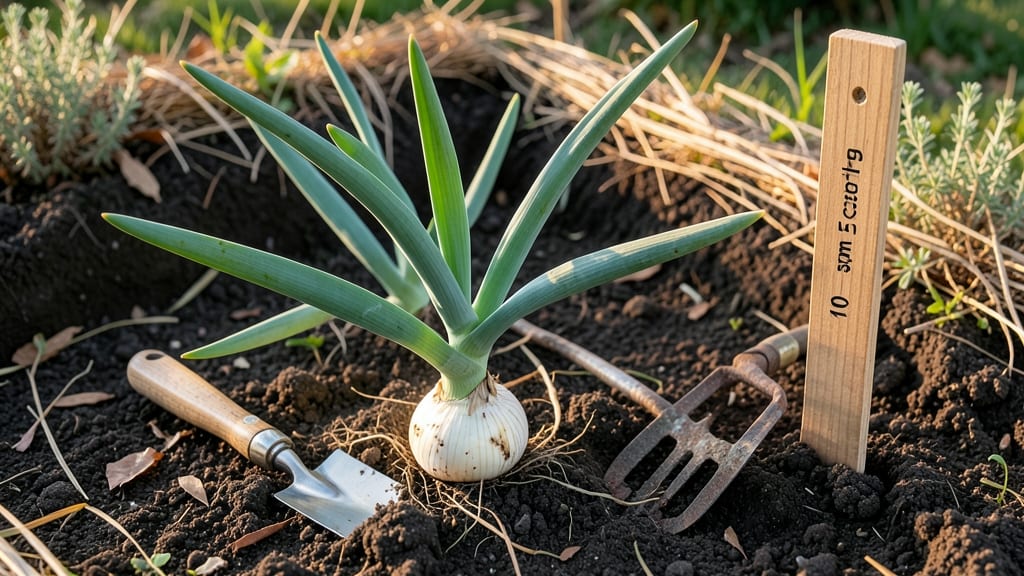
If you’ve ever stared at a seed packet for 🧅 onions in Michigan and wondered, "Why does it say ‘plant in March’ when the ground is still frozen?"—you’re not alone.
The answer lies in Michigan’s tricky climate, where planting onions too early risks frost damage, and planting too late means missing the sweet spot for a bountiful harvest.
Here’s the secret: timing isn’t just about the calendar—it’s about soil warmth, frost dates, and the type of onion you’re growing.
Whether you’re a first-time gardener or a seasoned green thumb, getting this right could mean the difference between a sad, stunted crop and a pantry full of homegrown 🧅 onions by summer.
In this guide, I’ll break down the exact windows for planting onions in Michigan—from early spring sets to late-summer seeds—so you can avoid common mistakes and align your planting with your local climate. No more guesswork, just proven strategies for USDA Zones 5b-6b.
Ready to master the art of onion planting? Let’s dive into the frost-free deadlines, soil prep tips, and variety-specific schedules that will set you up for success—no matter where you are in the Mitten State.
Michigan onion planting deadlines by variety type (short-day vs. long-day)
Michigan’s USDA Zones 4-6 create unique challenges for onion growers. The last spring frost typically arrives between April 15-30, while the first fall frost hits around October 15. These dates determine whether you’ll grow short-day, intermediate-day, or long-day onions successfully.
Planting the wrong variety at the wrong time results in small bulbs or no harvest at all.
Onions are photoperiod-sensitive, meaning daylight hours trigger bulb formation. Short-day onions (like Texas Early White) form bulbs when days are 12-14 hours long, while long-day onions (like Yellow Sweet Spanish) need 14-16 hours of daylight.
Michigan’s summer days rarely exceed 15 hours, making long-day varieties risky unless you use black plastic mulch to extend daylight exposure.
Here’s the critical rule: Plant short-day onions 4-6 weeks before your last frost (typically late March to early April) for a summer harvest. For long-day onions, aim for mid-April to early May—but only if you’re in southern Michigan (Zones 5b-6a).
Northern gardeners should stick to intermediate-day varieties like Candy or Sweet Sandwich for reliable results.
Soil temperature is just as critical as air temperature. Onion seeds and sets won’t germinate until soil reaches 45°F (7°C). Use a soil thermometer to confirm readiness—cold, wet springs (like 2020’s) can delay planting by 2-4 weeks.
If your soil is still below 45°F in April, opt for onion sets instead of seeds for faster harvests.
🌱 Michigan Onion Planting Deadlines by Variety
| Variety Type | Planting Window | Soil Temp Requirement | Harvest Window | Michigan Notes |
|---|---|---|---|---|
| Short-Day (e.g., Texas Early White) | Late March–Early April | 45–50°F (7–10°C) | July–August | Best for northern MI (Zones 4-5); reliable bulbs. |
| Intermediate-Day (e.g., Candy, Sweet Sandwich) | Mid-April–Early May | 50–55°F (10–13°C) | August–September | Versatile for all MI zones; good for storage. |
| Long-Day (e.g., Yellow Sweet Spanish) | Early May–Mid-May | 55–60°F (13–16°C) | September–October | Risky in northern MI; use black plastic mulch. |
| Fall-Planted (Short-Day Only) | July–August (90 days before frost) | 50–60°F (10–16°C) | October–November | Extends harvest season; cure bulbs indoors. |
For fall-planted onions, Michigan’s 90-100 day harvest window means you must sow seeds or sets by mid-July to early August. This strategy lets you harvest after summer crops like tomatoes and peppers are done, maximizing garden space.
Use straw mulch to insulate bulbs from early frosts, which can cause bolt-free harvests even in October.
Pro tip: Test your soil pH before planting—onions thrive in 6.0–7.0 pH. Michigan’s clay-heavy soils often test lower; amend with lime 2–3 months before planting. I once planted onions in unamended soil and ended up with stunted, bitter bulbs—a lesson that saved me from repeating the mistake!
Remember, Michigan’s microclimates vary wildly. Southern regions (like Jackson or Kalamazoo) can plant 2 weeks earlier
Michigan onion planting deadlines by variety type (short-day vs. long-day)
Michigan’s climate demands precision when planting onions, especially because the state spans USDA Zones 4-6. The biggest factor separating success from failure?
Choosing the right onion variety and planting it at the correct time. Short-day onions (like Texas Early White) thrive when days are shorter, while long-day onions (like Yellow Sweet Spanish) need extended daylight to bulb properly.
For Michigan gardeners, this means planting short-day varieties in late summer (July-August) for a fall harvest, while long-day onions must go in early spring (March-April) to mature before summer heat sets in. Missing these windows risks stunted growth or no harvest at all.
🌱
| Variety Type | Best Planting Window | Soil Temp. for Germination | Days to Harvest | Michigan-Specific Tip |
|---|---|---|---|---|
| Short-Day Onions | July 15 - August 15 | 50°F+ (10°C+) | 90-120 days | Ideal for fall harvest; plant 90 days before first frost. |
| Intermediate-Day Onions | March 15 - April 15 | 40°F+ (4°C+) | 100-130 days | Best for spring harvest; plant when soil is workable. |
| Long-Day Onions | March 1 - April 1 | 45°F+ (7°C+) | 120-150 days | Must be in ground early; risk of bolting if planted late. |
If you’re planting onion sets (pre-grown bulbs), aim for 4-6 weeks before your last frost date. For seeds, start indoors 8-10 weeks before transplanting—around early March—to give seedlings a head start before Michigan’s unpredictable spring weather.
Pro tip: Use a soil thermometer to confirm soil temps are above 40°F (4°C) before planting. Cold soil delays germination, and onions won’t tolerate being transplanted once they sprout.
For gardeners in northern Michigan (Zone 4), push planting dates 1-2 weeks later to account for shorter growing seasons. Southern Michigan (Zone 6) can afford slightly earlier plantings, but always check your local frost-free date—usually April 15 but can vary yearly.
🌡️