
Trees
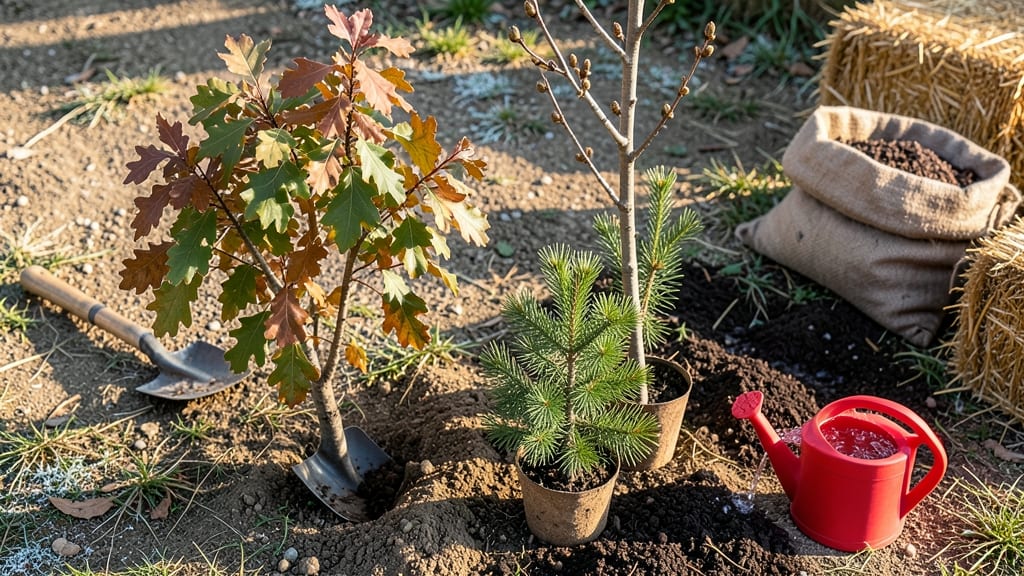
If you’ve ever planted a tree in Utah only to watch it struggle through the first winter, you’re not alone—timing is everything. The best time to plant trees in Utah isn’t just about picking a season; it’s about aligning with your microclimate’s unique frost patterns, soil temperatures, and precipitation cycles.
Whether you’re in the high desert’s USDA Zone 5-9 or the Wasatch Front’s cooler valleys, planting at the wrong time can mean weak root growth or even death.
But get it right, and you’ll give your 🌳 decades of strong, healthy life. Let’s break down the science-backed windows for planting trees in Utah’s diverse regions.
From late winter to early spring or early fall, the optimal planting months vary by elevation and species. Deciduous trees like maples thrive in spring, while evergreens often prefer fall. I’ll show you how to adjust for Utah’s unpredictable weather and avoid common mistakes that sabotage young trees.
Ready to plant with confidence? You’ll learn the exact deadlines for your area, plus pro tips to maximize survival—whether you’re in Salt Lake City or southern Utah’s desert. Let’s get started.
Utah’s microclimate planting zones: when to plant trees by region
Utah’s geography creates five distinct microclimates, each with unique planting deadlines and soil conditions. The Wasatch Front (like Salt Lake City) has earlier frost dates than the high desert of southern Utah, where winter arrives 2-3 weeks later.
Understanding these zones ensures your tree establishes strong roots before winter stress sets in.
For deciduous trees (like maples or fruit trees), the ideal window is late winter to early spring—when soil temperatures reach 40°F (4°C). Evergreens (such as pines or junipers) prefer early fall planting to avoid transplant shock during summer heat.
Let’s break down the best times by region to maximize survival rates.
🌱
| Region | Best Planting Window | Key Considerations | Soil Prep Tip |
|---|---|---|---|
| Northern Mountains (e.g., Park City) | Late April–early June | Cooler soils; prioritize drought-resistant species (e.g., aspen, serviceberry) | Amend with compost to improve drainage |
| Wasatch Front (e.g., Salt Lake City) | March 15–April 30 | Moderate climate; maples and oaks thrive here | Test soil pH (6.0–7.5 ideal for most trees) |
| Southern Desert (e.g., St. George) | September 1–October 15 | Extreme heat; evergreens (e.g., juniper, desert willow) excel | Mulch heavily to retain moisture |
| Eastern Plains (e.g., Price) | April 1–May 15 | Lower elevation; cottonwoods and Russian olives adapt well | Avoid compacted soil; loosen top 12 inches |
| High Plateaus (e.g., Moab) | Late March–early May | Cold nights; birch and spruce perform best | Add organic matter to improve fertility |
🌡️ Pro Tip: Check soil temperature with a probe—50°F (10°C) is ideal for root establishment.
In the Wasatch Front, where last frost dates average March 15, planting maple or oak trees in late March gives roots 6–8 weeks to establish before summer heat. Meanwhile, southern Utah’s desert zones (like St. George) shift to fall planting to avoid 100°F+ soil temperatures in summer.
For high-altitude areas (above 8,000 feet), like Park City, delay planting until late April to avoid late-spring frosts. Evergreens here benefit from early fall (September) planting, as cooler temps reduce transplant shock. Always check USDA Zone maps for your exact location—Utah spans Zones 5–9!
Regional water availability also plays a role. In arid southern Utah, <
Critical factors that determine Utah tree planting success (beyond just months)
Timing isn’t the only factor—your tree’s species, soil moisture, and elevation all play critical roles in Utah’s unpredictable climate. For example, oaks and maples thrive when planted in late fall because their roots establish before winter dormancy, while evergreens like spruces prefer early spring to avoid drought stress.
Even within the same month, a tree in Park City’s Zone 6 faces different risks than one in St. George’s Zone 9.
Soil temperature is another game-changer. In Utah, soil must reach at least 50°F (10°C) for roots to grow actively. Use a soil thermometer to check—especially in high-desert areas where cold nights can stall root development.
If you plant too early, roots may suffocate in cold, wet soil, while planting too late risks heat stress before winter arrives.
🚨 INSERT VISUAL ELEMENT HERE 🚨
Deciduous trees (e.g., maples, birches) prefer early spring planting, while evergreens (e.g., pines, junipers) thrive in fall.
Aim for 50°F+ soil—use a thermometer to avoid planting in cold, dormant soil.
Higher elevations (e.g., Wasatch Mountains) need 2-4 weeks earlier than low deserts (e.g., Moab).
In arid zones, prioritize deep watering before planting to simulate natural rainfall.
Check USU Extension frost maps—late-spring frosts can kill tender new growth in Zone 7+ areas.
Don’t overlook moisture availability, either. Utah’s arid climate means newly planted trees need consistent watering for the first 2-3 years. In southern Utah, where rainfall is scarce, I recommend installing a drip irrigation system to deliver 1-2 inches of water weekly during the growing season.
Without this, even the hardiest species like desert willows can struggle.
Finally, Utah’s unpredictable weather patterns demand flexibility. A late-spring frost in May can devastate early-planted trees, while a drought spell in September can stress fall-planted specimens. Always monitor local forecasts and adjust your planting timeline accordingly.
For example, if June is unusually cool, delay spring planting by a few weeks to avoid root rot from prolonged soil saturation.
Pro tip: Use mulch to regulate soil temperature and retain moisture—especially in high-desert areas where temperature swings are extreme. A 3-inch layer of organic mulch (like wood chips) can make the difference between thriving roots and struggling growth.
Pair this with deep watering, and you’ll give your tree the best shot at survival in Utah’s challenging conditions.