
Trees
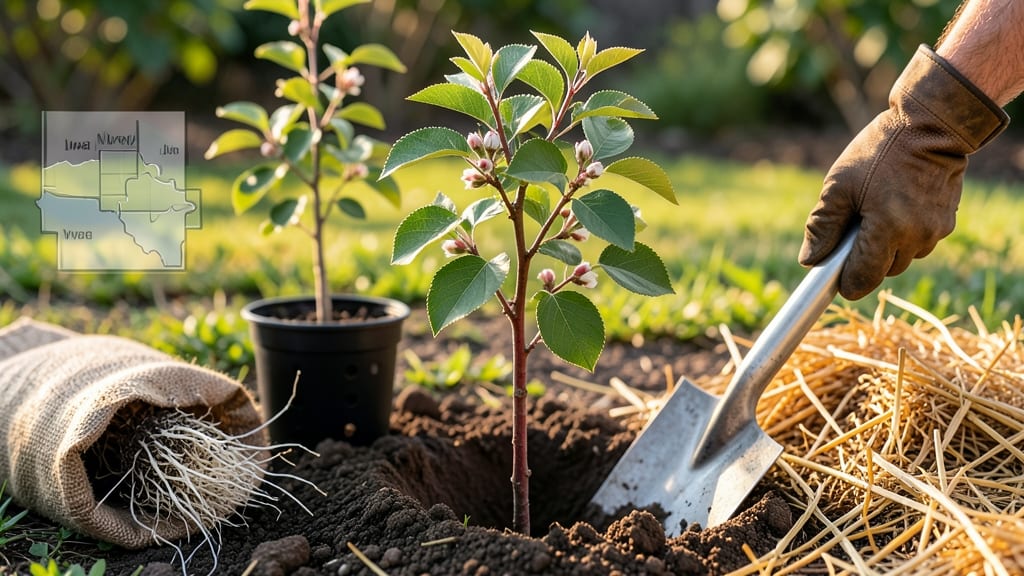
Planting an apple tree 🍎 in Iowa isn’t just about digging a hole—it’s about timing it perfectly to beat frost, match chill hours, and set your tree up for a lifetime of harvests. With Iowa’s 5a-5b climate, you’ve got just two narrow windows to get it right: early spring or fall, before the ground freezes solid.
Here’s the catch: not all apple varieties thrive equally in Iowa’s 400–900 chill hours. Plant too early, and a late frost will wipe out your young tree. Too late, and it won’t establish strong roots before winter.
I’ll show you exactly when to plant—whether you’re working with bare-root saplings or container-grown trees—so you avoid costly mistakes.
We’ll also cover the critical 30-day rule for fall planting, which varieties handle Iowa’s swings best, and how to prep your soil for maximum root growth. Skip the guesswork and let’s get your apple tree off to the right start.
By the end, you’ll know not just when to plant, but why those dates matter—and how to give your tree the best shot at bearing fruit for decades. Ready to dig in?
Iowa’s best planting months for apple trees by chill-hour zones
Iowa’s climate—with its freezing winters and hot summers—requires careful timing when planting apple trees. The chill-hour requirement (the number of hours below 45°F needed for fruit production) determines which varieties thrive in your specific USDA Zone 5a-5b area.
Most of Iowa falls into 400–900 chill hours, so selecting the right variety and planting window is critical.
For bare-root trees, the best time to plant is during dormancy, either in early spring (March–April) or fall (September–October). Container-grown trees offer more flexibility but still benefit from spring or fall planting to avoid heat stress or winter heaving.
Let’s break down the ideal planting windows for Iowa’s chill-hour zones.
🌱 Key Insight: Planting in fall allows roots to establish before winter, while spring planting avoids late frosts that can damage new growth. Both methods work, but fall planting is often preferred for bare-root trees.
| Chill-Hour Zone | Best Planting Window | Recommended Varieties | Soil Prep Tips |
|---|---|---|---|
| 400–600 hours | Fall (Sept 15–Oct 15) or Spring (March 15–April 15) | Haralson, Liberty, Zestar! | Test pH (6.0–6.5), amend with compost |
| 600–800 hours | Fall (Sept 1–Oct 30) or Spring (April 1–May 1) | Honeycrisp, Jonathan, Golden Delicious | Add organic matter, ensure drainage |
| 800–900+ hours | Spring (April 15–May 15) only | Fuji, Gala, McIntosh | Mulch heavily, protect from late frosts |
✂️ Pro Tip: Avoid planting in late spring (May–June) to prevent frost damage to new shoots.
When planting in fall, aim to finish by October 15 in most of Iowa to allow roots to establish before winter. For spring planting, wait until the soil is workable (around April 15) but before buds swell.
This timing ensures your tree isn’t stressed by late frosts or heatwaves.
Soil preparation is just as critical as timing. Iowa’s clay-heavy soils often need organic matter to improve drainage. Test your soil’s pH (6.0–6.5) and amend with compost or peat moss if needed.
Dig a hole twice as wide as the root ball but only as deep as the container’s base. This prevents root suffocation and allows for proper settling.
For bare-root trees, soak roots in water for 1–2 hours before planting to rehydrate them. Place the tree in the hole so the graft union (the bump where the scion meets the rootstock) is 2–3 inches above soil level.
Backfill with native soil, tamp gently, and water deeply to eliminate air pockets. Mulch around the base with 3–4 inches of wood chips to retain moisture and regulate soil temperature.
If you’re planting in spring, monitor weather forecasts for late frost warnings. Young trees are vulnerable to damage if temperatures dip below 25°F. Use frost cloth or a row cover for added protection during critical growth phases.
In fall, avoid planting if frost is forecasted within 2 weeks, as roots won’t have time to harden off.
One common mistake is planting too deep, which can suffocate the tree. Always check the graft union’s position after backfilling—it should remain visible above the soil line. Another pitfall is overwatering immediately after planting, which can lead to root rot.
Instead, water deeply once a week for the first month, then adjust based on rainfall.
Iowa’s USDA Zone 5a-5b climate means you’ll need cold-hardy varieties that can withstand subzero temperatures. Varieties like Haralson and Liberty are excellent choices for northern Iowa, while Honeycrisp and Jonathan thrive in southern regions. Always verify a variety’s chill-hour range before purchasing to ensure it matches your location.
Finally, consider pollination needs. Most apple trees require a second variety for cross-pollination. Plant two compatible trees within 50 feet of each other to ensure fruit set. For example, Honeycrisp pairs well with Jonathan, while Haralson benefits from a Liberty companion.
By aligning your planting window with chill-hour zones and preparing the soil properly, you’ll give your apple tree the best chance to thrive in Iowa’s unpredictable climate. 🌳
Top apple tree varieties for Iowa’s climate and their planting timing
Iowa’s chill-hour requirements (400–900+) mean not all apple varieties thrive equally. I’ve narrowed down the 10 best cold-hardy varieties for Iowa gardeners, complete with exact planting deadlines and chill-hour matches to avoid wasted effort.
For example, Honeycrisp (600–800 chill hours) is a top pick for Zone 5b, but planting it too late in fall can delay root establishment. Meanwhile, Haralson (400–500 chill hours) is perfect for northern Iowa’s shorter winters but needs early spring planting to avoid frost damage.
Each variety has a 30-day window for fall planting—miss it, and your tree may struggle to harden off before winter. Spring planting offers a 6-week window (March–April) before buds break, but soil must be workable and frost-free.
Here’s how to match varieties to your Iowa location and avoid common timing mistakes:
Pro tip: Bare-root trees establish faster than container-grown ones, so prioritize them for fall planting. If buying container-grown, plant in early spring to avoid root-bound stress.
For southern Iowa (Zone 6), varieties like Fuji (800+ chill hours) work, but plant them by October 1 to ensure root growth before winter. Northern Iowa gardeners should stick to 400–600 chill-hour varieties like Zestar! or Haralson.
Now that you’ve matched your variety to Iowa’s chill zones, the next step is avoiding planting pitfalls—like frost heave or improper soil prep—which I’ll cover in the next section. Don’t skip it!