
Plants
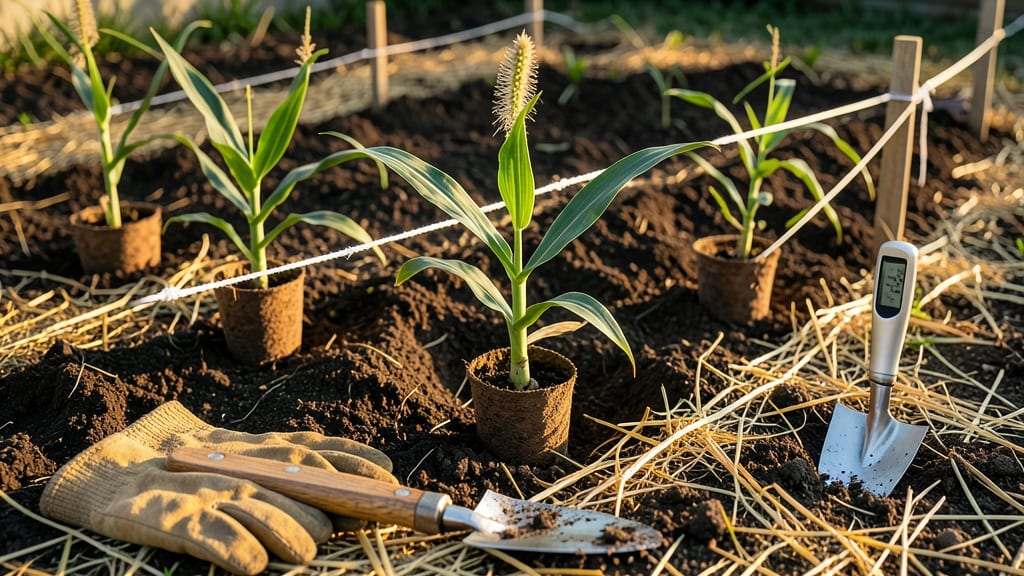
If you're dreaming of a golden 🌽 harvest this summer in Georgia (GA), timing your corn planting is the single most important factor for success.
Planting too early risks frost damage, while waiting too long cuts your harvest window short—both mistakes can leave you with disappointing yields or no corn at all.
Georgia's 7a-9a zones offer a long growing season, but even here, the difference between a bountiful crop and a failed one often comes down to knowing exactly when to drop those seeds in the soil.
With last frost dates ranging from mid-March to late April across the state, you'll want to plant between April 15 and June 15 for peak results.
I've helped gardeners across Georgia maximize their corn yields, and the key is understanding how your specific microclimate affects planting windows.
Whether you're in the cooler mountain regions or the warmer coastal plains, we'll break down exactly when to plant for your zone—and how to adjust for early or late varieties.
Ready to grow corn that rivals the sweet corn at your favorite roadside stand? Let's dive into the perfect planting schedule tailored to Georgia's unique climate, so you can enjoy fresh ears from July through October without a single wasted seed.
Georgia corn planting dates by hardiness Zone: exact timing for frost-free success
Georgia’s diverse climate—from the coastal plains to the mountain regions—means corn planting dates vary dramatically. Most of Georgia falls within USDA Zones 7a-9a, but even within these zones, microclimates can shift your ideal planting window by weeks.
To avoid frost damage and maximize yields, I’ll break down the exact timing for each zone, including soil temperature requirements and last frost dates.
Corn thrives when soil temperatures stay above 60°F for at least a week. In Georgia, this typically aligns with mid-April to early June, depending on your location.
Planting too early in cooler zones (like Zone 7a) risks frost damage, while delaying in warmer zones (like Zone 8b) can lead to heat stress before harvest. Let’s dive into the specifics.
🌽 Georgia Corn Planting Calendar by Zone
| USDA Zone | Last Frost Date | Optimal Planting Window | Soil Temp Requirement | Notes |
|---|---|---|---|---|
| Zone 7a (North GA) | Mid-April | Late April - Early May | 60°F+ for 7+ days | Use row covers for early starts; risk of late frosts. |
| Zone 7b (Central GA) | Early April | Early April - Mid-May | 60°F+ for 5+ days | Best for early varieties; watch for spring rains. |
| Zone 8a (South GA) | Late March | Mid-March - Late May | 58°F+ for 5+ days | Longer season; can plant twice (spring + fall). |
| Zone 8b (Coastal GA) | Early March | Late February - June | 55°F+ for 5+ days | Humidity increases pest risk; use drought-tolerant varieties. |
📅 Pro Tip: For Zones 8a-8b, consider a late summer planting (July-August) for a fall harvest.
If you’re in Zone 7a or 7b, aim to plant by May 1st to ensure ears mature before first frost (typically mid-November).
In Zones 8a-8b, you can push planting later—even into June—for a late summer harvest, but choose fast-maturing varieties (60-75 days) to avoid heat stress.
For gardeners in urban areas or microclimates (like Atlanta’s heat islands), soil warms faster. Use a soil thermometer to confirm 60°F+ before planting. In cooler mountain valleys, delay until after Mother’s Day to avoid frost risk.
I’ve seen 30-day differences in planting windows just 20 miles apart in North Georgia!
Another critical factor is day length. Corn needs 12+ hours of daylight to pollinate properly. In Georgia, this aligns with late April through early June.
Planting after June 15th risks poor ear development due to shorter days. For a second harvest, try succession planting every 2-3 weeks in May.
Don’t forget to account for variety maturity. Early varieties (like ‘Early Sunglow’) take 60-70 days, while standard sweet corn (like ‘Silver Queen’) needs 75-90 days. Calculate backward from your average first frost date to determine your latest safe planting window.
For example, in Zone 7a, planting ‘Silver Queen’ after May 1st risks immature ears before frost.
To extend
How to adjust corn planting for Georgia’s microclimates: heat, rain, and soil factors
Georgia’s diverse climate—from the humid coastal plains to the cooler mountain regions—means your corn planting timeline should account for more than just frost dates. Microclimates can shift your ideal planting window by 2-4 weeks, so let’s break down how to adapt for your specific growing conditions.
First, consider your location’s heat intensity. Coastal areas like Savannah (Zone 8a) can handle early April plantings, while North Georgia’s Chattanooga region (Zone 7a) may need to wait until late April.
Even within cities, urban heat islands can make soil warm up faster—test with a soil thermometer to confirm 60°F+ temperatures before planting.
Next, adjust for rainfall patterns. Southern Georgia’s wet springs may require black plastic mulch to warm soil faster, while northern regions benefit from row covers to protect young seedlings.
If your area gets consistent afternoon rains, opt for faster-maturing varieties like ‘Early Sunglow’ (60 days) to avoid fungal issues.
Soil pH matters too—Georgia’s clay-heavy soils often need lime adjustments to reach the ideal 6.0-6.8 range. Test your soil 2 weeks before planting and amend as needed. For sandy soils common in coastal areas, add compost or aged manure to retain moisture during Georgia’s summer heat.
Finally, watch for pest pressure. Corn earworm thrives in Georgia’s heat—use row covers for early plantings or choose resistant varieties like ‘Peaches and Cream.’ In high-humidity areas, space plants 12 inches apart to improve air circulation and reduce disease risk.
By tailoring your approach to your microclimate, you’ll avoid common pitfalls and enjoy a consistent harvest from July through October. Start small—try a 3x3 ft test patch—to refine your timing before committing to a full garden.