
Plants
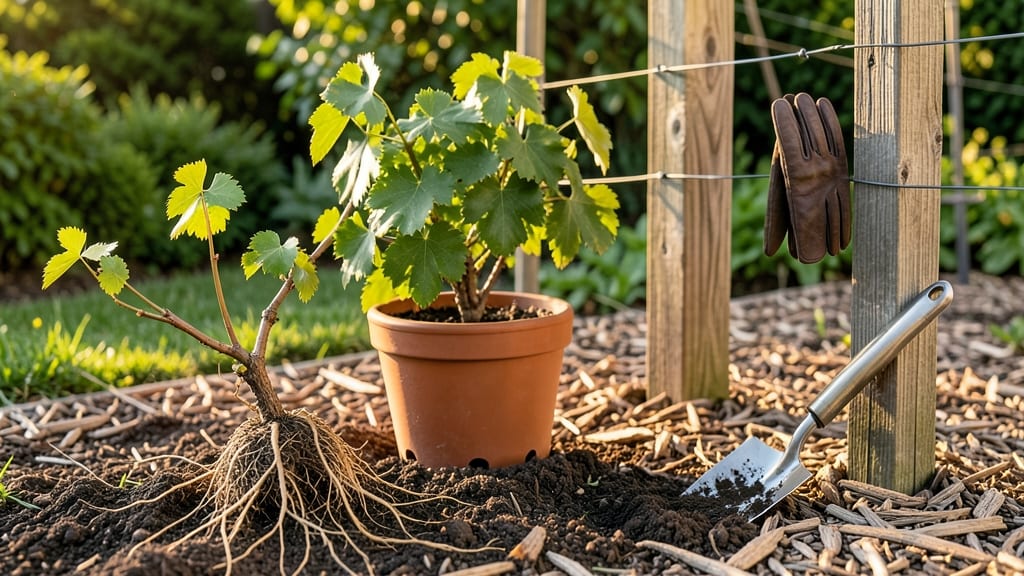
Timing your 🍇 grape planting in Michigan isn’t just about following a calendar—it’s about outsmarting the Great Lakes’ unpredictable spring frosts and short growing season. Get the schedule wrong, and your vines might freeze before they ever produce fruit.
But with the right cold-hardy varieties and precise planting windows, you can turn Michigan’s climate into your advantage.
Most gardeners in zones 5b-6b swear by early spring planting (April-May) for bare-root vines, when the soil thaws but buds haven’t yet burst. This gives roots time to establish before summer heat arrives.
For container grapes, late spring after the last frost is your best bet—usually around mid-May in most regions.
Why does this matter? Because grapes planted too early risk frost damage, while those planted too late struggle to mature before winter.
I’ll break down the exact week-by-week schedule, including soil prep tips and frost-risk strategies tailored to Michigan’s unique microclimates—so you can enjoy homegrown grapes (or even wine!) in just a few seasons.
Ready to skip the guesswork? Let’s dive into the perfect planting schedule that’ll have your vines thriving, no matter where in the state you’re growing. The key is knowing when to act—and when to wait.
Michigan grape planting schedule by week: exact timing for spring & fall
Timing your grape planting to Michigan’s 160 frost-free days and unpredictable spring frosts is everything. Plant too early, and your vines may freeze before establishing roots. Too late, and they won’t harden off before winter.
The Upper Peninsula (Zone 4) has a shorter window than the Lower Peninsula (Zone 5-6), so adjust accordingly. Here’s your week-by-week guide to planting grapes in Michigan.
For bare-root grapes, aim for early spring planting—typically late April to early May—when soil temperatures reach 45°F but before buds swell. This gives roots 6-8 weeks to establish before summer heat.
Container-grown vines can wait until after the last frost (usually mid-May), but don’t delay beyond early June or risk stunted growth.
🌱 Visual Tip: Watch for forcing buds on bare-root vines. If buds begin swelling, it’s time to plant immediately—delaying risks bud death from frost or heat stress.
Week 1-2 (Late April)
Soil prep: Amend with compost and sand to improve drainage. Test pH (6.0-6.5)—grapes hate acidic soil.
Week 3 (Early May)
Plant bare-root vines in full sun with 10-12 feet between rows. Bury roots 2-3 inches deeper than in the nursery.
Week 4-5 (Mid-May)
Install trellis supports (T-bar or kniffin) and train vines to encourage upward growth. Water deeply (1-2 gallons) to settle soil.
Week 6-7 (Late May)
Fertilize with balanced 10-10-10 (½ cup per plant). Mulch with straw or wood chips to retain moisture and suppress weeds.
Week 8-10 (June)
Prune wild shoots to 2-3 buds per cane. Monitor for powdery mildew—spray with neem oil if needed.
Fall Option (Late Sept)
Plant container vines after last frost. They’ll establish roots before winter but need extra mulch for insulation.
Fall planting is riskier in Michigan but works for container-grown vines if done 6-8 weeks before first frost (typically late September). The key is ensuring roots have 4-6 weeks to establish before soil freezes. Avoid fall planting for bare-root vines—they’re more vulnerable to winter heaving.
🌡️ Pro Tip: Use a soil thermometer to confirm soil temps are above 50°F before planting. Cold soil slows root growth and increases disease risk.
After planting, focus on watering deeply (1-2 gallons per vine) every 7-10 days until established. By year two, your vines will need pruning in late winter to shape canes for the next harvest. Michigan’s climate rewards patience—with the right timing, you’ll have homegrown grapes in 3-4 years!
☀️ Remember: Grapes need 6-8 hours of sun daily.
Michigan grape planting schedule by week: exact timing for spring & fall
Timing your grape planting is everything in Michigan’s unpredictable climate. The 4-6 week window between last frost (mid-April) and summer heat is your best bet for establishing strong roots before winter. For bare-root vines, aim for early spring planting—this gives roots 60+ days to establish before dormancy.
Container-grown grapes offer more flexibility—plant them after last frost (typically late May in southern Michigan, early June in the north).
This reduces transplant shock while avoiding early spring frosts that can kill tender new growth. Fall planting is risky but possible in mild microclimates if you plant 6-8 weeks before first frost (early September in most areas).
🌱 Best for Containers: Weeks 3 (May 16-June 15)
⚠️ Risky Fall Window: Weeks 4 (August 15-September 15, only for mild zones)
Week 1-2 (March 15-April 15): This is your prime bare-root window. Soil temperatures should be 40-50°F. Dig a hole twice as wide as the root ball, amend with compost, and plant so the graft union sits 2-3 inches above soil.
Water deeply to eliminate air pockets. Mulch heavily (4-6 inches) with straw to protect roots from late frosts.
Week 3 (May 16-June 15): Ideal for container-grown vines after last frost. Harden off plants for 7-10 days before transplanting. Use Epsom salt (1 tbsp per gallon) in watering to boost magnesium for strong canes. Install your trellis system immediately—grapes need support within 30 days of planting.
Week 4 (August 15-September 15): Only attempt fall planting in Zone 6b+ with mild winters. Choose dwarf varieties like 'Valiant' for faster establishment. Plant 4-6 weeks before first frost, water thoroughly, and apply extra mulch (8+ inches) to insulate roots.
Prune back 50% of canes to reduce winter damage risk.
Pro tip: Check Michigan State University’s frost forecast (available via their MSU Extension resources) for your specific region.
Northern Michigan’s Upper Peninsula often has 2-3 weeks later last frost dates than the Lower Peninsula—adjust your schedule accordingly. Container growers can push planting into early June safely, while bare-root vines planted after April 15 risk stunted root growth before winter.
Remember, root establishment is your #1 priority. A grapevine with strong roots by winter will outperform one planted late, even if it gets a head start on top growth.
For maximum success, pair your planting timing with proper soil prep—aim for pH 6.0-6.5 and well-draining soil to prevent winter rot. 🌱