
How To
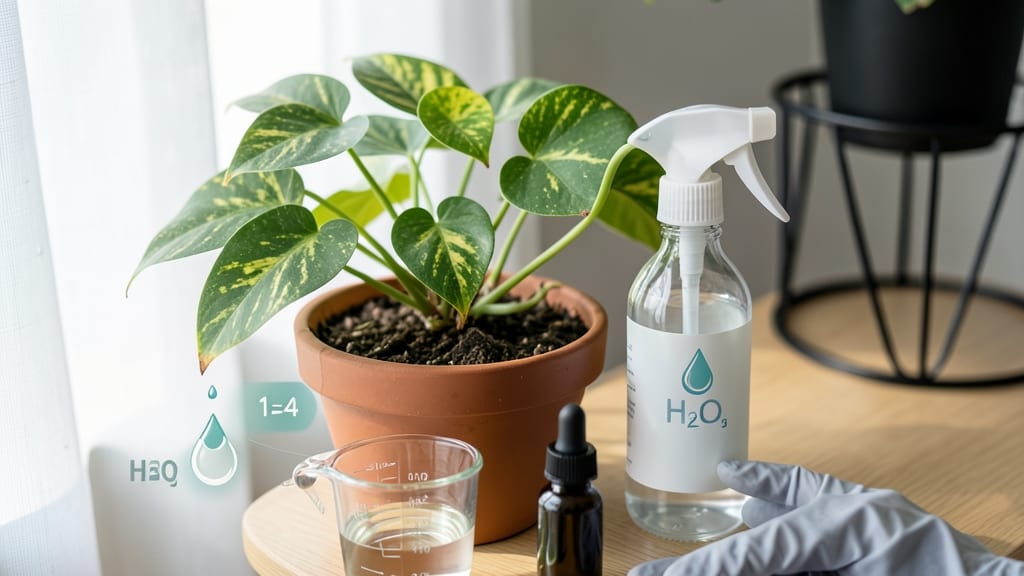
If you've ever spotted black spots creeping across your 🌱 General Plant leaves or noticed mushy roots during repotting, hydrogen peroxide in water might be your secret weapon—but only if you get the dilution right.
The wrong concentration can turn your antifungal treatment into a root killer, leaving your plants limp and struggling. I’ve tested the science-backed ratios that zap fungal spores while keeping your soil safe, so you can finally tackle those stubborn infections without the guesswork.
From seed sterilization to weekly watering boosts, I’ll walk you through exactly how much hydrogen peroxide to use, which plants handle it best, and when to switch to gentler methods. No more overwatering with harsh chemicals—just targeted, effective care for your garden.
Let’s dive into the simple ratios that protect your plants while keeping your soil healthy, so you can enjoy thriving greenery all season long.

Safe hydrogen peroxide dilution ratios for plant water: fungus-killing strength without root damage
Hydrogen peroxide is a gardener's secret weapon against fungal infections, but getting the dilution ratio wrong can turn your treatment into a disaster.
The key is understanding how much hydrogen peroxide in plant water works safely—most gardeners use a 3% solution (the highest concentration available at pharmacies), but diluting it properly is everything. Too strong, and you'll burn roots; too weak, and it won't fight fungus effectively.
Let's break down the science and safe ratios for different plant types.
For most plants, a 1:20 ratio (1 part 3% hydrogen peroxide to 20 parts water) is the gold standard. This creates a 0.15% solution, strong enough to kill fungal spores but gentle enough for roots.
However, delicate plants like orchids or succulents need an even weaker solution—0.3% hydrogen peroxide (1:60 ratio)—to avoid stress. Always use food-grade 3% hydrogen peroxide; higher concentrations are unsafe for plants.
Hydrogen peroxide works by releasing oxygen bubbles that suffocate fungal spores while also oxygenating roots. This is especially helpful for overwatered plants or those in compacted soil, where poor aeration encourages rot.
But remember: hydrogen peroxide breaks down quickly—within 24-48 hours—so it won’t linger in the soil like chemical fungicides. This makes it safe to use every 1-2 weeks for preventive care, but never more frequently than that.
| Plant Type | Hydrogen Peroxide Ratio | Frequency | Notes |
|---|---|---|---|
| Hardy Plants (Tomatoes, Peppers, Herbs) | 1:20 (0.15%) | Every 7-14 days | Safe for soil drenching |
| Delicate Plants (Orchids, Succulents, Seedlings) | 1:60 (0.05%) | Every 2-3 weeks | Use for foliar spray only |
| Houseplants (Pothos, Snake Plant) | 1:40 (0.075%) | Every 3-4 weeks | Test on one leaf first |
| Seedlings or Cutting Roots | 1:100 (0.03%) | Once during propagation | Prevents damping-off disease |
If you're treating fungal infections like powdery mildew or black spot, a slightly stronger 1:10 ratio (0.3%) can be used as a foliar spray, but only for hardy plants.
For root dips or seed sterilization, a 3% solution undiluted is safe for a few seconds—just don’t leave roots soaking in it. Always shake the hydrogen peroxide bottle before mixing to ensure even distribution of the solution.
One common mistake is assuming all plants tolerate the same strength. For example, succulents and cacti have sensitive roots and should never receive anything stronger than a 1:60 dilution. Even then, apply it sparingly to the soil surface rather than pouring it directly onto roots.
Always monitor your plants for yellowing leaves or wilting after treatment—these are signs of overuse.
For container plants, hydrogen peroxide breaks down faster in smaller soil volumes, so you can use a slightly stronger mix (1:15 ratio) without risk. Just
Pro tip: Mix your hydrogen peroxide solution in a glass or ceramic container—plastic can degrade over time when exposed to the solution. Label your spray bottles clearly, as hydrogen peroxide loses potency after 30 days when stored in light. Keep it in a cool, dark place,
Safe hydrogen peroxide dilution ratios for plant water: fungus-killing strength without root damage
Hydrogen peroxide is a versatile natural fungicide that oxygenates soil and roots while combating bacterial and fungal pathogens. But the wrong concentration can harm delicate root systems.
Most commercial hydrogen peroxide comes in 3% solution, but plants need far less—think of it as a gentle sanitizer, not a disinfectant.
The key is dilution. For most plants, a 0.5% to 1% solution is safe and effective. This means mixing 1 part 3% hydrogen peroxide with 59 parts water (for 0.5%) or 29 parts water (for 1%).
Higher concentrations risk root burn or leaf damage, especially for tender plants like herbs or seedlings.
Here’s how hydrogen peroxide works: it releases oxygen when diluted, which suffocates fungal spores and bacteria while promoting beneficial microbial activity. It breaks down quickly in soil (within 24 hours), leaving no harmful residues.
This makes it ideal for seed sterilization, cutting propagation, and watering infected plants.
| Use Case | Dilution Ratio (3% H₂O₂) | Frequency | Plants Suited |
|---|---|---|---|
| Soil sterilization | 1 part H₂O₂ to 32 parts water (0.09%) | Once per season | All plants (before planting) |
| Watering infected plants | 1 part H₂O₂ to 20 parts water (1.5%) | Every 7–10 days | Vegetables, herbs, shrubs |
| Root dip for cuttings | 1 part H₂O₂ to 10 parts water (3%) | Single use | Succulents, woody plants |
| Seed sterilization | 1 part H₂O₂ to 4 parts water (0.75%) | Once before sowing | All seeds |
For sensitive plants like orchids, ferns, or seedlings, stick to the lowest concentration (0.09%). Overuse can disrupt beneficial soil microbes, so limit applications to once every 2 weeks for watering.
Always use freshly mixed solution—hydrogen peroxide loses potency over time, especially when exposed to light or heat.
Test your mix on a small leaf first to check for irritation. If brown spots appear within 24 hours, the concentration is too high. For container plants, water until it drains through the bottom—never let roots sit in concentrated solution.
In garden beds, apply evenly and water thoroughly afterward to dilute any residual peroxide.
Remember: hydrogen peroxide is not a cure-all. For severe fungal infections like powdery mildew or root rot, combine it with neem oil or copper fungicide for better results. Always pair treatments with proper airflow and pruning infected foliage to prevent reinfection.