
How To
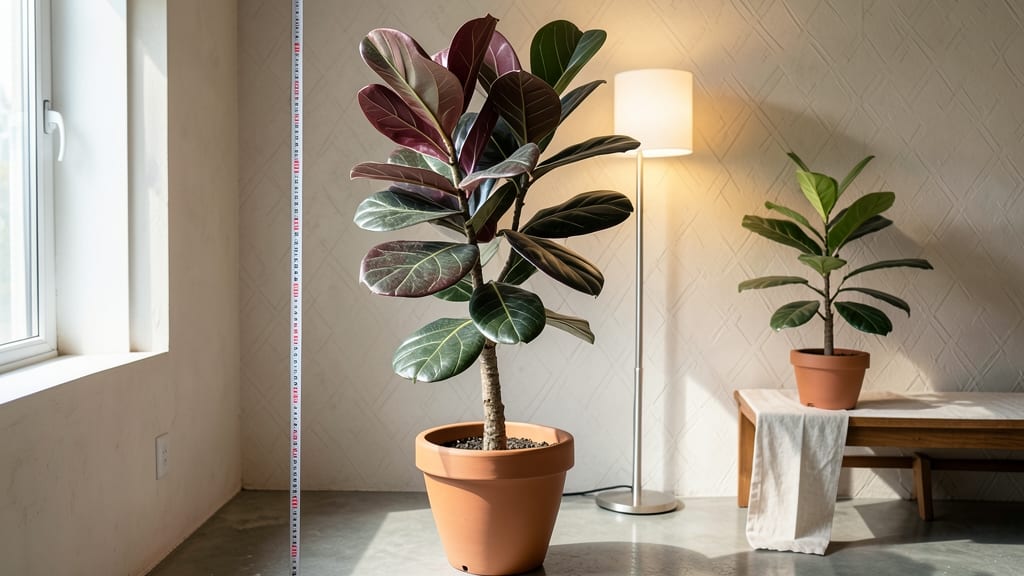
If you’ve ever glanced at your Rubber Plant 🌿 and wondered how tall this plant can grow, the answer depends on more than just time—it’s all about the variety you’ve got and how you care for it.
Some types stay compact and manageable, while others can grow into towering indoor trees, reaching heights that might surprise you.
The key to controlling your Rubber Plant’s growth lies in understanding its natural tendencies. Whether you’re dealing with a ‘Burgundy’ variety that stays shorter or a ‘Robusta’ that can soar, light exposure, pruning habits, and even pot size play a huge role in how tall it gets.
With the right approach, you can keep it at a height that fits your space—or let it grow wild if you’re going for that jungle vibe.
But here’s the thing: many people accidentally encourage rapid growth (or stunted growth) without realizing it. Overwatering, poor lighting, or skipping pruning can turn your Rubber Plant into a leggy giant or a sad, slow-growing shrub.
I’ll show you how to avoid these common mistakes and give your plant the perfect conditions to thrive—whether you want it to stay small or stretch skyward.
Ready to learn exactly how tall your Rubber Plant can grow and how to shape its future? Let’s dive into the details so you can enjoy a healthy, happy plant that fits your home—and your vision.


Rubber plant height limits by variety: from compact to towering giants
Rubber plants (Ficus elastica) are famous for their dramatic growth potential, but their mature height varies wildly depending on the variety and growing conditions. Some stay compact enough for small apartments, while others can reach ceiling heights in just a few years.
The key to controlling height lies in understanding your plant’s genetic potential and adjusting care accordingly.
Standard rubber plants typically grow 6 to 10 feet tall indoors, but dwarf varieties like ‘Tineke’ or ‘White Knight’ max out at 2 to 4 feet.
Even within the same species, differences in light exposure, pruning habits, and pot size can shrink or stretch your plant’s height by 30% or more. Let’s break down the most popular varieties and their expected mature sizes.
| Variety | Mature Height (Indoors) | Growth Rate | Best For |
|---|---|---|---|
| Ficus elastica 'Burgundy' | 8–10 ft | Fast | Large spaces, statement plants |
| Ficus elastica 'Robusta' | 6–8 ft | Moderate | Indoor trees, medium rooms |
| Ficus elastica 'Black Prince' | 7–9 ft | Fast | Dramatic foliage, tall ceilings |
| Ficus elastica 'Tineke' | 2–4 ft | Slow | Small spaces, desks, shelves |
| Ficus elastica 'White Knight' | 3–5 ft | Moderate | Bathrooms, bright corners |
| Ficus elastica 'Silver Ghost' | 5–7 ft | Moderate | Unique foliage, medium rooms |
🌿 Pro Tip: Dwarf varieties thrive in smaller pots and lower light, while fast growers like ‘Burgundy’ need bright indirect light and regular pruning to stay manageable.
If you’re growing a rubber plant outdoors in USDA Zones 10–12, expect even taller growth—10 to 15 feet—since they’re not limited by ceiling heights. In cooler climates, outdoor rubber plants often stay smaller (4–6 feet) unless grown as container plants moved indoors during winter.
One surprising factor in height control is stem thickness. Thicker stems (like those in ‘Robusta’) grow slower vertically but produce broader canopies, while thin stems (like ‘Black Prince’) shoot upward faster.
This is why some plants look "bushy" while others stretch like tall, skinny trees.
For small-space gardeners, choose dwarf varieties or prune aggressively to encourage bushier growth. Even standard varieties can be kept under 4 feet with regular pinching (removing top growth) and rotational pruning. The trade-off? More frequent pruning means more cuttings for propagation—free plants for friends!
Light plays a huge role in height. Rubber plants in low light grow taller and leggier as they stretch toward light sources, while those in bright indirect light develop compact, sturdy stems.
A south-facing window can double your plant’s growth rate but may require more frequent pruning to control height.
Soil and pot size also influence height. Root-bound plants grow taller as they compete for space, while overpotted plants (with extra soil) focus energy on leaf production instead of vertical growth.
If your rubber plant is outgrowing its space, repotting into a slightly larger container can help manage its height naturally.
Remember: Pruning isn’t just for height control—it also encourages fuller growth and healthier leaves. Even if you love a tall rubber plant, trimming the tips every 6–12 months keeps it looking lush and prevents woody, bare stems. Think of it as a haircut for your plant!
Whether you’re aiming for a miniature desk plant or a room-filling giant, knowing your rubber plant’s variety and growth habits lets you shape its future height—before it’s too late.
With the right care, you can turn a 10-foot monster into a compact bush or keep a dwarf variety thriving on a windowsill for years
How to control rubber plant height: pruning, light, and growth hacks
If you’re aiming for a compact rubber plant that fits your shelves or a tall statement plant that reaches the ceiling, you’ve got more control than you think. The secret lies in strategic pruning, light management, and a few clever growth hacks that can shape your plant’s future.
Unlike some plants that grow at a steady pace, rubber plants respond dramatically to these adjustments, making them one of the most adaptable houseplants for height control.
First, let’s talk about pruning techniques. Pruning isn’t just about trimming dead leaves—it’s a way to redirect energy and encourage bushier or taller growth. For example, cutting back the top growth stimulates side branches, creating a fuller, wider plant.
If you want your rubber plant to grow taller faster, avoid heavy pruning and instead focus on trimming just the tips to promote vertical growth. The key is timing: prune in spring or early summer when the plant is actively growing.
🌱 Step-by-Step Pruning Guide for Height Control
- Step 1: Identify your goal—taller or bushier growth.
- Step 2: Use sterilized scissors to cut just above a leaf node for taller growth.
- Step 3: Trim top third of stems to encourage branching for a fuller look.
- Step 4: Propagate cuttings in water or soil to grow new plants.
- Step 5: Repot pruned plants in fresh, well-draining soil to reduce stress.
Light exposure is another game-changer for controlling height. Rubber plants crave bright, indirect light, but too little light leads to leggy growth as the plant stretches toward any available light source. Place your plant near an east or north-facing window for ideal conditions.
If you notice your plant growing too tall too quickly, it’s likely reaching for light. Rotate the pot every few weeks to ensure even growth, and consider adding a grow light if natural light is insufficient.
Pot size also plays a surprising role in height control. Rubber plants in too-large pots tend to focus energy on root growth rather than vertical growth, resulting in a shorter, bushier plant. Conversely, a smaller pot encourages faster upward growth as the roots become root-bound.
If you want your rubber plant to stay compact, choose a pot that’s only slightly larger than its root ball. For taller growth, opt for a pot that’s just big enough to accommodate the roots without excess space.
Finally, don’t underestimate the power of fertilizer and watering habits. Over-fertilizing can lead to rapid, unchecked growth, while under-fertilizing slows it down. Use a balanced fertilizer (like 10-10-10) every 4-6 weeks during spring and summer to support steady growth.
As for watering, keep the soil slightly moist but never soggy. Overwatering can stress the plant and lead to uneven growth, while underwatering slows it down entirely.
With these techniques, you can shape your rubber plant’s height to fit your space perfectly—whether you want it to stay small and manageable or grow tall and dramatic. The best part?
These methods work for all rubber plant varieties, so you can apply them no matter which type you’re growing. Experiment a little, and you’ll soon have a plant that’s exactly the height you’ve always wanted.