
Companion Plants
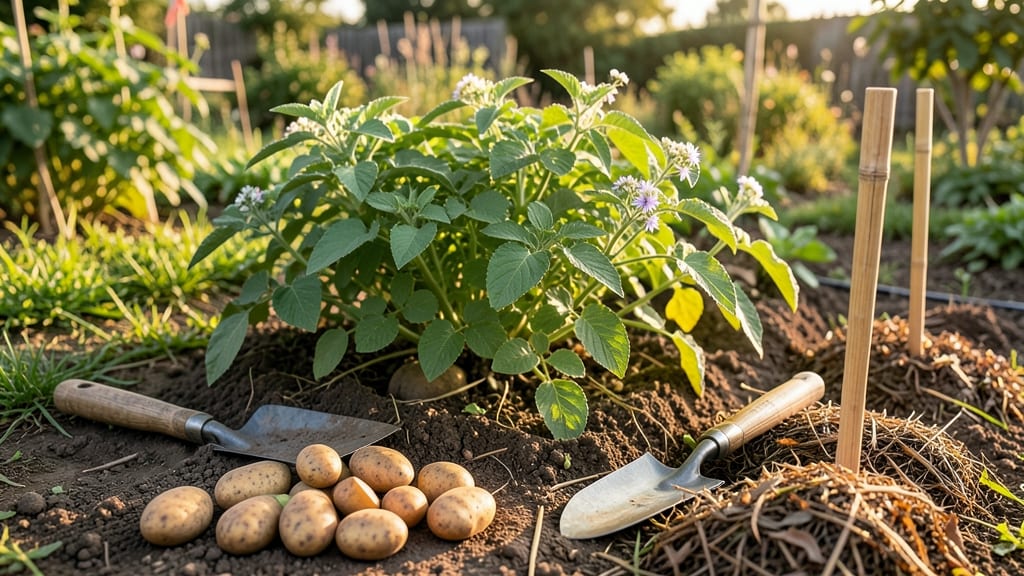
If you're asking "when can I plant potatoes in Michigan", the answer isn't one-size-fits-all—it depends on your county, soil temperature, and whether you're growing early or late varieties.
Michigan's USDA zones 5a-6b mean frost can linger well into April, but with the right timing, you can beat it and enjoy homegrown 🥔 by summer.
Most gardeners wait until mid-April to early May after the last frost, but savvy growers start seed potatoes indoors as early as late February.
This head start gives you a jump on the season, especially if you're planting cold-hardy varieties like 'Yukon Gold' or 'Red LaSoda' that thrive in Michigan's cooler soils.
Here's the game-changer: soil temperature matters more than calendar dates. Potatoes need soil that's at least 45°F to sprout consistently. In northern Michigan, this might mean waiting until early May, while southern counties can plant weeks earlier—sometimes as early as late March.
I’ll break down the exact frost-free dates by region, plus tips for extending your season with row covers or raised beds. Whether you're a first-time gardener or a veteran grower, these strategies will help you maximize your harvest from July through September.
Michigan potato planting dates by county: frost-free guidelines for success
Michigan’s diverse climate means potato planting dates vary dramatically from the southern Lower Peninsula to the Upper Peninsula’s cooler zones. In USDA zones 5a-6b, timing your seed potatoes correctly ensures healthy growth and avoids frost damage.
Most gardeners aim for 2-3 weeks after the last average frost date, but soil temperature matters just as much—potatoes need 45°F soil warmth to sprout reliably.
For southern Michigan counties like Wayne, Oakland, and Macomb, the average last frost falls between April 15-20. This means you can plant seed potatoes outdoors in early April if you use row covers or choose cold-hardy varieties.
In contrast, northern counties like Chippewa, Mackinac, or Alger typically see their last frost May 1-15, pushing outdoor planting to late April or early May.
Here’s how to align your planting with Michigan’s frost-free zones for maximum success:
If you’re eager for an early harvest, consider indoor starts in late February or early March. Place seed potatoes in pots with potting mix and keep them in a cool, dark spot until sprouts emerge (about 4-6 weeks).
Once sprouts reach 1-2 inches, move pots to a sunny window or under grow lights for 10-12 hours of light daily. Transplant these pre-sprouted potatoes outdoors 2-3 weeks before your last frost date for a jumpstart on the season.
For gardeners in sandy soils (common in northern Michigan), warm soil faster by using black plastic mulch or straw mulch. In clay-heavy soils (southern Michigan), amending with compost or sand improves drainage and warms the soil quicker.
Always test soil temperature with a soil thermometer—potatoes won’t sprout until it hits 45°F consistently.
Pro tip: Set up a frost watch using your local National Weather Service alerts. Late frosts in May can still damage young plants, so have row covers or old bedsheets ready to throw over vulnerable seedlings. Even a light frost (28°F) can kill emerging sprouts, so monitor forecasts closely.
Remember, Michigan’s growing season is short, so prioritize early-maturing varieties (60-90 days to harvest) if you’re in cooler zones. Late-season varieties (90-120 days) work better in southern Michigan where summers are longer. Plan your planting schedule around your harvest goals—aim for July-August harvests to avoid early fall frosts.
For a foolproof approach, plant in stages: sow 1/3 of your seed potatoes 2 weeks before your ideal date, 1/3 on target, and the final 1/3 2 weeks after. This staggered planting ensures a continuous harvest and reduces risk if one batch fails due to weather.
How to adjust potato planting for Michigan’s unpredictable spring weather
Michigan’s spring weather can be as unpredictable as a March snowstorm followed by 70-degree days. If you’ve ever planted potatoes only to watch frost nip your young sprouts, you know how frustrating this can be.
The key to success is flexibility—adjusting your planting timeline based on soil temperature, frost forecasts, and seasonal extensions like row covers or raised beds.
I’ve learned the hard way that calendar dates mean nothing if the ground is still frozen. Instead, focus on soil warmth. Potatoes need soil temperatures of at least 45°F to sprout reliably. Use a soil thermometer to check—if it’s colder, wait.
In northern Michigan (USDA zones 5a-5b), this might mean delaying planting until early May, while southern counties (like Wayne or Monroe) can plant as early as late March.
For those who can’t wait, indoor starts are a game-changer. Begin chitting (pre-sprouting) seed potatoes in late February or early March. Place them in a cool, bright spot—like a sunny windowsill—and they’ll sprout in 2-4 weeks.
Once sprouts are 1-2 inches long, plant them outdoors 2-3 weeks before your last frost date. This head start gives you a 4-6 week earlier harvest, especially valuable in Michigan’s short growing season.
Row covers are another lifesaver for extending the season. These lightweight fabrics protect young plants from late frosts (which can hit as late as May 15 in some areas) and even early fall frosts if you’re planting late varieties.
Simply drape the cover over your potato hills and secure the edges with bricks or soil. Remove it on warm days to allow pollination if growing flowering varieties, but leave it on during 28°F or colder nights.
🚨 Late Frost Warning: How to Protect Your Potatoes
Signs of frost damage: Wilting, blackened leaves, or a frosty sheen on foliage.
Immediate action: Cover plants with blankets, cardboard, or row covers. Remove covers once the sun warms the air to 50°F.
Preventative tip: Plant in raised beds—they warm up faster than in-ground soil and drain better, reducing frost risk.
Choosing the right potato varieties also makes a difference. In Michigan’s cooler climate, early-maturing varieties like ‘Early Rose’ or ‘Red LaSoda’ (ready in 60-70 days) are ideal for early planting.
Mid-season types like ‘Yukon Gold’ (90 days) work well for traditional spring planting, while late varieties like ‘Kennebec’ (110 days) need a longer season. If you’re in doubt, stick with early or mid-season varieties—they’re more forgiving of Michigan’s unpredictable springs.
Don’t forget to monitor your plants closely after emergence. Young potato plants are extremely frost-sensitive, even after they’ve sprouted. If a late frost is forecasted, cover them immediately—even a light frost can stunt growth or kill the plant entirely.
With these adjustments, you’ll turn Michigan’s fickle spring into your advantage and enjoy a bountiful harvest from July through September.