
Plants
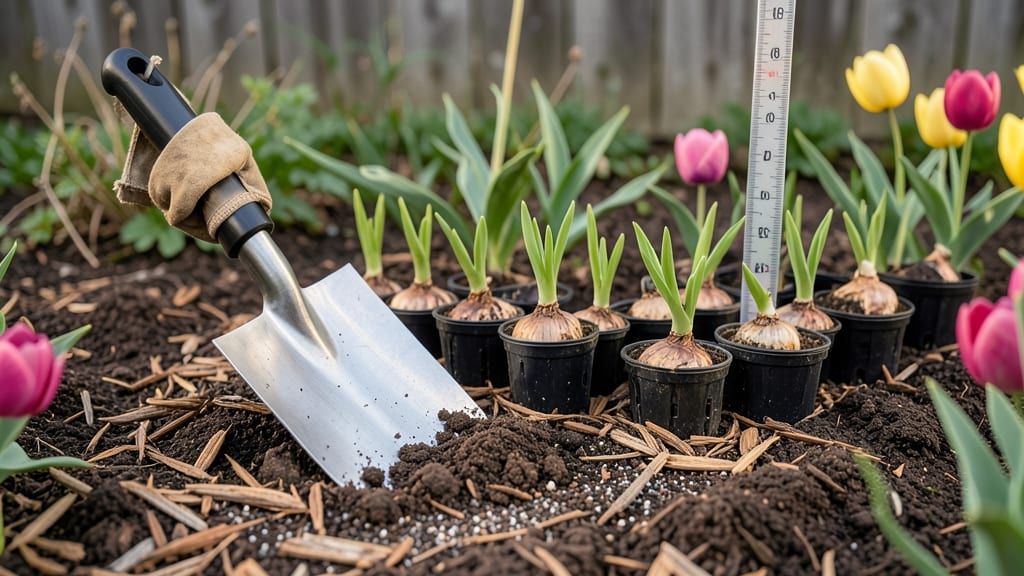
Timing when you can plant potted tulips in the ground can feel like solving a puzzle—get it wrong, and you might end up with weak blooms or no flowers at all.
The key lies in understanding your climate's chill-hour needs, which vary depending on your USDA zone and the specific tulip variety you're growing.
For most gardeners in zone 6a, the best window to plant potted tulips is 4-6 weeks before the first frost—typically in late fall—or early spring after the last frost.
But here's the catch: rushing the process can leave your bulbs vulnerable to cold snaps, while waiting too long might disrupt their dormancy cycle.
I'll walk you through the exact steps to determine your planting timeline, including how to check for root-bound bulbs and ideal soil conditions. By the end, you'll know exactly when to give your 🌷 tulips the perfect start in their new home.
Whether you're a first-time gardener or a seasoned pro, mastering this timing will set you up for vibrant spring blooms. Let's dive into the chill-hour checklist that makes all the difference.
Understanding tulip chill-hour requirements before planting
Tulips thrive when they receive the right amount of cold exposure—called chill hours—before planting. Most varieties need between 3,000 and 5,000 chill hours below 45°F (7°C) to bloom properly.
Without enough cold, your potted tulips may produce weak stems or no flowers at all. This requirement is why timing matters so much!
Your USDA hardiness zone determines when you can safely plant. For example, gardeners in Zone 5 or colder can plant potted tulips in early fall (September-October), while those in Zone 7+ should wait until late fall or early spring.
Check your zone using the USDA Plant Hardiness Zone Map.
Not all tulip varieties have the same chill needs. Darwin Hybrid tulips need 4,000–5,000 chill hours, while Fosteriana tulips thrive with just 3,000–4,000 hours. If you live in a warm climate, choose varieties like Parrot tulips, which are more adaptable.
To calculate your chill hours, track temperatures below 45°F (7°C) using a weather station or online tool. Most regions accumulate enough chill hours by late fall or early winter, but milder climates may need to plant in spring after last frost.
Here’s the key: Plant potted tulips when soil temps drop to 50–60°F (10–15°C). This ensures bulbs establish roots before winter dormancy. In warmer zones, pre-chill bulbs in the fridge for 8–12 weeks at 35–45°F (2–7°C) to mimic natural cold exposure.
⚠️ Critical Mistake: Planting too early in warm soil can cause bulbs to sprout prematurely, leading to frost damage. Conversely, planting too late may prevent them from rooting before winter.
| Tulip Type | Chill Hours Needed | Best Planting Time | Zone Fit |
|---|---|---|---|
| Darwin Hybrid | 4,000–5,000 | Fall (Sept–Nov) | Zones 3–8 |
| Fosteriana | 3,000–4,000 | Fall or Spring | Zones 4–9 |
| Parrot Tulips | 3,500–4,500 | Late Fall (Nov–Dec) | Zones 5–8 |
| Species Tulips | 2,000–3,000 | Spring (After Frost) | Zones 6–10 |
🌷 Pro Tip: Use a chill-hour calculator to track progress if you’re unsure.
If you’re in a mild-winter zone (Zone 9–10), avoid planting potted tulips in fall entirely. Instead, store bulbs in a cool, dry place until late winter or early spring, when temps stabilize. This prevents premature sprouting.
Always plant potted tulips in well-draining soil to prevent rot. Amend heavy clay with compost or sand for optimal drainage. The pointy end of the bulb should face upward—this ensures proper growth direction.
Remember: Patience is key. Tulips planted in fall may not bloom until the following spring, but the wait is worth it for those show-stopping flowers! 🌷
Step-by-step planting timeline by region (USDA Zones 3–9)
Timing your potted tulips’ transition to the garden bed depends heavily on your USDA zone and local frost dates. In Zone 3–5, aim for late September to early October—about 6 weeks before the first frost—while Zones 6–8 can plant as late as November.
Spring planting is trickier but works in Zones 7–9 after the last frost, ideally by mid-February.
Forgetting to account for soil temperature is a common mistake. Tulips need 40–50°F soil to start rooting. Use a soil thermometer to check—if it’s warmer than 55°F, wait a few weeks or plant in partial shade to slow growth until conditions cool.
The 3 critical timing mistakes to avoid are planting too early (risking frost damage), waiting until soil is too warm (disrupting dormancy), and ignoring variety-specific needs (some tulips need more chill hours than others). Let’s break down the exact windows for each zone.
Fall: Late Sept–Early Oct
Spring: Early April
Soil Temp: 40–50°F
Fall: Oct–Nov
Spring: Mid-Feb
Soil Temp: 45–55°F
Fall: Nov–Dec
Spring: Jan–Feb
Soil Temp: 50–60°F
In Zones 3–5, where winters are harsh, focus on fall planting. The ground freezes faster, so bulbs need time to establish roots before dormancy. Use a garden calculator to find your first frost date—this is your anchor for timing.
For example, if your first frost is November 15, plant by October 1.
For Zones 6–9, spring planting becomes an option, but only if you’ve kept bulbs in a cool, dark place (like a garage) until soil warms. In these zones, tulips can bloom in the same year if planted early enough.
However, fall planting still yields stronger blooms the following year due to proper dormancy.
Always harden off potted tulips before transplanting. Move them outdoors for 3–5 days in partial shade before planting to acclimate. This reduces shock and improves survival rates. Once planted, water deeply but avoid soggy soil—drainage is key to prevent bulb rot.