
Plants
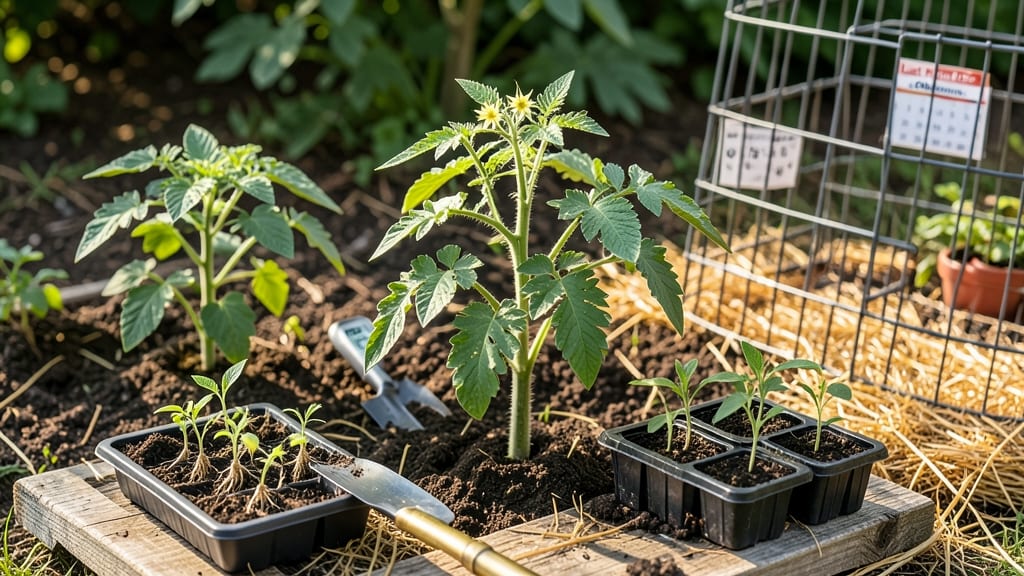
Timing when do you plant tomatoes in Oklahoma could mean the difference between a bumper crop of juicy 🍅 or a sad, wilted disappointment. With the state's unpredictable swings from frost to scorching heat, getting those seeds in the ground at just the right moment is everything.
Most Oklahoma gardeners in zones 7a-7b should wait until mid-April to early June to plant tomatoes after the last frost—typically around March 15—but there's more to it than just dates. Soil temperature plays a crucial role, and starting seeds indoors can give you a head start on the season.
Whether you're a first-time gardener or a seasoned pro, understanding these nuances will help you avoid common mistakes like planting too early and risking frost damage. I'll walk you through the exact steps, from seed starting to transplanting, so you can maximize your harvest from June through October.
Let's dive into the zone-specific deadlines and proven strategies that work for Oklahoma's climate, so you can enjoy homegrown tomatoes all season long without the guesswork.
Oklahoma planting zones: exact dates for transplanting vs. seed starting tomatoes
Oklahoma’s USDA zones 6b-8a create a unique challenge for tomato growers—late frosts in spring and sweltering summers demand precise timing. The key is planting after your average last frost date, which ranges from March 15 in southern Oklahoma to April 15 in the Panhandle.
For most gardeners, this means mid-April to early June for outdoor transplants, but seed starting indoors can begin much earlier.
I’ve grown tomatoes in Oklahoma City (Zone 7b) for years, and I’ve learned that soil temperature matters just as much as air temperature. Tomatoes won’t thrive until the soil reaches at least 60°F, which typically happens by late April in central Oklahoma and early May in northern regions.
Using a soil thermometer takes the guesswork out of timing—trust me, I’ve had too many sad seedlings from rushing it!
Here’s the golden rule: Wait until nighttime temperatures consistently stay above 50°F. This prevents cold shock, which stunts growth and invites disease. In Zone 7a (e.g., Tulsa), that’s usually mid-April, while in Zone 8a (e.g., Lawton), you can push it to early April.
Pro tip: Check the Oklahoma Mesonet for real-time soil temps if you’re unsure.
For direct sowing seeds outdoors, aim for 2-3 weeks after your last frost when soil is warm. But I always recommend starting seeds indoors 6-8 weeks before transplanting to give them a head start.
This is especially critical for heirloom varieties, which take longer to mature. My ‘Brandywine’ tomatoes need that extra time to develop their signature flavor!
| Zone & Location | Last Frost Date | Start Seeds Indoors | Transplant Outdoors | Direct Sow Outdoors |
|---|---|---|---|---|
| Zone 6b (e.g., Altus, Woodward) | April 15 | March 15 | May 1 | May 15 |
| Zone 7a (e.g., Tulsa, Stillwater) | March 30 | February 15 | April 15 | April 30 |
| Zone 7b (e.g., Oklahoma City, Norman) | March 15 | February 1 | April 1 | April 15 |
| Zone 8a (e.g., Lawton, Ardmore) | February 15 | January 15 | March 1 | March 15 |
Note: Adjust dates 1-2 weeks earlier for urban heat islands or later for high-altitude areas (e.g., Wichita Mountains).
Microclimates play a huge role in Oklahoma. If you’re gardening in urban areas like Oklahoma City, pavement and buildings can create heat islands that warm soil faster—sometimes 1-2 weeks earlier than rural areas. Conversely, higher elevations (e.g., near Tulsa) may need to wait 5-7 days longer for safe transplanting.
I once planted ‘Early Girl’ tomatoes in my city yard on March 28, and they thrived, while my friend in rural Zone 7a had to wait until April 10.
Don’t overlook succession planting for a longer harvest. In Oklahoma’s 90-day growing season, you can squeeze in 2-3 plantings: one in early April, another in mid-May, and even a late-June heat-tolerant variety like ‘Solar Fire’.
This ensures tomatoes from June through October. Just be prepared to shade young plants in July’s 100°F+ heat with row covers or shade cloth.
For container growing, start seeds indoors 8 weeks early since pots warm up faster and dry out quicker. I’ve had great success with ‘Tiny Tim’ tomatoes in 5-gallon buckets, planting them out by April 15 in Zone 7b.
The key is using self-watering containers and keeping them in protected spots (like near a south-facing wall) during unpredictable spring nights.
Always verify with Oklahoma State University Extension for county-specific advice. Their free frost date maps and local gardening guides are gold—especially if you’re new to the area. I cross-reference their data with my own 10-year planting journal to fine-tune my schedule every year. After all, Oklahoma
Tomato varieties that thrive in Oklahoma’s heat and humidity (with planting adjustments)
Oklahoma’s summer heat and humidity demand tomato varieties that resist disease and heat stress. While classic varieties like Beefsteak struggle, heat-tolerant hybrids and disease-resistant heirlooms thrive here. I’ve grown ‘Mountain Merit’ for 5 years—it’s my go-to for blight resistance and steady yields even when temps hit 100°F.
For early spring plantings (March-April), opt for cool-season varieties like ‘Stupice’ or ‘Cherokee Purple’, which tolerate light frosts better than most. But by mid-May, switch to heat-lovers like ‘Solar Fire’ or ‘Heatmaster’—these handle Oklahoma’s afternoon sun without wilting.
My late-June plantings of ‘Celebrity’ always produce until October.
🌱
🌿 Best Oklahoma Tomato Varieties
Early Season (March-April)
- ✅ ‘Stupice’ – Disease-resistant, cold-tolerant
- ✅ ‘Cherokee Purple’ – Heirloom, great flavor
- ✅ ‘Mountain Merit’ – Early producer, blight-resistant
Mid-Season (May-June)
- ✅ ‘Celebrity’ – Classic, reliable, disease-resistant
- ✅ ‘Better Boy’ – Large fruit, heat-tolerant
- ✅ ‘Arkansas Traveler’ – Heirloom, great flavor
Late Season (June-July)
- ✅ ‘Solar Fire’ – Heat-tolerant, red fruit
- ✅ ‘Heatmaster’ – Handles 100°F+ temps
- ✅ ‘Sun Gold’ – Cherry tomato, drought-resistant
Adjust your planting timeline based on the variety. Early-season types (like ‘Stupice’) can go in late March, while heat-lovers (like ‘Solar Fire’) should wait until mid-May when soil temps hit 70°F+.
I’ve even had success with succession planting—adding ‘Celebrity’ in early June for a fall harvest before frost.
Disease pressure in Oklahoma’s humid summers means pruning and airflow are critical. My ‘Mountain Merit’ plants get weekly pruning to remove lower leaves, and I mulch heavily with straw to prevent soil-borne diseases. For cherry tomatoes, I use cage supports to keep fruit off damp soil.
Pro tip: Save seeds from your best performers! Oklahoma’s microclimates (urban vs. rural) mean what works in Tulsa might differ from Oklahoma City. I’ve noticed ‘Arkansas Traveler’ does better in higher elevations (like Oklahoma’s panhandle), while ‘Better Boy’ thrives in lower, hotter areas near Lawton.
Experiment and keep notes!
☀️