
Plants
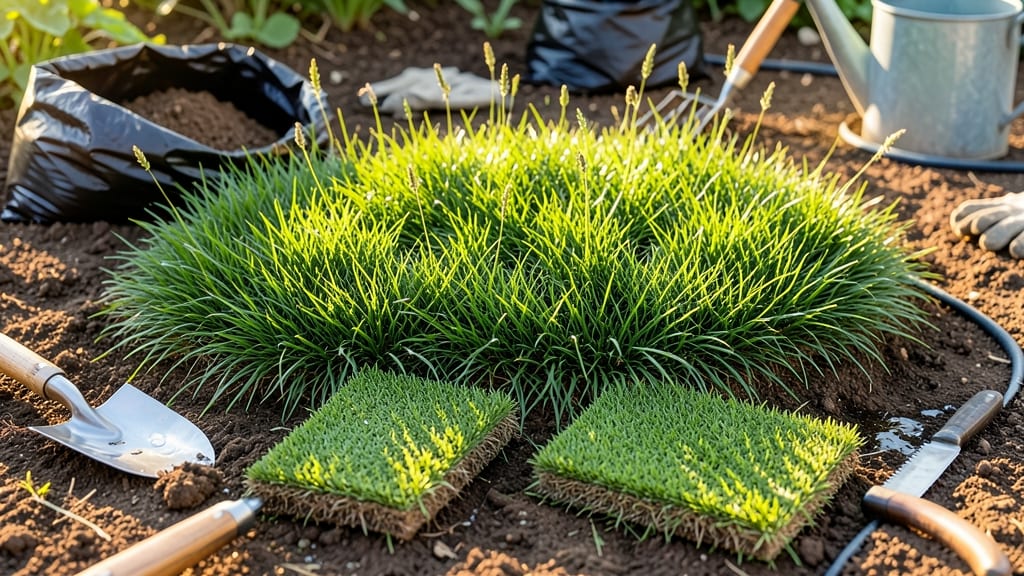
If you're dreaming of a lush, green lawn in Texas but planting your Bermuda grass 🌱 at the wrong time, you might as well be watering a desert—it won’t take.
The difference between a fast-growing carpet of grass and a patchy disaster often comes down to those few weeks when soil temps hit just right.
Texas’s 8a-10a zones mean your neighbors in North Texas and the Gulf Coast don’t share the same planting schedule—and getting it wrong can mean waiting another year for that perfect summer lawn.
Whether you’re in Dallas or Houston, timing your Bermuda grass seeds or sod for late spring to early summer (March–June) is the game-changer.
I’ll break down the exact months by region, so you can plant when the ground is warm enough (think 65°F+) and avoid the common mistakes that leave Texas lawns struggling. No more guessing—just a foolproof plan for a lawn that’s the envy of the block.
Let’s get your Bermuda grass off to the fastest, strongest start possible—because in Texas heat, the right timing isn’t just helpful, it’s essential.
Best planting months for Bermuda grass in Texas by region (north vs. Central vs. South)
Texas’s diverse climate means your Bermuda grass planting window varies dramatically by region. In North Texas (USDA Zones 7b-8a), aim for April to early May when soil temperatures hit 65°F+ consistently. This timing avoids late frosts while giving your grass a head start before summer heat peaks.
In Central Texas (Zones 8a-8b), you can plant as early as late March to April, while South Texas (Zones 9a-10a) gardeners can start in February to early March—just before the heat sets in.
Why the difference? Bermuda grass thrives in warm soil and direct sunlight, but planting too early in cooler regions risks frost damage.
For example, Dallas’s last frost typically falls around February 15, while Houston’s is often by January 15. Soil thermometers are your best friend—wait until readings show 75°F+ at 4-inch depth before planting.
For sod vs. seed, timing shifts slightly. Sod can handle warmer soil (up to 85°F) and establishes faster, so you can plant 1–2 weeks later than seeds.
Seeds, however, need consistent moisture and gentler heat to sprout—hence the earlier window. If you’re in West Texas, avoid planting before May to prevent heat stress during germination.
One common mistake? Assuming "spring" is a single month. In Texas, spring planting spans March to May, with April being ideal for most regions. For example, Austin’s perfect window is mid-April, while El Paso’s extends to June due to its high-desert climate.
Always check your local frost dates—the Texas A&M AgriLife Extension offers free frost maps for precise guidance.
After planting, water deeply 2–3 times weekly for the first 4 weeks to encourage root growth. Bermuda grass is drought-tolerant once established, but young roots need consistent moisture.
In South Texas, where humidity is high, water in the early morning to prevent fungal diseases. In West Texas, water late evening to reduce evaporation.
If you miss the ideal window, don’t panic! Bermuda grass can still be planted in late summer (August), though growth slows in fall. For a fall lawn, focus on overseeding with ryegrass instead.
And remember: Texas’s heat is your ally—Bermuda grass grows aggressively in summer, filling in bare spots faster than cool-season grasses.
For fastest establishment, pair planting with a slow-release fertilizer (like 16-4-8 NPK) and mulch lightly with straw to retain moisture. Avoid synthetic fertilizers early—they can burn tender seedlings.
With the right timing, your Bermuda grass can go from bare soil to lush green in just 6–8 weeks!
🌱
Best planting months for Bermuda grass in Texas by region (north vs. Central vs. South)
Texas’s diverse climate means your Bermuda grass planting schedule should match your region—North, Central, or South. Planting too early risks frost damage, while waiting too long means slower establishment in scorching summer heat. The golden window? When soil temps hit 65°F+ and stay warm.
For North Texas (USDA Zones 8a-8b), aim for April–May. This gives seeds time to germinate before peak summer heat arrives. In Central Texas (Zones 8b-9a), shift to March–April—warmer soils mean faster sprouting.
Down in the South (Zones 9b-10a), you can plant as early as February–March.
🌱Pro Tip: Use a soil thermometer—Bermuda grass needs consistent warmth to thrive. If temps dip below 60°F, germination slows dramatically.
If you’re planting sod instead of seeds, adjust your timeline slightly—sod establishes 2–3 weeks faster than seeds. For North Texas, lay sod in late April–early May; in South Texas, March works perfectly. The key? Consistent moisture for the first 30 days post-planting.
🌡️Watch Out: West Texas (e.g., Lubbock) has harsher drought conditions. Plant in early April and mulch heavily to retain moisture—Bermuda grass here needs extra care to survive.
Timing your Bermuda grass right isn’t just about months—it’s about soil warmth, rainfall patterns, and even local microclimates. Check your last frost date (typically February 15 in North Texas, January 1 in South Texas) and plant 6–8 weeks after for best results.