
Plants
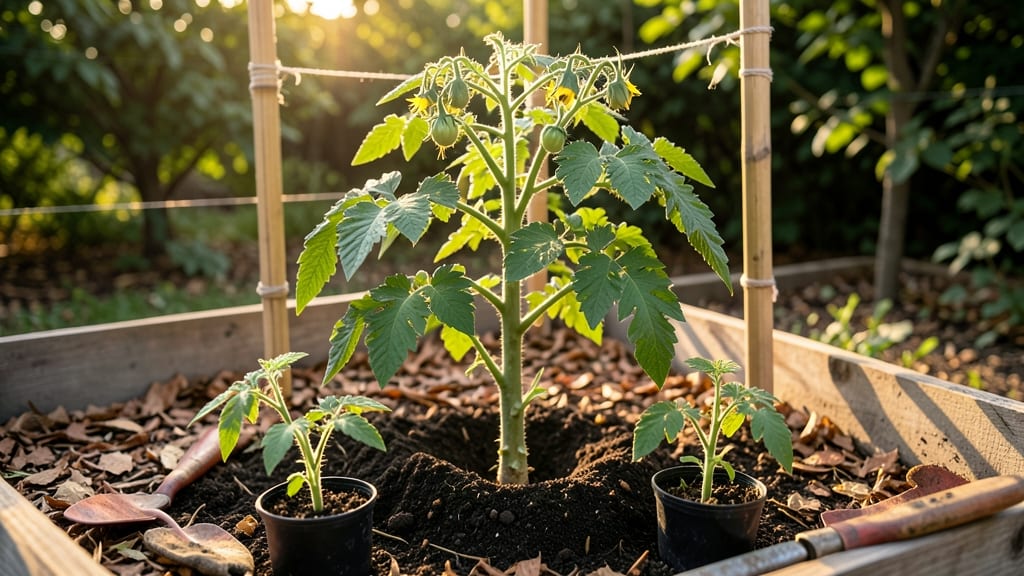
When is the best time to plant tomatoes in Georgia? If you're dreaming of juicy, vine-ripened 🍅 tomatoes straight from your garden, timing is the game-changer you can't afford to mess up. Planting too early risks frost damage, while waiting too long might leave you with stunted plants and fewer harvests—neither scenario ends with the bounty you crave.
Georgia's unique climate, spanning USDA zones 7b-8b, means the perfect planting window varies dramatically from north to south. Whether you're in the cooler mountains or the warmer coastal plains, knowing your county's frost-free dates could mean the difference between a thriving tomato patch and a sad, struggling one.
I'll walk you through the exact frost-free windows for both spring and fall planting, plus how to adjust for early vs. late varieties.
You'll discover why late February to early April works for most gardeners, but also when a fall harvest in late July or August could give you a second chance at tomato success.
Ready to avoid common mistakes like planting too soon or ignoring heat tolerance? Let's dive into the strategies that'll have your tomatoes flourishing all season long—because in Georgia, the right timing turns good gardens into great ones.
Georgia’s frost-free dates by county: the exact window for planting tomatoes
Georgia’s diverse climate means your tomato planting window varies dramatically—from North Georgia’s cooler highlands to South Georgia’s subtropical heat. Understanding your last spring frost and first fall frost dates is critical, as tomatoes thrive in warm soil (60°F+) and consistent temperatures above 50°F.
The USDA Zones 7b-8b in Georgia give us roughly 210 frost-free days, but local microclimates can shift planting by 2-4 weeks.
For most Georgia counties, the optimal tomato planting window spans late February to early April for spring harvests and late July to early August for fall crops.
However, North Georgia gardeners (e.g., Dahlonega, Blue Ridge) often wait until mid-April due to later frosts, while South Georgia (e.g., Albany, Valdosta) can start as early as February 15 under row covers.
Always check your local extension office for precise dates—because a single late frost can wipe out seedlings overnight.
Below is a county-by-county breakdown of Georgia’s frost-free windows, tailored to help you pinpoint the 60-day planting window for your tomato varieties. This table includes last spring frost, first fall frost, and recommended transplanting dates for both spring and fall plantings.
Use it to align your seed-starting indoors (6-8 weeks before last frost) or direct sowing outdoors (after soil warms to 60°F).
| Region | Last Spring Frost | First Fall Frost | Spring Planting Window | Fall Planting Window |
|---|---|---|---|---|
| North Georgia (e.g., Fannin, Gilmer, Hall) | March 25 - April 5 | November 5 - November 15 | April 15 - May 15 | July 20 - August 10 |
| Central Georgia (e.g., Athens, Macon, Warner Robins) | March 15 - March 25 | November 10 - November 20 | March 30 - April 15 | July 10 - July 30 |
| South Georgia (e.g., Albany, Valdosta, Savannah) | February 20 - March 10 | November 20 - December 5 | February 28 - March 20 | July 1 - July 20 |
| Coastal Georgia (e.g., Brunswick, Camden, Chatham) | February 15 - February 25 | December 1 - December 15 | February 15 - March 10 | June 20 - July 10 |
*Dates are averages—check local weather for real-time adjustments.
Pro tip: Use black plastic mulch to warm soil 5-10°F faster, letting you plant 2-3 weeks earlier in spring or extend fall harvests. For North Georgia’s shorter season, opt for early-maturing varieties (e.g., ‘Early Girl’ (55 days)) or cherry tomatoes (e.g., ‘Sweet 100’ (60 days)).
In South Georgia’s longer heat, heat-tolerant types like ‘Heatmaster’ or ‘Solar Fire’ thrive through summer’s 90°F+ temps.
Georgia’s fall frost dates are equally critical. If you plant tomatoes in late July or August, aim to harvest before mid-November in North Georgia or early December in South Georgia.
For a second fall crop, start seeds indoors in June and transplant by July 15, using row covers to protect against early chills. This succession planting trick can give you two harvests per year—one in summer and another in fall.
Don’t overlook soil temperature—it’s just as important as air temperature. Tomatoes won’t germinate below 50°F, and roots struggle to absorb nutrients below 60°F. Use a soil thermometer to confirm readiness.
In North Georgia, soil may linger in the 40s°F well into April, while South Georgia soils can hit 65°F+ by late February.
How to adjust planting time for early vs. late varieties in Georgia’s climate
Georgia’s humid subtropical climate creates unique challenges for tomato growers. While spring planting is ideal for early varieties, fall planting extends your harvest season—if done correctly. The key is matching your tomato variety to Georgia’s heat zones and adjusting planting times accordingly.
For cool-season varieties like 'Celebrity' or 'Better Boy,' aim to plant 4-6 weeks before your last frost date (typically March 15-April 15 in most counties). These varieties thrive in 60-75°F soil and produce best when temperatures stay below 85°F during fruiting.
Heat-tolerant varieties like 'Solar Fire' or 'Heatmaster' can handle Georgia’s summer heat waves (90°F+). These should be planted late July-August for a fall harvest before the first frost (mid-November). The trick? Use black plastic mulch to warm soil faster and row covers to protect young plants from late-summer pests.
Spring Planting (Early Varieties)
- ✅ Pros: Longer growing season, higher yields
- ✅ Best for: 'Early Girl,' 'Stupice' (cherry)
- ✅ Soil temp: 60-75°F (use row covers if needed)
Fall Planting (Late Varieties)
- ✅ Pros: Avoids summer pests, extends harvest
- ✅ Best for: 'Solar Fire,' 'Heatmaster' (heat-tolerant)
- ✅ Soil temp: 70-80°F (use black plastic mulch)
If you’re in North Georgia (USDA Zone 7b), focus on spring planting with cold-hardy varieties like 'Mountain Merit.' For South Georgia (Zone 8a/8b), you can experiment with succession planting: start a spring batch (March) and a fall batch (July) for continuous harvests.
Pro tip: Use a soil thermometer to confirm soil temps before planting. Tomatoes won’t thrive in cold soil—wait until it consistently hits 60°F at a 4-inch depth. In cooler microclimates (like mountain regions), consider greenhouse starts or straw bale gardens to jumpstart growth.
Finally, don’t overlook watering strategies. Drip irrigation or soaker hoses keep roots consistently moist without wetting foliage (which spreads disease). In fall plantings, reduce watering slightly as temps drop to prevent blossom end rot.