
Plants
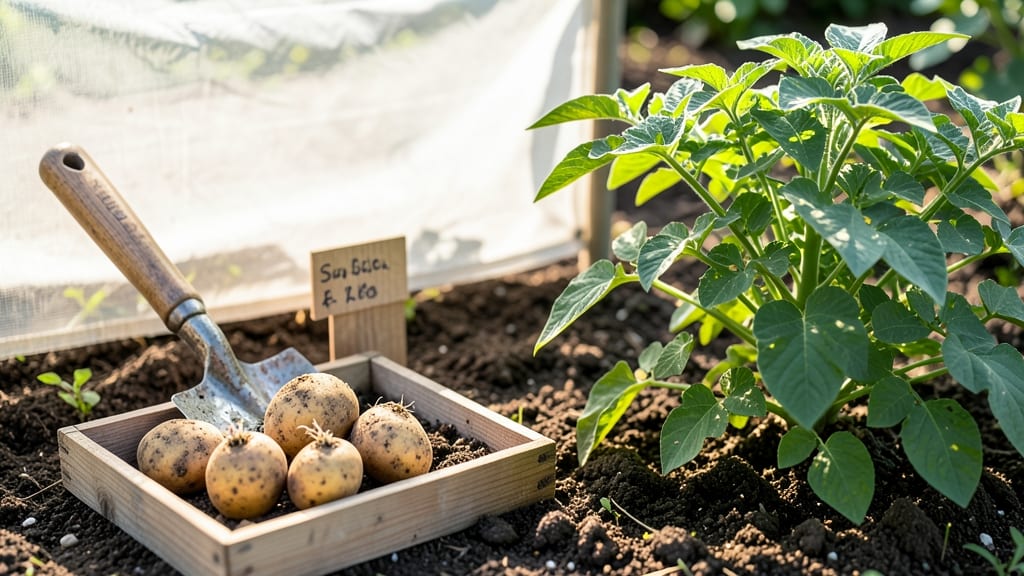
If you’ve ever stared at a bag of seed potatoes wondering when should you plant potatoes in Michigan—only to freeze when the first frost warning hits—you’re not alone.
Michigan’s unpredictable spring weather makes timing everything for a bountiful 🥔 harvest, and getting it wrong can mean wasted effort (or worse, a crop lost to frost).
The good news?
With the right strategy, you can plant potatoes 4-6 weeks before your last frost date—whether you’re in Detroit’s warmer Zone 6b or the cooler Upper Peninsula’s Zone 5b. That window typically opens in early April for southern Michigan and stretches into late April for northern regions, but soil temperature (not just calendar dates) is the real game-changer.
In this guide, I’ll break down exactly when to plant for your specific zone, how to adjust for early vs. late varieties, and pro tips to extend your growing season—so you can avoid the three mistakes that ruin Michigan gardens every year.
Let’s get those spuds in the ground the right way.
From soil prep to frost-proofing, we’ll cover everything you need to know to turn your potato patch into a high-yield success—no matter where you are in the Mitten State.
Michigan potato planting deadlines by USDA hardiness Zone (with frost-free date maps)
Michigan’s USDA Hardiness Zones 4b-6a create a 3-week difference in ideal potato planting windows. Southern Michigan (Detroit, Kalamazoo) can plant as early as mid-March, while the Upper Peninsula (Marquette, Houghton) waits until late April.
The key is planting 4-6 weeks before your last frost date, not just guessing by calendar dates.
For precise timing, use the Michigan State University Extension’s frost-free maps or check NOAA’s Local Climate Data. In Zone 5b (Grand Rapids), aim for early to mid-April—any earlier risks cold soil damage to sprouting tubers.
Northern zones like Zone 4b (Marquette) should wait until late April to early May when soil temps hit 45°F.
| Zone | Last Frost Date | Planting Window | Soil Temp Goal | Key Cities |
|---|---|---|---|---|
| 5b-6a | Mid-April | Early to mid-April | 45°F+ | Detroit, Kalamazoo, Lansing |
| 5a | Late April | Late April | 45°F+ | Grand Rapids, Traverse City |
| 4b | Early May | Late April to early May | 45°F+ | Marquette, Houghton, Sault Ste. Marie |
Pro tip: Use a soil thermometer to confirm readiness—potatoes won’t sprout until soil hits 45°F.
In southern Michigan, this often aligns with late March to early April, while northern areas may need to wait until mid-May for consistent warmth. Cold soil delays germination and invites disease risks like scab.
For early harvests, plant early varieties (e.g., ‘Yukon Gold’) in late March under row covers to extend the season. In Zone 6a (Detroit), this can push first harvests to early July. Conversely, late varieties (e.g., ‘Russet’) planted in early May yield in September, ideal for storage.
Michigan’s unpredictable springs mean flexibility is key. If frost threatens after planting, use lightweight row covers or straw mulch to protect sprouts. The Michigan State University Extension recommends tracking 32°F overnight temps—if they dip below this, cover your crop immediately.
Don’t rely solely on calendar dates. Check NOAA’s Local Climate Data or your local Cooperative Extension office for historical frost dates. For example, Traverse City (Zone 5a) averages its last frost on May 10th, so plant 4-6 weeks prior—by late March to early April.
If you’re in Zone 4b (Upper Peninsula), consider starting seed potatoes indoors in late February under grow lights. Transplant outdoors after the last frost, but avoid planting after June 1st—potatoes need 90-120 days to mature, and late plantings won’t yield before frost.
For container growing, plant 2-3 weeks earlier than in-ground potatoes since pots warm faster. Use 5-gallon buckets with drainage holes and plant 2 seed potatoes per container. Place containers in full sun and monitor soil moisture closely—containers dry out faster.
Remember: Potatoes hate heat during tuber formation. In southern Michigan, plant early varieties by late March to avoid July heat stress, which reduces yield. Northern zones have more leeway but still risk short growing seasons—prioritize early-maturing varieties like ‘Red LaSoda’ (70 days) over ‘Kennebec’ (110 days).
How to adjust planting time for early vs late varieties (and avoid common Michigan mistakes)
Michigan’s diverse climate zones mean your potato planting window depends on both variety type and last frost date. Early varieties like red potatoes (e.g., 'Red Pontiac') can handle cooler soils, while late varieties like russets (e.g., 'Kennebec') need warmer temperatures to thrive.
Planting the wrong variety at the wrong time is a recipe for disappointment—especially in Michigan’s unpredictable springs.
For Zone 6b (southern Michigan), aim to plant early varieties 4-5 weeks before last frost (typically mid-March to early April). Mid-season varieties like Yukon Gold go in 2-3 weeks before last frost (late March to mid-April), while late varieties wait until after last frost (early to mid-April).
In Zone 5b (northern Michigan), shift these dates 2-3 weeks later to avoid frost damage.
🚨 CRITICAL MISTAKE #1: Ignoring Soil Temperature 🚨
Potatoes won’t sprout until soil reaches 45°F (7°C). A soil thermometer is your best friend—planting too early in cold soil leads to rotten seed potatoes and stunted growth. In Michigan, this often means waiting until late April in the north or early April in the south, even if calendar dates suggest earlier planting.
⚠️ 3 Michigan-Specific Planting Mistakes to Avoid
- Overcrowding: Planting too close (less than 12 inches apart) leads to small, misshapen tubers and disease spread.
- Shallow planting: Burying seed potatoes less than 4 inches deep exposes them to frost heave and light-induced greening (toxic solanine buildup).
- Planting after last frost: Late varieties like russets need 90-120 days to mature—planting them after mid-May risks unripe harvests before frost.
Pro Tip: Use row covers for early planting to protect from late frosts!
For early varieties, aim for a 60-70 day harvest (plant by April 1 in Zone 6b to harvest by June 10). Mid-season varieties (70-90 days) should be in the ground by April 15 in Zone 6b or May 1 in Zone 5b, while late varieties (90-120 days) need to go in by May 1 in Zone 6b or May 15 in Zone 5b to avoid early frost.
Michigan’s short growing season demands smart variety selection. Early varieties (e.g., 'Early Rose') are ideal for northern gardens or succession planting, while mid-season types (e.g., 'Yukon Gold') balance yield and timing. Late varieties (e.g., 'Russet Burbank') are risky in Zone 5b unless you use row covers or cold frames to extend the season.
Always check Michigan State University Extension for your local frost dates—they update annually based on NOAA data. And remember: soil temperature > calendar dates. A warm April day doesn’t mean your soil is ready—wait for that 45°F threshold before planting.