
Plants
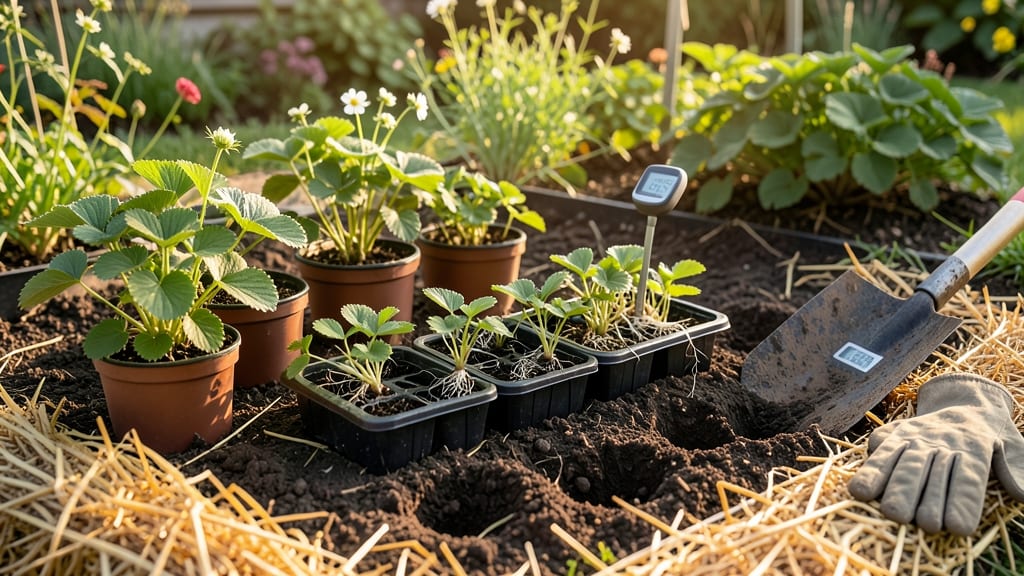
Timing your strawberry 🍓 planting in Ohio isn’t just about the calendar—it’s about matching your plants to the state’s unpredictable frost dates and chill-hour needs. Get it wrong, and you might end up with stunted plants or no harvest at all.
But nail it, and you’ll enjoy juicy berries from June through August (or even later with fall planting).
The key is planting between March and April for spring harvests or September and October for a fall-to-winter bounty. Ohio’s USDA Zone 6a climate means you’ll need to balance early warmth with late frosts, especially in northern regions where cold snaps linger longer.
Whether you’re a first-time gardener or a seasoned pro, these timing tips will help you avoid common mistakes and maximize your yield.
We’ll break down exactly when to plant based on your location—whether you’re in Columbus, Cincinnati, or Cleveland—and which varieties thrive best in Ohio’s soil. Plus, I’ll share my top tricks for preparing the ground, protecting young plants, and keeping your strawberries productive for years.
Ready to turn your garden into a berry patch?
Let’s dive into the best planting windows, soil prep secrets, and care routines that’ll have your strawberries flourishing like never before. No more guesswork—just sweet, homegrown success!
Ohio’s strawberry planting zones: matching chill hours for maximum yields
Ohio’s diverse climate—from the cold northern regions near Lake Erie to the milder southern areas—means not all strawberry varieties thrive equally. The key to success? Matching your planting zone with the chill hours your strawberries need.
June-bearing varieties typically require 300-900 chill hours, while everbearing types need 300-600 chill hours to produce fruit reliably.
Northern Ohio (USDA Zones 5b-6a) often experiences harsher winters and later springs, while southern Ohio (Zones 6a-7a) enjoys warmer microclimates and extended growing seasons.
For example, Chandler and Jewel varieties excel in northern Ohio, while Seascape and Albion do better in southern regions due to their lower chill-hour requirements.
Here’s how to align your planting with Ohio’s microclimates and chill-hour needs for the best yields. The comparison below breaks down the best varieties for each region and their ideal planting windows.
| Region | USDA Zone | Chill Hours Needed | Best Varieties | Planting Window | Notes |
|---|---|---|---|---|---|
| Northern Ohio | 5b-6a | 700-900 | Chandler, Jewel, Honeoye | March 15-April 15 | Longer dormancy; protect from late frosts. |
| Southern Ohio | 6a-7a | 300-600 | Seascape, Albion, Fort Laramie | March 1-April 30 | Warmer winters; everbearing types thrive. |
| Central Ohio | 6a | 500-700 | Ozark Beauty, Sparkle | March 15-April 15 | Versatile; works for both seasons. |
For gardeners in northern Ohio, focus on June-bearing varieties like Chandler, which require 700-900 chill hours to set fruit. Plant these in late March to mid-April to avoid early spring frosts.
In southern Ohio, everbearing types like Seascape (only 300-600 chill hours) can produce fruit twice a year if planted in early spring or fall.
Ohio’s microclimates can vary even within cities. For example, areas near Lake Erie may experience cooler temperatures and delayed springs, while inland regions like Columbus often see earlier last frost dates.
Always check your local frost-free date (typically mid-April in most of Ohio) and adjust your planting timeline accordingly.
If you’re unsure about your chill hours, use a chill-hour calculator or consult your local Ohio State University Extension office. They can provide hyperlocal advice based on your specific county. For instance, Cleveland’s chill hours often exceed 900, while Cincinnati’s may dip below 600, making some varieties unsuitable.
Pro tip: Bare-root plants are ideal for Ohio gardeners because they establish roots quickly in cool spring soil. If you opt for potted strawberries, plant them 2-4 weeks earlier to give roots time to adjust before the growing season kicks in.
Once you’ve matched your variety to your zone, the next step is preparing your soil. Strawberries thrive in well-draining, slightly acidic soil (pH 5.5-6.5). Amend your soil with compost or peat moss to improve fertility and drainage, especially in clay-heavy soils common in northern Ohio.
🌱
Step-by-step planting timeline: Ohio’s spring vs. fall planting window
Ohio gardeners have two prime windows to plant strawberries: spring (March-April) for a summer harvest and fall (September-October) for berries next year. The key is working 4-6 weeks before your last frost date—typically around April 15 in most of Ohio.
For fall planting, aim for 6 weeks before the first frost (mid-October), giving roots time to establish before winter.
Spring planting gives you a June-August harvest, while fall-planted berries ripen July-September of the following year. Both methods work in Ohio, but your choice depends on whether you prefer a single big harvest or staggered production.
I recommend starting with both seasons to spread out your berry bounty and reduce pest pressure.
Here’s my proven month-by-month