
Plants
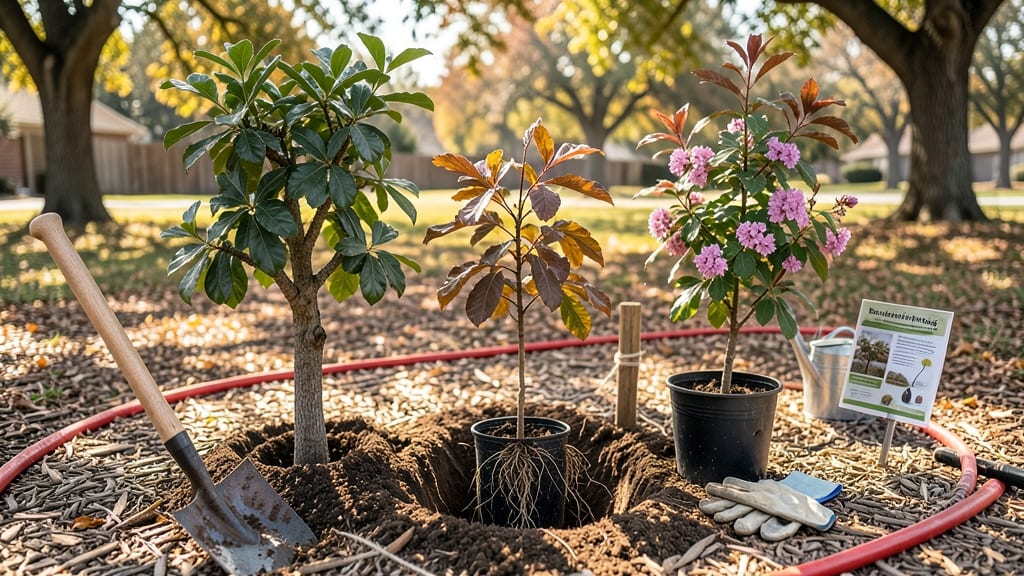
Timing your tree planting in Texas isn't just about picking a season—it's about beating the brutal heat, unpredictable freezes, and diverse microclimates that can make or break your sapling's survival. One wrong move, and your 🌳 could struggle before it ever gets a chance to thrive.
Texas isn't one-size-fits-all when it comes to planting. Whether you're in frost-prone North Texas or the warmer southern regions, the best months shift dramatically. What works in Zone 8a might fail spectacularly in Zone 10a, and planting too early or late can leave your tree vulnerable to extreme conditions.
I've seen firsthand how proper timing can transform a struggling tree into a thriving giant. In this guide, I'll break down exactly when to plant—from the ideal fall window to the perfect early spring timing—plus regional adjustments that make all the difference.
You'll also discover the critical mistakes that kill new trees in Texas heat, plus species recommendations that actually survive our unpredictable climate. Let's get your tree off to the right start—because in Texas, timing really is everything.
Texas tree planting calendar by region: best months for survival
Texas isn’t one-size-fits-all when it comes to planting trees. The state’s USDA hardiness zones 8a-10a create dramatic differences in frost timing, soil types, and heat intensity. For example, North Texas (like Dallas) faces late spring frosts, while South Texas (like Brownsville) can plant year-round with minimal risk.
Let’s break down the ideal planting windows by region to maximize your tree’s survival chances.
Timing matters because trees planted in Texas heatwaves (June-August) struggle to establish roots before drought stress sets in. Meanwhile, late fall plantings risk winter dieback if frozen before roots anchor.
The sweet spot? Fall (October-November) and early spring (February-March) when soil stays cool and moisture is consistent.
Here’s the region-by-region breakdown of optimal planting months, accounting for frost dates and soil conditions:
For urban areas (e.g., Austin, Dallas), planting in fall gives roots time to establish before summer heat. In rural zones, like the Panhandle, early spring planting avoids late frosts. Pro tip: Check your local AgriLife Extension office for hyper-local frost data—microclimates can shift planting windows by weeks!
Soil prep varies by region too. In North Texas, amend clay soil with compost. In West Texas, add organic matter to sandy soils. Always plant 2-3 inches deeper than the root ball to encourage root spread.
Skip planting in extreme heat—even native trees like Live Oaks struggle when soil temps exceed 90°F.
Watering schedules also differ. In South Texas, deep watering every 10-14 days suffices, while North Texas may need weekly deep soaks during summer. Use a moisture meter to avoid overwatering—Texas droughts can turn into floods overnight!
Native trees like Texas Redbud or Eastern Red Cedar thrive in these conditions, but non-natives (e.g., Crape Myrtle) need extra care. Always mulch 3 inches deep and keep mulch 6 inches from the trunk to prevent rot. 🌳
Remember: The first 2 years are critical. A tree planted in optimal months with proper soil and water will outpace one planted at the wrong time by 3-5 years. Start with the right timing, and your tree will thank you for decades.
Critical mistakes that kill newly planted trees in Texas heat
Even with the perfect planting timing, Texas's extreme conditions can turn a healthy sapling into a statistic if you make these common mistakes. I’ve seen 🌳 owners lose trees to simple oversights—don’t let this happen to yours.
First, overwatering is the silent killer. Texas soil drains fast, and too much water suffocates roots. Many new planters drown their trees thinking they need constant moisture—wrong. Deep, infrequent watering is key, especially in summer.
Ignoring root flare depth is another fatal error. Burying the root flare (where roots meet the trunk) strangles growth. Always plant so the flare sits 1-2 inches above soil level. I’ve dug up trees planted too deep—they’re fighting for air.
Here’s what you must avoid to give your tree a fighting chance in Texas heat:
Texas Tree Planting Pitfalls
Another deadly mistake? Planting too close to structures. Trees need room to breathe—roots spread 1.5x the canopy width. I’ve seen sidewalks crack and foundations shift because of aggressive root systems.
Finally, neglecting post-planting care seals a tree’s fate. Stake young trees only if necessary (windy areas), and prune dead branches immediately. A little attention now prevents years of struggle later.
Texas trees don’t forgive mistakes—but they thrive when given the right care. Avoid these pitfalls, and your sapling will grow into a towering giant instead of a sad statistic. 🌿