
Plants
Timing your alfalfa planting in Missouri could mean the difference between a thriving crop and a disappointing yield. This hardy legume 🌱 thrives in the Show-Me State's zones 5b-6b, but getting the window right—whether it's early spring or late summer—is everything.
Missouri's climate swings from chilly northern springs to balmy southern summers, making alfalfa's planting schedule more of an art than a science. Too early, and frost will nip your seedlings; too late, and you'll miss the optimal growing window before summer heat sets in.
I've seen firsthand how a well-timed planting can turn your field into a nitrogen-rich powerhouse, while poor timing leaves you scratching your head over stunted growth. Let me walk you through the exact frost-free windows and regional adjustments that work best for Missouri farmers.
From soil temperature checks to variety selection, you'll discover the game-changing strategies that keep alfalfa productive for years. Ready to unlock your best harvest yet?
Missouri alfalfa planting dates by USDA hardiness Zone (with frost risk charts)
Alfalfa thrives in Missouri’s USDA Zones 5b-7a, but timing your planting is everything. The Show-Me State’s northern regions (Zone 5b) face earlier frosts, while southern areas (Zone 7a) enjoy longer growing seasons.
Plant too early, and frost will kill tender seedlings; too late, and your alfalfa won’t establish before winter. Let’s break down the ideal frost-free windows for each zone to maximize your yield.
Missouri’s last spring frost typically occurs between mid-April (north) and early April (south), while the first fall frost arrives around mid-October (north) to late October (south). These dates create a 180-day frost-free window—the perfect timeline for alfalfa’s 2-3 year growth cycle.
However, your exact planting window depends on your specific zone and microclimate.
Here’s how Missouri’s three key USDA zones differ in frost risk and planting windows:
| Zone | Last Spring Frost | First Fall Frost | Ideal Planting Window | Backup Window | Key Risk |
|---|---|---|---|---|---|
| Zone 5b (Northern MO) | April 15–May 1 | October 15–20 | April 15–May 10 | July 15–August 15 | Late frosts in May |
| Zone 6a (Central MO) | April 1–April 15 | October 20–30 | April 1–May 1 | July 1–August 10 | Heatwaves in July |
| Zone 7a (Southern MO) | March 15–April 1 | November 1–10 | March 15–April 15 | July 10–August 20 | Early fall frosts |
*Adjust dates 1–2 weeks earlier for high-elevation areas or later for urban heat islands.
For Zone 5b gardeners, I recommend planting early April to give seedlings time to establish before potential late frosts. If you miss this window, your backup option is late summer (July 15–August 15), but seedlings may struggle to mature before winter.
In Zone 6a and 7a, you’ve got a slightly longer window—plant between March 15 and April 15 for spring or July 1–August 20 for a fall crop.
Missouri’s northern zones (5b) are most vulnerable to late spring frosts, which can devastate young alfalfa plants. To mitigate this risk, use frost cloth or plant in microclimates like south-facing slopes where frost collects less.
In southern zones (7a), the bigger threat is early fall frosts, so aim to plant your fall crop by August 15 to ensure seedlings have time to establish before winter.
Pro tip: Check your local USDA Plant Hardiness Zone Map for precise frost dates. Missouri’s northern border (Zone 5b) can have 10–14 days earlier frosts than the southern border (Zone 7a).
Even within zones, elevation matters—higher areas (like the Ozarks) may need 1–2 weeks earlier planting than flatter regions.
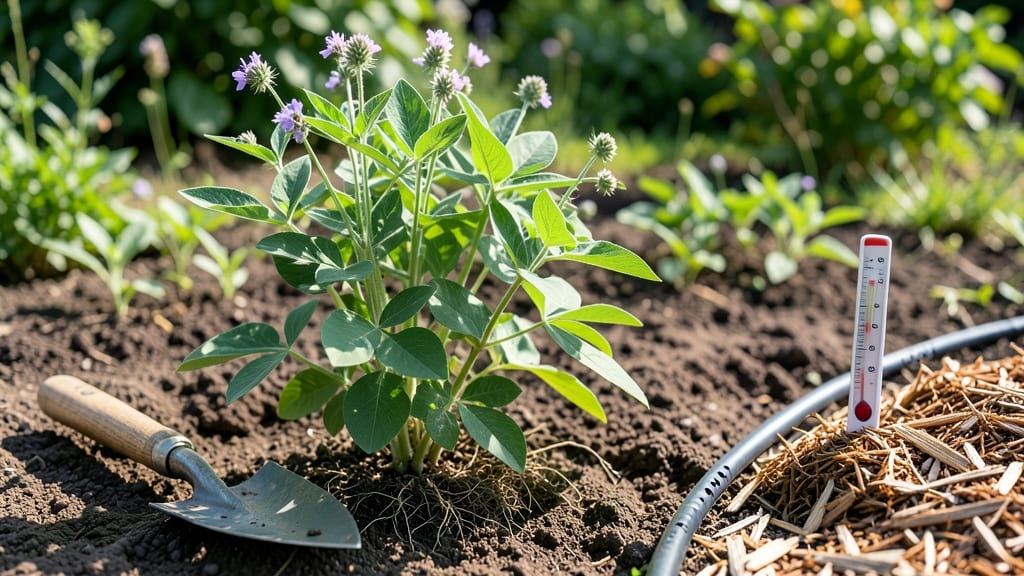
Alfalfa’s soil temperature preference is another critical factor. Seeds won’t germinate well below 50°F (10°C), so wait until the soil warms to at least 55°F (13°C) in spring or 60°F (16°C) in fall. Use a soil thermometer to avoid guessing—this tool is a game-changer for Missouri’s unpredictable springs.
Remember, alfalfa is a perennial crop, meaning it will regrow for 3–5 years if planted correctly. Getting the timing right in year one sets the stage for high-yield harvests in subsequent seasons. Don’t rush—wait for those frost-free signs (like consistent 50°F nights) before committing to planting.
For Zone 6a gardeners (the majority of Missouri), I’ve found that planting April 1–15 strikes the best balance. This window gives seedlings enough time to develop deep roots before summer heat arrives, while still avoiding late frosts.
If you’re in southern Missouri (Zone 7a), you can push planting to March 15—just be prepared to protect young plants if an unexpected frost rolls in.
🌱
Missouri alfalfa planting dates by USDA hardiness Zone (with frost risk charts)
Missouri spans USDA Zones 5b-7a, and your alfalfa planting window shifts dramatically between these regions. In Zone 5b (northern Missouri), your last frost typically arrives around April 15-30, while Zone 7a (southern Missouri) sees frost-free conditions by March 15-25.
These dates create a 3-week window difference—enough to make or break your crop's early growth.
For optimal success, aim to plant alfalfa 4-6 weeks before your last frost date. This gives seedlings time to establish roots before summer heat arrives. In northern Missouri, that means mid-March to early April, while southern regions can start as early as late February.
Missouri's unpredictable spring weather—like the infamous April snowstorms—can delay planting. I recommend using soil thermometers to confirm temperatures reach 50°F (10°C) consistently before sowing. This simple tool has saved me from planting too early in chilly springs.
| Zone | Last Frost | Ideal Planting Window | Frost Risk After Planting |
|---|---|---|---|
| 5b (North) | April 15-30 | Mid-March to early April | High (late frosts common) |
| 6a (Central) | April 1-15 | Late February to March | Moderate (occasional late frosts) |
| 7a (South) | March 15-25 | Late February | Low (rare frosts after March) |
Late summer planting (July-August) is your second chance for alfalfa success, especially in northern Missouri. This window works because alfalfa's deep taproot system helps it survive summer droughts better than many crops. However, avoid planting after August 15—you risk seedlings struggling to establish before the first frost in October.
Pro tip: In Zone 6b and above, consider a fall planting in early September. The cooler temperatures reduce weed competition, and established seedlings can handle early winter frosts better than spring-planted crops. Just be sure to use cold-hardy varieties like 'Moapa' for this approach.
Missouri's microclimates mean your neighbor's perfect planting time might not work for you. Always check local frost-free date averages from your county extension office—they'll have data specific to your elevation and soil type. A little extra research now saves headaches later.