
Trees
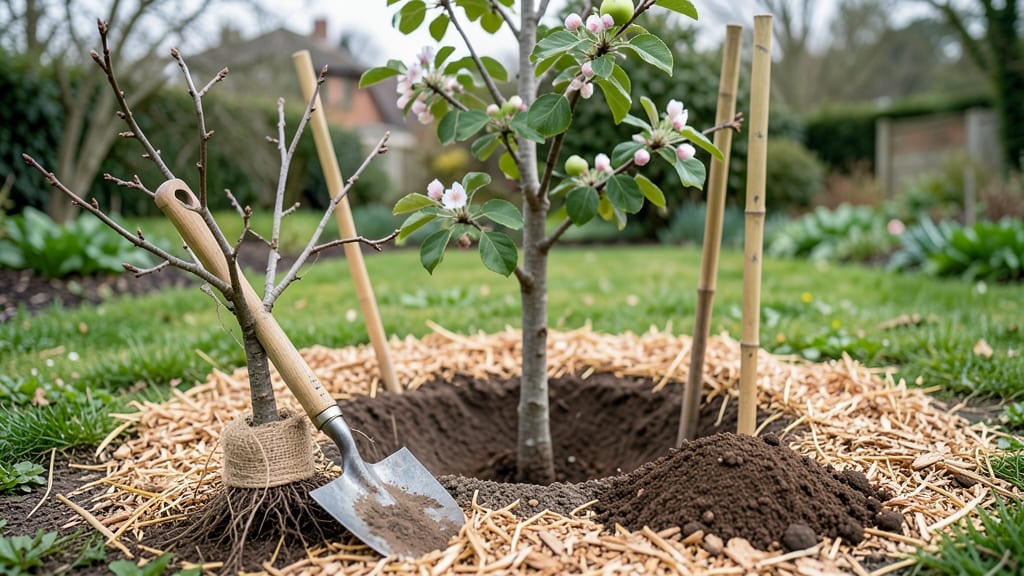
If you're dreaming of a homegrown apple harvest in England, timing your 🍎 tree planting is the single most important step—get it wrong, and frost or poor root growth could ruin years of effort.
The secret lies in understanding England's regional microclimates, where coastal areas stay milder than inland zones, and autumn planting often outperforms spring in many parts of the country.
I've helped countless UK gardeners navigate this tricky balance, and what I've learned is that there's no one-size-fits-all answer. While spring planting gets all the attention, autumn offers cooler soil temperatures that reduce transplant shock—a game-changer for young trees.
The key is knowing exactly when to dig in your specific region, whether you're in frost-prone Yorkshire or the milder West Country.
What sets successful apple growers apart isn't just picking a season—it's preparing the ground properly and choosing the right varieties for your local climate.
We'll cover all this and more, including how to tell when your soil is ready for planting and which apple types thrive best when planted at the optimal time. Let's get your orchard off to the perfect start.
From soil preparation to post-planting care, I'll walk you through every step to ensure your new tree establishes strong roots before winter arrives.
Whether you're a first-time grower or looking to expand your orchard, these insights will help you avoid common mistakes and maximize your chances of a fruitful harvest for years to come.
Best planting months for apple trees by England’s climate regions
England’s climate varies dramatically from the mild coastal regions of Cornwall to the colder inland areas of Yorkshire. These differences mean your apple tree planting window should align with your local frost patterns and soil conditions.
For most of England, autumn (October-November) and early spring (March-April) are the safest periods, but regional nuances make all the difference.
In Southern England, where winters are milder, you can push planting into late autumn (November) or even early December for bare-root trees. The soil stays workable longer, and frost risk is lower than in northern regions.
However, avoid planting when hard frosts are forecasted, as young roots are vulnerable. For container-grown trees, you have slightly more flexibility, as their roots won’t dry out as quickly.
Moving north to Central England, the window narrows. Here, autumn planting (October) is ideal, but by November, the ground can freeze, stalling root growth. Spring planting in March-April is your backup, but avoid late April, when late frosts can damage emerging buds.
Varieties like Braeburn or Cox’s Orange Pippin thrive here when planted in these optimal windows.
Northern England and upland areas like the Lake District or Yorkshire Dales demand extra caution. Plant bare-root trees in October to allow roots to establish before winter, but never after mid-November. Spring planting here must wait until April, after the last frost date—typically mid-April in these regions. Cider apple varieties, like Dabinett, are well-suited to these cooler climates when planted correctly.
🌱
| Region | Best Planting Window | Soil Temp. Goal | Frost Risk | Ideal Varieties |
|---|---|---|---|---|
| Southern England | Oct-Nov (autumn) or Mar-Apr (spring) | 5-10°C (41-50°F) | Low (mild winters) | Gravenstein, Egremont Russet |
| Central England | Oct (autumn) or Mar-Apr (spring) | 4-8°C (39-46°F) | Moderate (late frosts) | Braeburn, Cox’s Orange Pippin |
| Northern England | Oct (bare-root only) or Apr (spring) | 3-7°C (37-45°F) | High (early frosts) | Dabinett, Foxwhelp |
| Upland Areas | Oct (bare-root) or May (spring) | 2-6°C (36-43°F) | Very High (late frosts) | Ashmead Kernel, Yarlington Mill |
🌿 Regional planting windows adapt to frost risk and soil warmth
If you’re planting in coastal areas, like Devon or Cornwall, you can extend your autumn window into early December thanks to the milder maritime climate. However, inland areas near London or the Midlands should avoid planting after mid-November, as soil temperatures drop sharply.
Always check your local frost dates—the Met Office or Royal Horticultural Society (RHS) provide regional forecasts to guide your timing.
For container-grown apple trees, the rules relax slightly. You can plant these throughout the growing season (April-September), but they’ll need consistent watering and protection from extreme heat or cold. This flexibility makes them ideal for urban gardens or areas with poor soil drainage.
Just ensure the container is large enough—at least 40cm (16in) in diameter—to support root growth.
One critical mistake gardeners make is planting too early in spring (February-March) in colder regions. Young trees planted then may sprout too soon, only to be damaged by late frosts. In Northern England, wait until after April 15th to minimize this risk.
Similarly, autumn planting after November 15th in most regions leaves roots vulnerable to winter freeze-thaw cycles, which can heave them out of the ground.
🌡️
To double-check your local planting window, use the RHS Plant Finder or consult your county’s agricultural extension service. They’ll provide hyper-local advice tailored to your microclimate, whether you’re in a
How to prepare your apple tree for seasonal planting success
Preparing your apple tree properly before planting is just as critical as choosing the right month. I’ve seen too many gardeners rush this step and end up with stunted growth or even tree death.
The key is creating the perfect conditions for root establishment—whether you're planting in autumn or spring.
Start by testing your soil pH—apples thrive in slightly acidic soil (pH 6.0-7.0). If your soil is too alkaline, add composted leaf mold or peat moss to adjust it.
I always recommend digging in a bucket of well-rotted manure or compost a few weeks before planting to improve drainage and fertility.
For bare-root trees (the most common type), soak the roots in water for 1-2 hours before planting. This prevents them from drying out during the transplant. If you're planting a container-grown tree, remove it from the pot and gently tease out any circling roots—this encourages outward growth.
When digging your planting hole, make it twice as wide as the root ball but no deeper. This prevents water pooling around the roots. If your soil is clay-heavy, mix in sand or grit to improve drainage.
I’ve found that adding a handful of mycorrhizal fungi (available at garden centers) can boost root growth by up to 30%.
After planting, water deeply to settle the soil and remove air pockets. Mulch around the base with wood chips or straw, keeping it 3-4 inches away from the trunk.
This helps retain moisture and regulates soil temperature. In drought-prone areas, a 5-gallon watering once a week is essential during the first growing season.
Finally, stake young trees if needed—especially in windy regions like coastal areas. Use soft ties to avoid damaging the trunk as it grows. With proper preparation, your apple tree will establish strong roots and be ready to fruit in just 3-5 years.