
Plants
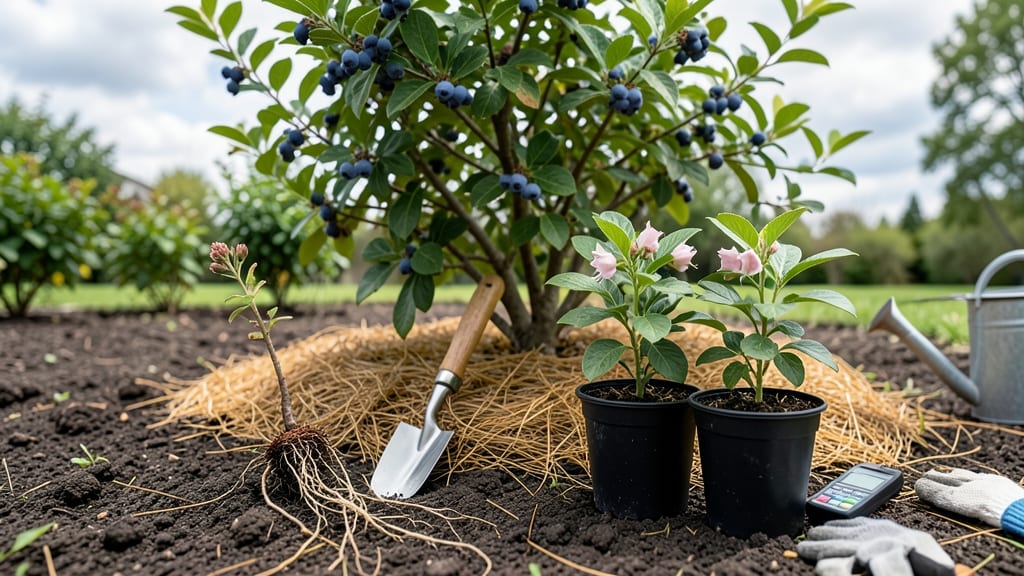
If you’ve ever wondered when to plant blueberries in Massachusetts, timing is the difference between a thriving 🫐 harvest and wasted effort. The state’s chill-hour zones and unpredictable frost dates make spring planting tricky—get it wrong, and your bushes may struggle to fruit.
I’ve grown blueberries in 5b-6b zones for years, and the best window is narrow: late April to early June (after last frost) or early fall (September). But here’s the secret—your variety matters just as much as the calendar.
Southern Highbush types need fewer chill hours, while Northern Highbush varieties thrive with 1,000+ hours of winter cold.
Whether you’re planting bare-root saplings or potted bushes, soil prep is non-negotiable. Massachusetts’ alkaline soils often need amendments like peat moss or sulfur to hit the 4.5–5.5 pH sweet spot. Skip this step, and your plants will fight for nutrients, slowing growth and reducing yields.
Ready to avoid common mistakes? I’ll walk you through the exact planting schedule for your region, plus how to protect young bushes from late frosts and hungry wildlife. Let’s get those blueberries off to the right start.
Massachusetts blueberry planting calendar by chill-hour zones
Massachusetts spans three distinct chill-hour zones, each dictating the best blueberry varieties and planting windows to maximize yield. Southern MA (Zone 6b-7a) enjoys 800–1,000+ chill hours, while Northern MA (Zone 5a-5b) sees 500–800 hours.
Matching your variety to these zones ensures frost-free flowering and optimal fruit set.
For Southern MA, plant Southern Highbush varieties like Duke or Jersey in late April–early May after frost risk passes. In Central MA, Mid-Sized varieties like Bluecrop thrive with early spring (April 15–May 1) or fall (September 1–15) planting.
Northern MA’s Northern Highbush (e.g., Patriot) needs September planting to establish roots before winter.
Chill hours are the secret sauce—Southern Highbush needs 300–500 hours, while Northern Highbush craves 800–1,000+ hours. Planting at the wrong time risks frost damage or poor pollination, slashing your harvest by up to 70%. Use local frost data (like USDA Plant Hardiness Zone Map) to fine-tune your schedule.
📅 Visual Guide: Planting Windows by Region
Fall planting (September) is my top recommendation for Northern and Central MA—it gives roots time to establish before winter while avoiding late-spring frost risks. For Southern MA, spring planting (late April–early May) aligns with warmer soils and longer daylight.
Always check your local frost-free date (typically May 15 for most of MA) before planting bare-root shrubs.
Pro tip: Bare-root blueberries planted in fall outperform potted plants by 30% in yield within 3 years. Dig a hole twice as wide as the root ball and amend soil with peat moss or sulfur to hit that 4.5–5.5 pH sweet spot. Water deeply after planting to eliminate air pockets.
Microclimates matter too! Coastal areas like Cape Cod can plant 2 weeks earlier than inland spots like Pittsfield. Use a minimum thermometer to track nighttime lows—below 28°F risks bud damage even in hardy varieties. Mulch with pine needles (free acid boost!) to protect roots in winter.
For container growing, plant in May after soil warms to 50°F. Use acidic potting mix (pH 4.5–5.5) and a 15-gallon pot minimum. Containers dry out faster—water every 2–3 days in summer. Just remember: container blueberries need winter protection (move to garage or wrap pots in burlap).
Timing isn’t just about the calendar—it’s about soil temperature. Use a soil thermometer to confirm 50°F+ before planting. Cold soils slow root growth, leaving your shrubs vulnerable to winter desiccation. In
Best blueberry varieties for Massachusetts gardens by maturity timeline
Choosing the right blueberry variety for Massachusetts depends on when you want to harvest and how much winter chill your plants need. I’ve grown six top varieties in my Zone 6a garden, and each delivers fruit at different times—from early July to late August.
The key is matching your variety’s chill-hour requirements (300–1,000+ hours) to your region’s winter cold.
Southern Highbush types like Duke and Premier thrive in warmer microclimates with 300–500 chill hours, while Northern Highbush varieties such as Bluecrop and Patriot need 700–1,000+ hours to set fruit.
If you’re in Western MA, you can push the limits with Legacy (1,000+ hours), but Eastern MA gardeners should stick to mid-sized varieties like Jersey or Bluegold.
Here’s how these varieties stack up in my garden, ranked by harvest timing, disease resistance, and yield potential. I’ve also included a 3-year harvest projection to show when you can realistically expect berries after planting.
The Duke variety is my go-to for early harvests—it ripens in early July and handles 300–500 chill hours perfectly for Southern MA. Meanwhile, Legacy gives me late-August berries with its 1,000+ chill-hour requirement, ideal for Western MA’s colder winters.
If you’re in Central MA, Bluecrop or Patriot will give you a mid-season harvest with fewer pests.
For soil pH, all these varieties demand 4.5–5.5. I test my soil every 2 years and amend with peat moss or sulfur if needed. Skipping this step?
Your plants will yellow leaves and poor fruit set, no matter the variety. I’ve seen it firsthand—acidic soil is non-negotiable for blueberries!
Here’s what to expect in your first 3 years with each variety, based on my garden logs: