
Plants
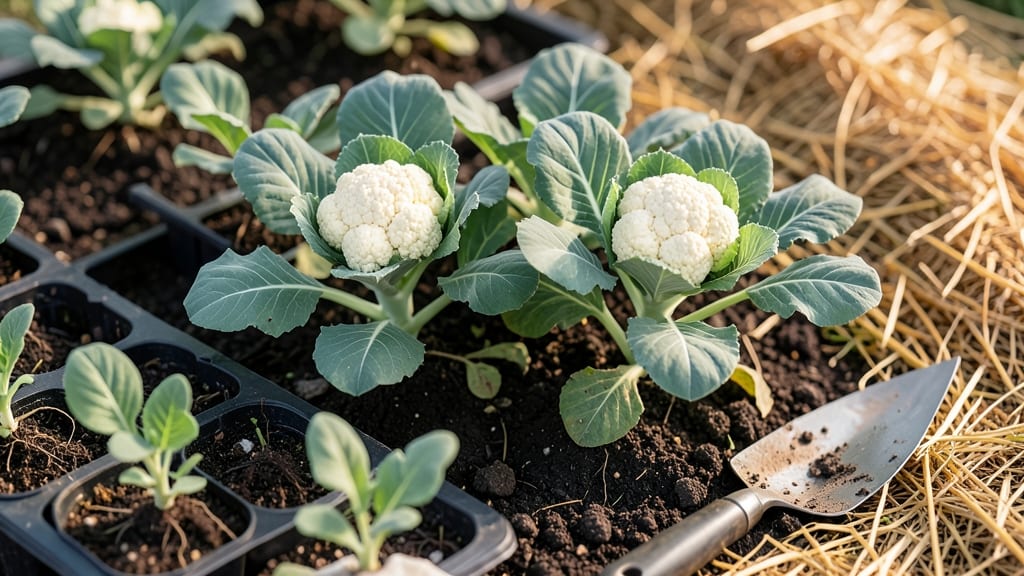
Timing your cauliflower 🥬 planting in Michigan isn’t just about following a calendar—it’s about outsmarting frost dates and making the most of your short growing season.
Whether you’re a first-time gardener or a seasoned green thumb, getting those seeds in the ground at the right moment can mean the difference between a thriving harvest and a sad, bolted disappointment.
Michigan’s USDA zones 5b-6b bring unique challenges, with unpredictable frost patterns that can throw off even the best-laid plans. But here’s the good news: with the right strategies, you can grow cold-hardy varieties that thrive in cooler weather, giving you two chances to plant—once in spring and again in fall.
Let’s break down exactly when to start your seeds or transplants for maximum success.
You’ll discover the ideal planting windows—mid-April to early May for spring and late July to early August for fall—plus how to adjust for your specific region in the state. We’ll also cover how to handle those tricky false springs and avoid common mistakes that lead to wasted effort.
Ready to grow plump, flavorful heads of cauliflower even in Michigan’s cooler climate? I’ll walk you through everything you need to know, from selecting the best varieties to mastering the timing that makes all the difference.
Michigan frost dates & optimal cauliflower planting windows by region
Michigan’s USDA zones 5b-6b mean cauliflower growers must work with tight windows between last spring frosts (mid-April in southern regions, early May in the north) and first fall frosts (mid-October).
The key is planting 4-6 weeks before last frost for spring crops and 10-12 weeks before first frost for fall harvests to ensure mature heads before cold snaps. Northern Michigan’s shorter season (around 120 frost-free days) demands early-maturing varieties, while southern regions can stretch harvests into late fall.
For spring plantings, start seeds indoors 6-8 weeks before last frost (around February-March) and transplant outdoors after soil warms to 45°F. Fall plantings require seeds sown indoors in July with outdoor transplanting by late July-early August.
This timing ensures heads mature before October’s first frost while avoiding summer bolting from heat stress.
Regional variations matter: Northern Michigan (USDA 5b) should focus on early-maturing varieties (60-70 days to harvest), while Southern Michigan (USDA 6b) can extend seasons with late-summer transplanting and row covers. Always check your local Michigan State University Extension frost maps—they’re gold for precise timing.
Pro Tip: Use frost cloth to push spring plantings 2-3 weeks earlier or extend fall harvests by 3-4 weeks—critical for Michigan’s unpredictable weather. For example, Detroit’s last frost averages April 15, while Traverse City’s is May 1.
Here’s a quick reference for Michigan’s planting windows by region:
| Region | Last Spring Frost | First Fall Frost | Spring Planting Window | Fall Planting Window |
|---|---|---|---|---|
| Southern Michigan (USDA 6b) | April 10–15 | October 15–20 | Mid-April to early May | Late July to early August |
| Central Michigan (USDA 5b-6a) | April 20–May 1 | October 5–10 | Late April to mid-May | Early August to mid-August |
| Northern Michigan (USDA 5b) | May 1–10 | September 20–October 5 | Early May to mid-May | Late July (only early varieties) |
For spring plantings, aim for 60-80 days to maturity—this means starting seeds indoors in March and transplanting after soil reaches 50°F. In fall, choose varieties with 70-90 days to maturity and plant seeds indoors in July for outdoor transplanting by August 1.
This timing aligns with Michigan’s 120-150 frost-free days, giving heads enough time to bulk up before cold weather.
Don’t overlook succession planting: In southern Michigan, you can squeeze in two spring plantings (early April and late April) or two fall plantings (early August and mid-August) by using fast-maturing varieties like ‘Snowball Y Improved’ (70 days) or ‘Early Snowball’ (65 days).
This strategy maximizes your harvest even in Michigan’s short season.
Always monitor soil temperature—cauliflower roots thrive at 60–70°F. Use a soil thermometer to avoid planting too early when cold soil stunts growth. In northern Michigan, wait until May 15 or later for spring plantings to avoid frost damage.
For fall crops, prioritize late-summer transplanting (late July) to ensure heads mature before October’s first frost. Use row covers to extend harvests by 2-3 weeks in both spring and fall. This simple trick can add hundreds of pounds to your yield in Michigan’s cooler climate.
🌱
Michigan frost dates & optimal cauliflower planting windows by region
Michigan’s USDA zones 5b-6b create distinct planting challenges, with frost dates shifting 1-2 weeks between northern and southern regions. In northern Michigan (zone 5b), the last spring frost typically arrives by May 15, while southern areas (zone 6b) see frost-free conditions as early as April 20.
For fall plantings, the first frost hits northern areas by October 10, compared to October 25 in the south.
To maximize your cauliflower harvest, plant spring crops 4-6 weeks before your last frost date—so mid-April in southern Michigan and late April in the north. For fall, aim for 10-12 weeks before the first frost, meaning late July to early August across the state.
These windows ensure your plants mature before cold snaps arrive.
Here’s how to adjust for your specific region, including early, mid-, and late-season varieties that thrive in Michigan’s climate:
| Region | Last Spring Frost | First Fall Frost | Spring Planting Window | Fall Planting Window |
|---|---|---|---|---|
| Northern Michigan (Zone 5b) | May 15 | October 10 | Late April - Early May | Late July - Early August |
| Southern Michigan (Zone 6b) | April 20 | October 25 | Mid-April - Late April | Early August - Mid-August |
| Central Michigan (Zone 5b-6a) | May 1 | October 15 | Late April - Early May | Late July - Early August |
For early-season varieties, start seeds indoors 6-8 weeks before transplanting outdoors. In Michigan, this means March 15-April 1 for spring crops.
Use grow lights or a sunny windowsill to ensure strong seedlings before the last frost. Late-season varieties can handle cooler temps, so you can plant them as late as June 1 for a fall harvest—just protect them with row covers if frost threatens early.
Pro tip: Check Michigan State University’s Frost Freeze Forecast for real-time updates, as false springs (warm spells followed by frost) can catch gardeners off guard. If temperatures drop below 40°F at night, cover young plants with frost blankets or old towels to protect tender leaves.
By aligning your planting with these region-specific windows, you’ll avoid the heartbreak of bolted cauliflower and enjoy two bountiful harvests each year—one in summer and another in fall. The key is patience and preparation, especially in Michigan’s variable climate.