
Plants
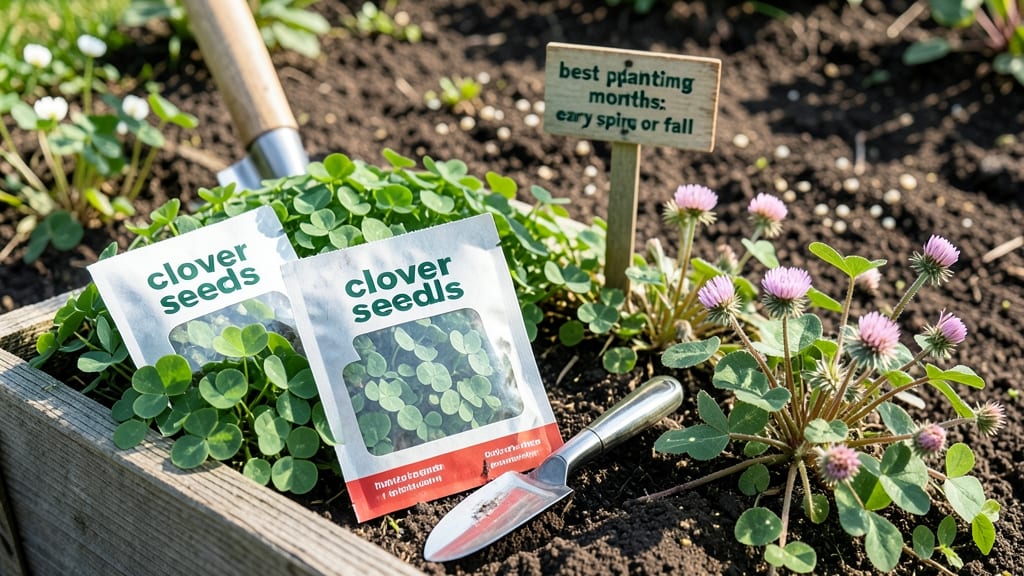
If you’ve ever struggled to plant clover in Massachusetts at the right time, timing might be your biggest hurdle. Plant too early, and frost will wipe out your efforts before they even begin.
Too late, and weeds will outcompete your delicate seedlings—leaving you with patchy ground cover instead of the lush, nitrogen-rich carpet you envisioned.
Here’s the good news: with just 3-4 weeks of ideal conditions, clover can establish itself quickly in New England’s climate. The secret lies in understanding your microclimate—whether you’re in frost-prone Western MA, the milder Coastal regions, or the transitional Central Valley.
I’ll break down the exact planting windows so you can align your schedule with nature’s rhythm.
Why does this matter? Clover thrives in USDA zones 5b-7a, but its success hinges on soil temperatures, rainfall patterns, and frost dates.
Skip the guesswork and learn how to choose between early spring (March-April) or early fall (September-October) plantings—plus which varieties like white Dutch clover adapt best to Massachusetts’ unpredictable springs.
Ready to transform your lawn, garden beds, or erosion-prone slopes into a thriving clover ecosystem? Let’s dive into the fastest, most reliable methods tailored to your corner of the state—no more wasted seed packets or slow-growing patches.
Massachusetts clover planting dates by microclimate Zone
Timing your clover planting is critical in Massachusetts, where last frost dates can vary by 3+ weeks between coastal and inland regions. Coastal areas like Barnstable County typically see their last frost by April 1, while inland zones like Franklin County often wait until April 15.
These differences mean planting too early in colder zones risks frost damage, while late starts in warmer coastal areas may invite weeds.
For fastest establishment, aim to plant when soil temperatures reach 60°F+—this usually aligns with late March to early April for spring planting. Fall planting should occur 6-8 weeks before first frost, typically September 1-15, to allow roots to establish before winter dormancy.
Missing these windows? Don’t worry—we’ll cover backup strategies for late starts.
Here’s how to adjust your planting schedule based on Massachusetts’ three key microclimate zones:
| Zone | Last Frost Date | Optimal Planting Window | Backup Window | Key Consideration |
|---|---|---|---|---|
| Coastal (e.g., Cape Cod, Boston) | March 25–April 1 | March 15–April 10 | April 11–May 1 | Warmer soils, but watch for salt spray near coast. |
| Central (e.g., Worcester, Springfield) | April 10–15 | March 30–April 15 | April 16–May 10 | Moderate frost risk; prioritize well-drained soil. |
| Western (e.g., Pittsfield, Amherst) | April 15–20 | April 1–15 | April 16–May 15 | Colder soils; use row covers for early starts. |
If you miss the primary window, don’t panic—clover is perennial and can handle late starts. For spring, extend your planting to May 1 in all zones, but expect slower establishment.
In fall, push to October 1 in coastal areas, but avoid planting after September 15 in western MA to prevent winter kill.
Pro tip: Use a soil thermometer to confirm temps. Clover seeds won’t germinate below 50°F, so wait until your readings hit 60°F+ consistently. This often means delaying by 1-2 weeks after your last frost date, especially in northern zones.
For fastest germination, pair planting with 1 inch of rainfall or consistent watering. Massachusetts’ spring showers can be unpredictable—plan for drip irrigation if natural rainfall lags. In drought-prone years (like 2023), prioritize fall planting when summer moisture is more reliable.
Once planted, clover establishes in 3-4 weeks under ideal conditions. Coastal areas may see faster growth due to warmer soils, while inland zones could take 5-6 weeks. Monitor for weed competition—thin seedlings to 6 inches apart to ensure clover dominates.
For pollinator-friendly clover, aim for late spring planting to maximize blooms. Crimson clover, for example, thrives when sown by April 15 in central MA, producing flowers by June-July—just in time for bees and butterflies.
Remember: Clover’s deep taproots help it survive drought, but young plants need consistent moisture to establish. Mulch with straw or leaves to retain soil moisture and suppress weeds—critical in Massachusetts’ competitive growing conditions.
Massachusetts clover planting dates by microclimate Zone
Massachusetts’ diverse geography means Coastal, Central, and Western regions have wildly different frost dates and soil warming patterns. For example, Boston’s coastal zone (Zone 6b) can plant clover as early as late February, while Western MA’s Berkshires (Zone 5b) often wait until mid-April to avoid frost damage.
These timing differences are critical—planting too early in colder zones risks seed rot, while late starts in warmer areas let weeds dominate.
Your best bet is to align planting with soil temperatures above 60°F and consistent rainfall. In most of Massachusetts, this falls between March 15 and April 15 for spring and September 15 to October 15 for fall.
Fall plantings are especially reliable because cool soils and shorter daylight hours reduce weed competition, giving clover a head start.
Here’s how to adapt your schedule by region—plus backup dates if spring rains delay your plans:
| Region | Primary Planting Window | Backup Window (Late Start) | Key Microclimate Notes |
|---|---|---|---|
| Coastal (Zone 6b) | Late February–March 15 | April 1–15 | Warmer soils, earlier last frost (avg. March 20). |
| Central (Zone 6a) | March 15–April 1 | April 15–30 | Moderate frost risk; aim for soil temps ≥60°F. |
| Western (Zone 5b) | April 1–15 | April 30–May 15 | Latest frost dates (avg. April 25); colder soils. |
Pro tip: Use a soil thermometer to confirm readiness—clover seeds won’t germinate below 55°F. In my Central MA garden, I’ve found that planting white Dutch clover in early April consistently yields full coverage by June, even with our unpredictable spring rains.
For fall plantings, aim to finish by September 30 to allow 6–8 weeks of growth before the first frost.
If you’re in a high-elevation area (e.g., Mount Greylock), push planting back by 2–3 weeks to account for colder microclimates. Conversely, urban heat islands (like Boston’s Back Bay) can let you start 1–2 weeks earlier—just monitor soil moisture closely, as these areas dry out faster.
Remember: Clover thrives in cooler temps and can even handle light frost once established. The real enemy is competing weeds, so prioritize planting when weeds are still dormant. For maximum success, combine your planting with a light nitrogen fertilizer (5-10-10) to give seedlings a growth boost.