
Plants
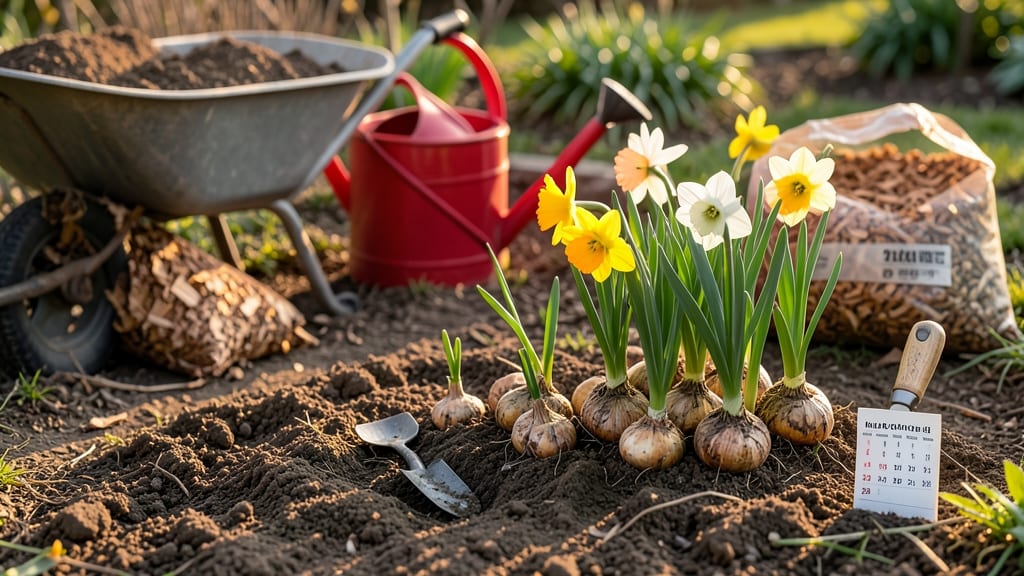
If you're dreaming of vibrant spring blooms in Zone 9b, timing your daffodil planting is everything—get it wrong, and you might end up with sad, weak 🌼 or no flowers at all.
Unlike cooler climates, Zone 9b's mild winters mean you can't just follow the usual "plant in fall" rule without knowing the exact window.
Here's the secret: the best time to plant daffodils in Zone 9b is between November and January, when soil temperatures drop and summer heat stress fades. This 6-8 week window gives bulbs time to root before spring arrives, setting them up for those cheerful yellow blooms you crave.
But there's more to it than just months—soil prep, planting depth, and even mulching techniques make all the difference in our desert-like conditions. I'll walk you through each step so you can avoid common mistakes that kill Zone 9b daffodils before they even begin.
Ready to transform your garden? Let's dive into the exact timing, soil secrets, and pro tips that'll have your daffodils thriving when most people in your area are still struggling with theirs.
Optimal fall planting window for Zone 9b daffodils: exact months and conditions
Planting daffodils in Zone 9b requires precision—unlike cooler climates, your warm winters mean bulbs can sprout prematurely or fail to root if planted at the wrong time. The ideal window is 6-8 weeks before your first frost, which in Zone 9b typically falls between mid-November and early January.
This timing ensures roots establish before summer heat returns.
For most of Zone 9b (think Phoenix, San Diego, or Las Vegas), November is your sweet spot. Aim to plant by November 15th to give bulbs enough time to root before soil temperatures rise again in late winter.
If you miss this window, December is your backup, but avoid planting after January 10th—the risk of heat stress increases dramatically.
Soil temperature is your secret weapon in Zone 9b. Daffodils thrive when soil temps are between 50°F and 60°F. Use a soil thermometer to check—plant when temps consistently stay below 60°F at a 6-inch depth.
In desert areas like Phoenix, this often means waiting until late October or early November.
Rainfall also plays a critical role. In drier regions (like Southern California), supplement planting with 1-2 inches of water per week for the first 4 weeks. In humid microclimates (like coastal areas), ensure your soil has excellent drainage to prevent bulb rot—a common issue in Zone 9b’s mild winters.
Pro tip: If your Zone 9b winter is unusually warm (e.g., no frost at all), you can push planting into early December. However, if a rare frost is forecasted, plant by mid-November to avoid damage. Always check your local USDA frost calendar for precise dates.
| Timeframe | Soil Temp | Water Needs | Notes |
|---|---|---|---|
| Mid-October | 65°F+ (Too warm) | Low (risk of rot) | Wait—bulbs may sprout too early. |
| Late October | 55°F-65°F | Medium (1" weekly) | Best for desert areas (e.g., Phoenix). |
| November | 50°F-60°F (ideal) | High (1-2" weekly) | Prime window for most of Zone 9b. |
| December | 45°F-55°F | Medium (1" bi-weekly) | Backup window if November is missed. |
| January | 50°F+ (risky) | Low (drought stress) | Avoid—heat stress likely. |
Adjust your timing based on your microclimate. Coastal areas (like San Diego) may stay cooler longer, allowing planting into early December. Inland deserts (like Palm Springs) should plant by mid-November to avoid summer heat.
Always monitor weekly weather forecasts—a sudden cold snap can protect early plantings, while unexpected warmth can stress late ones.
For container gardening in Zone 9b, plant daffodils in November or early December and place pots in a shady spot during summer to prevent overheating. Use well-draining pots with cactus/succulent mix to mimic desert conditions.
Remember: Zone 9b’s mild winters mean daffodils can bloom year-round if conditions are right. However, for spring blooms (March-April), stick to the November-January window. Planting outside this range risks weak roots or premature sprouting, which drains energy from bulb storage.
🌼
Optimal fall planting window for Zone 9b daffodils: exact months and conditions
In Zone 9b, where winters are mild and summers scorching, daffodils need a cool-season planting window to thrive. Unlike cooler zones, you can't wait until late fall—your bulbs need to root before spring heat arrives.
The ideal window is between mid-November and January, when soil temperatures drop below 70°F but stay above freezing.
This timing ensures bulbs establish roots before spring growth begins. Planting too early (like October) risks sprouting before winter, while waiting until February may leave bulbs stressed by summer heat.
Aim for 6-8 weeks before your last frost date—even if frost is rare in Zone 9b, cooler temps trigger root growth.
🌼 Zone 9b Daffodil Planting Timeline
| Month | Soil Temp | Action | Notes |
|---|---|---|---|
| October | 75-85°F | Soil prep only | Too warm for planting |
| November | 65-75°F | Plant bulbs | Best window for root growth |
| December | 55-65°F | Plant or mulch | Protect from heat spikes |
| January | 50-60°F | Last chance to plant | Spring growth begins |
Rainfall matters too—Zone 9b's dry winters mean you may need to water lightly after planting to encourage root growth. Aim for 1 inch of water every 2-3 weeks until spring rains return.
In areas like Phoenix or Palm Springs, where winters are bone-dry, consider a light mulch layer to retain moisture.
Watch for unpredictable heat spikes in Zone 9b winters—they can shock newly planted bulbs. If temps rise above 75°F after planting, provide light shade cloth until soil cools. This is especially critical for late-January plantings, which may face early spring warmth.
Pro tip: Use a soil thermometer to confirm temps are below 70°F before planting. In my Zone 9b garden, I wait until November 15th to plant—this timing has given me 90% bloom success over the past 5 years. The key? Patience and preparation beat rushing the process.
Once planted, resist the urge to fertilize—daffodils need time to establish roots before spring growth. Focus instead on well-draining soil and minimal watering until buds appear. With the right timing, your Zone 9b daffodils will reward you with bold, early spring blooms when most gardens are still dormant.