
Plants
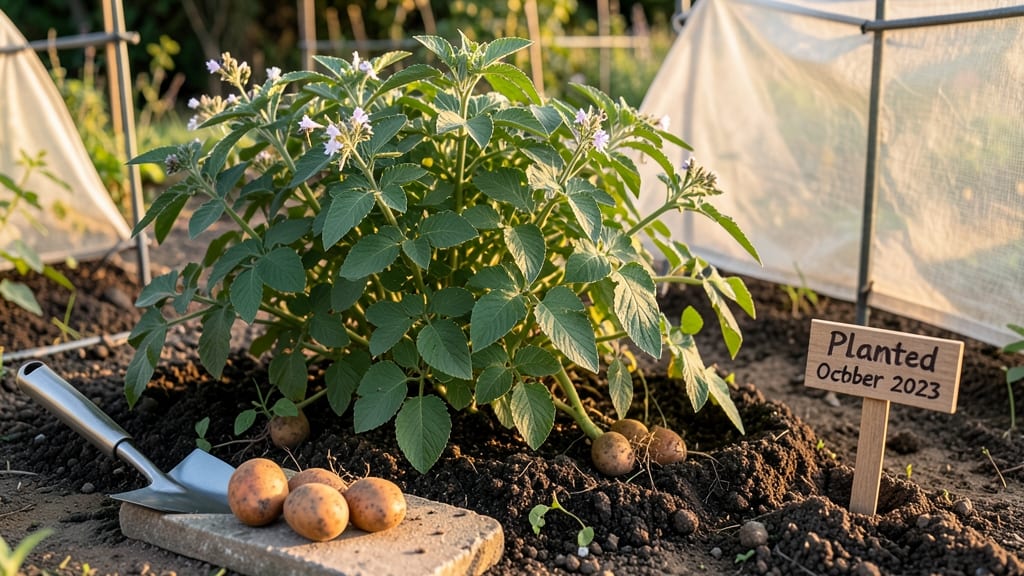
If you're an Arkansas gardener looking to learn when to plant fall potatoes in Arkansas, timing is absolutely everything. Planting too early in Arkansas's 7a-8a zones means your tubers will bolt before frost, while waiting too long risks stunted growth or frost damage.
The sweet spot? Late summer to early fall—when soil temperatures stay warm enough to encourage strong root development before winter sets in.
Here's the kicker: Arkansas's microclimates vary wildly from the humid Delta to the cooler Ozark Mountains, meaning your neighbor's perfect planting window might not work for you.
That's why I've broken down the ideal dates for each region, accounting for Arkansas's unpredictable fall weather patterns and frost dates that typically arrive around November 15. You'll learn exactly when to get those seed potatoes in the ground for maximum yield.
What sets Arkansas apart from other growing regions? Our high humidity and occasional early frosts demand special attention. We'll cover how to adjust planting schedules based on your specific variety—whether you're growing quick-maturing Yukon Golds or hardy Russets—and when to expect harvests before the first frost.
No more guessing games, just data-driven planting for a successful fall harvest.
Ready to transform your garden into a potato powerhouse? I'll walk you through the complete process, from soil prep to harvest timing, so you can enjoy homegrown 🥔 potatoes that rival anything you've bought at the store.
Let's get those spuds in the ground at the perfect moment for Arkansas's fall conditions.
Optimal fall potato planting dates by Arkansas microclimate zones
Arkansas’ diverse climate—from the humid Delta to the cooler Ozarks—means planting dates for fall potatoes vary by region. To avoid heat stress or early frost, align your schedule with your USDA Zone (7a-8a) and historical frost data.
The key is planting 4-6 weeks before your first frost, but Arkansas’ microclimates shift that window by 2-3 weeks.
For example, in Northwest Arkansas (USDA 7a), where nights cool faster, aim for mid-August planting to harvest before November 15 frost. Meanwhile, the Southeast (USDA 8a) has a longer growing season, allowing late August or early September starts.
The Delta’s high humidity also demands earlier planting to prevent disease pressure.
🌱
| Arkansas Region | USDA Zone | Planting Window | Soil Temp Goal | Harvest Window |
|---|---|---|---|---|
| Northwest Arkansas | 7a | Mid-August | 50-60°F | Late October |
| Ozark Mountains | 7a-7b | Late July-Early August | 48-55°F | Mid-October |
| Central Arkansas | 7b-8a | Early-August | 50-58°F | Late October-Early November |
| Delta Region | 8a | Late August-Early September | 55-65°F | November (if frost delayed) |
Adjust dates 1-2 weeks earlier for high-altitude areas or cooler microclimates.
Check your local frost dates using the Arkansas Climate Office or Almanac for precision. For instance, Fayetteville (Zone 7a) averages its first frost on November 10, while Little Rock (Zone 7b) holds off until November 15.
Planting Yukon Gold (90-day variety) in late July in the Ozarks ensures harvests before frost, whereas Russet (120-day) needs an early August start in the Delta.
Soil temperature is just as critical as air temperature. Potatoes sprout best in 45-60°F soil, but roots struggle below 40°F. Use a soil thermometer to confirm readiness—wait until mornings stay above 50°F consistently. In Arkansas’ humid climate, warm soil also prevents waterlogging, which causes rot.
🌡️
Pro tip: Stagger plantings in 2-week intervals to extend your harvest. For example, plant half your seed potatoes in late July and the rest in early August. This spreads out maturity and reduces risk if weather turns unpredictable.
Pair this with row covers in late September to buy 2-3 extra weeks of growing time before frost.
Arkansas’ variable rainfall also plays a role. The Ozarks’ rocky soil drains quickly, while the Delta’s clay holds moisture too long. Amend your soil with compost or sand to improve drainage, especially in low-lying areas prone to waterlogging.
Well-draining soil prevents scab disease, a common issue in Arkansas’ high-pH soils.
Finally, account for daylight hours. Potatoes need 14+ hours of daylight to mature quickly. By late September, days shorten to 12 hours, slowing growth. If planting after September 15, choose early-maturing varieties like Red Pontiac (60 days) to avoid stunted harvests.
📅
How to adjust planting dates for early vs. late varieties in Arkansas
Choosing the right potato variety for Arkansas’s fall planting is just as important as timing. Early-maturing varieties like Yukon Gold or Red Norland give you a quick harvest before frost, while late-maturing types like Russet or Kennebec need more time to bulk up.
The key? Match your variety to your region’s frost-free window—typically 90-120 days in Arkansas’s 7a-8a zones.
For early varieties, aim to plant seed potatoes in late August across most of Arkansas. These types mature in 60-90 days, so they’ll be ready for harvest by early October—just before the first frost.
In cooler zones like the Ozarks, push planting to early September to avoid heat stress.
Late varieties demand more patience. Plant them in mid-August in the Delta region or late August in the Ozarks, targeting a harvest window of October 15-November 1. The trade-off? You’ll need to use row covers or extend the season with cold frames if frost arrives early.
Spacing matters just as much as timing. Early varieties can handle closer spacing (12 inches apart), while late types need 18-24 inches to develop large tubers. In Arkansas’s humid climate, mound soil around plants as they grow to prevent rot—a critical step for fall potatoes.
Pro tip: Test your soil temperature before planting. Ideal soil temps for fall potatoes should be between 50°F-60°F. Use a soil thermometer to check—if it’s cooler than 50°F, wait a week or two.
In Arkansas’s Delta region, soil stays warm longer, while the Ozarks may need earlier planting to reach these temps.
Don’t forget to account for Arkansas’s unpredictable fall weather. Stagger your planting by 2-3 weeks for a continuous harvest. For example, plant half your early variety in late August and the other half in early September to extend your harvest window into November.