
Trees
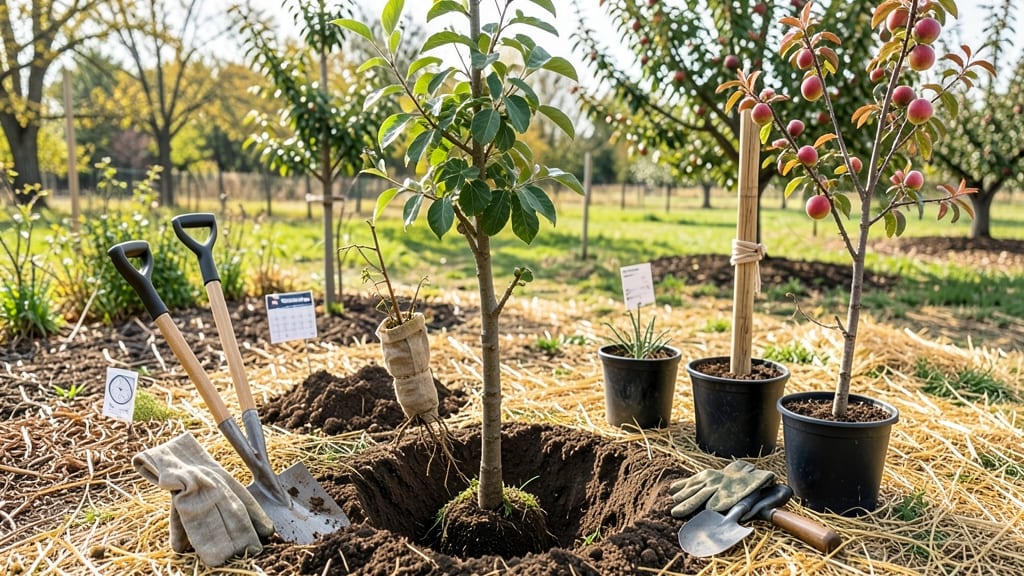
Timing your fruit trees' planting in Iowa isn't just about avoiding frost—it's about giving them the perfect start in zones 5a-6b where spring can swing from icy to sweltering in weeks. Whether you're dreaming of 🍎 apple orchards or juicy peach trees, planting too early or late can stunt growth or invite disease. The ideal window is narrow: early spring (March-April) or fall (September-October), but even then, Iowa's microclimates demand extra care.
Why does this matter? Because a tree planted at the wrong time struggles to establish roots before summer heat or winter freeze hits. I've seen firsthand how a bare-root sapling thrives when planted in cool, damp soil—just like Iowa's early spring offers—but wilts if stuck in dry May heat.
The key is understanding how your specific location (Des Moines vs. Sioux City) affects these deadlines.
What you'll discover here are the exact deadlines for each fruit type, soil prep secrets, and how to stretch your planting window when Mother Nature throws curveballs. We'll cover everything from soil thermometers to frost blankets so your young trees get the fighting chance they deserve in Iowa's unpredictable climate.
Ready to give your orchard the best possible start? Let's break down the science—and practical tips—so you can plant with confidence, whether you're a first-time gardener or a seasoned homesteader.
Iowa’s planting zones and best months for fruit trees
Iowa spans USDA hardiness zones 4-5, which means your planting window depends on where you live. Southern Iowa (zone 5b-6a) has a longer growing season, while northern areas (zone 4a-4b) face earlier frosts. This difference affects when you can safely plant bare-root trees versus container-grown varieties.
Most gardeners in Iowa plant fruit trees in early spring (March–April) or early fall (September–October). Spring planting lets trees establish roots before summer heat, while fall planting gives them time to root before winter dormancy.
However, Iowa’s unpredictable frost dates (April 15 in southern Iowa, May 1 in northern areas) mean timing is everything.
For bare-root trees, the ideal window is when soil temperatures reach 40°F (4°C) and stay consistent. In Iowa, this typically means late March to early April in southern regions and mid-April to early May in the north.
Container-grown trees offer more flexibility—they can be planted anytime soil isn’t frozen, even into late May, but avoid extreme heat.
Regional microclimates add another layer of complexity. Cities like Des Moines (zone 5b) can plant 2–3 weeks earlier than Sioux City (zone 4b), where late frosts linger.
Urban heat islands in cities like Cedar Rapids may also extend the planting window slightly. Always check your local frost dates and adjust accordingly.
🌱Choosing the right tree type also influences timing. Stone fruits (peaches, cherries, plums) need to be planted earlier (March–April) because they’re sensitive to late frosts. Pome fruits (apples, pears) are more forgiving and can handle April–May planting.
Always check the chilling hour requirements of your variety—most Iowa-adapted trees need 800–1,200 hours below 45°F (7°C).
Fall planting (September–October) is ideal for dormant bare-root trees because it allows roots to establish before winter. However, avoid planting after October 15 in most of Iowa, as soil may freeze before roots can anchor.
Container-grown trees can be planted into early November if soil isn’t frozen, but growth will slow significantly.
One of my biggest mistakes was planting a peach tree in mid-May—I thought the frost danger was over, but a late freeze killed the blossoms. Now, I always double-check frost dates and use a soil thermometer to confirm temperatures.
For Iowa gardeners, March 15–April 15 and September 1–October 15 are your safest bets.
If you’re in northern Iowa (zone 4a-4b), err on the side of planting later (mid-April or later) to avoid frost damage. Southern Iowans can push earlier (late March), but monitor weather forecasts for unseasonable warmth that can trick trees into early growth—only to be nipped by frost.
Pro tip: Container-grown trees are your best friend for late planters. They’re already established and can handle May–June planting, though you’ll need to water deeply and mulch heavily to compensate for the delayed start.
Just avoid planting during Iowa’s brutal summer heat (July–August), when transplant shock is more likely.
Remember, Iowa’s climate is unpredictable, but with the right timing, your fruit trees will thrive. Start by checking your USDA zone, then adjust for microclimates and tree types. Soon, you’ll be harvesting juicy peaches and crisp apples—all because you planted at the perfect moment. 🍎
Critical deadlines: when to plant for maximum root success
Understanding the exact deadlines for planting fruit trees in Iowa is the difference between a thriving orchard and a struggling sapling. For bare-root trees, the window is narrow: plant them as soon as the ground thaws but before buds break.
In Iowa’s USDA zones 5a-6b, this typically means mid-March to early April—but use a soil thermometer to confirm soil temps are above 40°F (4°C).
Container-grown trees offer more flexibility, allowing planting through May as long as you water deeply afterward. However, peaches and cherries (stone fruits) are finicky—they need to establish roots before summer heat hits, so aim for March-April planting for these varieties.
Apples and pears are more forgiving and can handle late spring planting if kept well-watered.
Here’s the non-negotiable rule: Never plant when the ground is frozen or when daytime temps exceed 85°F (29°C). In Iowa, this means avoiding late May through August for bare-root trees. The goal is to give roots 6-8 weeks of cool, moist soil before summer stress sets in.
| Fruit Type | Ideal Planting Window | Soil Temp Threshold | Key Risk |
|---|---|---|---|
| Apples | March 15–April 30 | 40°F (4°C) | Late frost damage |
| Peaches | March 1–April 15 | 45°F (7°C) | Summer heat stress |
| Cherries | March 10–April 10 | 40°F (4°C) | Late frost + disease |
| Pears | April 1–May 15 | 45°F (7°C) | Drought stress |
Fall planting (September-October) is your second chance, but it requires 6-8 weeks for roots to establish before winter. For example, plant apple trees by October 15 in southern Iowa (zone 6b) to avoid winter desiccation.
In northern Iowa (zone 5a), wrap the root ball with burlap and mulch heavily to protect from freeze-thaw cycles.
Pro tip: Use a soil thermometer to track temps—roots need 50°F (10°C) for active growth. If temps drop below this, delay planting until conditions improve. I’ve seen gardeners rush planting in late April only to watch their trees struggle when a 50°F (10°C) snap hits, stalling root growth for weeks.
Timing isn’t just about the calendar—it’s about soil conditions, tree type, and your local microclimate. In Iowa, where a 30°F (-1°C) drop can happen overnight, planning ahead means the difference between a healthy orchard and a failed investment. 🌱