
Trees
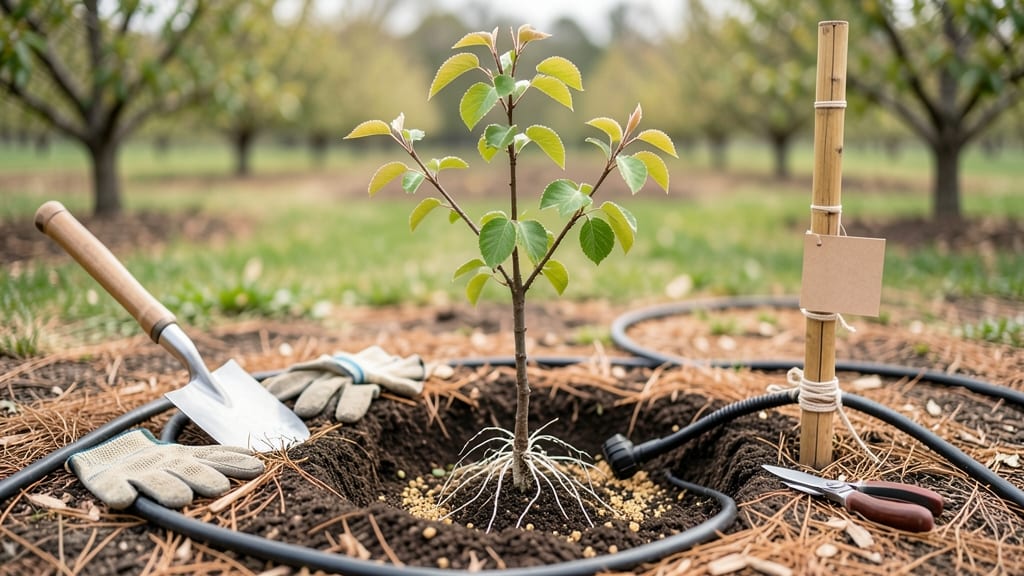
Timing your fruit tree planting in Kentucky isn't just about grabbing a shovel in spring—it's the key to unlocking years of reliable harvests. With chill-hour requirements varying by variety, planting too early or late can leave your 🍎 trees struggling to fruit, no matter how much care you give them.
Kentucky's 6a-7a zones demand precision: late winter to early spring (February-April) or fall (October-November) are your golden windows. Miss these, and you risk exposing young roots to summer heat or winter frost damage.
The difference between a thriving orchard and a sad sapling often comes down to these few critical weeks.
I'll show you exactly how to match your fruit tree variety to Kentucky's microclimates, from Bluegrass Region apples to Pennyrile peaches. You'll discover the easiest planting methods for bare-root vs. container-grown trees, plus soil prep secrets that make all the difference in your first harvest.
Whether you're dreaming of backyard apple cider or peach cobbler, getting this timing right means you'll be years ahead of gardeners who planted at the wrong moment. Let's get your orchard off to the perfect start.
Kentucky’s best planting months for fruit trees by chill-hour zones
Kentucky’s unique chill-hour requirements (300–1,000 hours) mean timing your fruit tree planting isn’t just about seasons—it’s about matching varieties to your specific microclimate. Most Kentucky gardeners thrive with 600–900 chill hours, but regional differences (like the Bluegrass Region vs. Pennyrile Plateau) demand precision.
Planting at the wrong time can delay fruiting by 2–3 years, so let’s break it down.
For bare-root trees, aim for late winter to early spring (February–March) when soil is workable but bud break hasn’t started.
This gives roots time to establish before Kentucky’s average last frost (March 15). Container-grown trees, however, can handle fall planting (October–November), provided they’re watered deeply before the first frost (November 15).
Here’s how Kentucky’s 6 chill-hour zones influence your planting window:
| Chill-Hour Zone | Best Planting Window | Ideal Varieties | Regional Notes |
|---|---|---|---|
| 300–500 | February–March | Peach, Fig, Pecan | Western KY (Pennyrile Plateau) |
| 500–650 | Late Feb–Early April | Apple (Liberty), Pear (Moonglow) | Central KY (Bluegrass) |
| 650–800 | March–April or Oct–Nov | Cherry (Stella), Plum (Methley) | Eastern KY (Appalachian foothills) |
| 800–900 | Late March–April | Apple (Jonagold), Pear (Bartlett) | Northern KY (Louisville metro) |
| 900–1,000 | April or Oct–Nov | Apple (Cortland), Cherry (Montmorency) | Far northern KY (near Cincinnati) |
To verify your chill-hour zone, use the USDA Plant Hardiness Zone Map and cross-reference with local cooperative extension data. For example, Lexington (Zone 7a) averages 750 chill hours, while Paducah (Zone 7b) sees only 600 hours.
Planting a 900-hour apple variety in Paducah? You’ll wait years for fruit—or risk poor yields.
Pro tip: Dormant trees (bare-root or container-grown) handle Kentucky’s winter cold better when planted in late winter. If you miss that window, fall planting (October) works for container-grown trees, but avoid late fall—frost can damage tender roots before they establish.
Remember, Kentucky’s humidity and summer heat (90°F+) stress young trees. Planting in early spring gives roots 6–8 weeks to grow before the heatwave hits.
For peaches and plums, which need 400–600 chill hours, late February is ideal in western KY, while apples and pears (600–900 hours) wait until March–April in the Bluegrass.
One last tip: Mulch heavily after planting to retain moisture and regulate soil temperature. Use wood
Top 5 fruit tree varieties that thrive in Kentucky’s climate (with planting timelines)
Kentucky’s 6a-7a zones create the perfect stage for fruit trees that love a mix of cold winters and warm summers. The right variety can mean the difference between a tree that fruits reliably and one that struggles.
I’ve narrowed it down to the top 5 performers that match Kentucky’s chill hours (300–1,000 hours) and humidity—plus their exact planting windows for maximum success.
First up is the ‘Liberty’ apple, a disease-resistant superstar with 600–800 chill hours. This variety thrives in Kentucky’s climate and is perfect for late winter planting (February–March) or early fall (October).
It’s also self-pollinating, so you won’t need to plant a second tree for cross-pollination—a huge plus for small spaces.
Next, the ‘Redhaven’ peach (500–700 chill hours) is a backyard favorite, but it needs precise timing. Plant bare-root trees in late winter (February) or container-grown trees in early fall (October). This variety loves Kentucky’s heat but can suffer in soggy soil, so well-draining spots are a must.
For pears, the ‘Moonglow’ (400–600 chill hours) is a top pick, especially in northern Kentucky. It’s best planted in late fall (November) or early spring (March) to avoid summer stress. This variety is less prone to fire blight, a common issue in Kentucky’s humid summers.
The ‘Starking Delicious’ cherry (500–700 chill hours) is ideal for central and southern Kentucky. Plant it in late winter (February) for the best root establishment. Cherries need full sun and consistent moisture, so mulching heavily in the first year is key to preventing drought stress.
Finally, the ‘Chickasaw’ plum (300–500 chill hours) is perfect for warmer microclimates like Louisville or Bowling Green. It’s best planted in early spring (March) or late fall (October). This variety is drought-tolerant once established, making it a low-maintenance choice for busy gardeners.