
Trees
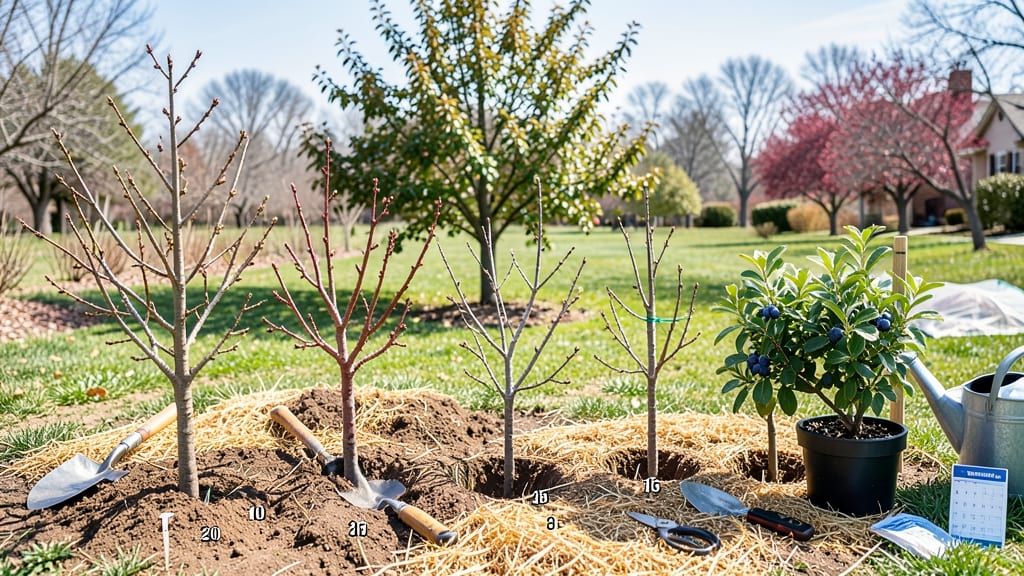
Planting fruit trees in Massachusetts at the wrong time can mean the difference between a thriving orchard and a sad, frost-bitten failure. Whether you're dreaming of crisp apples 🍎 or sweet cherries, getting the timing right is non-negotiable—especially in zones 5b-7a, where late frosts can sneak up before you're ready.
Here's the secret: the best window is actually two distinct periods—early spring (March-April) or early fall (September-October). Spring planting lets roots establish before summer heat, while fall gives trees time to settle before winter dormancy.
But don't just grab any tree—some varieties need more chill hours than others, and Massachusetts' microclimates mean what works in coastal areas might flop inland.
I've seen gardeners make costly mistakes by planting too late in spring or ignoring soil prep, and I'm here to show you how to avoid them. We'll cover everything from choosing the right varieties for your zone to the exact steps for bare-root vs. container-grown trees.
Let's get those fruit trees growing strong so you can enjoy homegrown harvests for years to come.
The key? Understanding your local frost dates, matching varieties to chill hours, and giving your trees the perfect start. Ready to turn your backyard into an orchard? Let's dive into the timing that makes all the difference.
Best planting months for Massachusetts fruit trees by chill-hour requirements
Massachusetts’ USDA zones 5b-7a create unique challenges for fruit tree growers. The key to success? Matching chill-hour requirements with your local microclimate. Most fruit trees need 300-1,000+ hours below 45°F to set fruit properly—too few hours, and your tree may bloom but fail to produce.
For bare-root trees, the best time to plant in Massachusetts is early spring (March-April) or early fall (September-October). Container-grown trees can handle slightly later fall planting, but avoid planting when soil is frozen or waterlogged.
The last average frost date is April 15, while the first frost typically arrives October 15.
Chill-hour needs vary dramatically by fruit type. Apples and pears often require 600-1,000+ hours, while peaches and nectarines need 300-500 hours. Stone fruits like cherries fall in the 500-1,000-hour range. Coastal areas (e.g., Cape Cod) may struggle with low-chill varieties, while inland regions (e.g., Worcester) can support high-chill cultivars.
Here’s how to align your planting with chill-hour zones and frost risks:
| Fruit Type | Chill-Hour Needs | Best Planting Window | Top Varieties for MA | Frost Risk Note |
|---|---|---|---|---|
| Apples | 600-1,000+ hours | Early spring (March-April) or early fall (Sept-Oct) | 'Liberty,' 'Honeycrisp,' 'McIntosh' | High frost risk in spring; plant after last frost. |
| Pears | 300-600 hours | Early spring (March-April) or early fall (Sept-Oct) | 'Bartlett,' 'Anjou,' 'Seckel' | Moderate frost risk; avoid late spring blooms. |
| Peaches/Nectarines | 300-500 hours | Early spring (March-April) only | 'Redhaven,' 'Sanguine,' 'Fantasia' | Low chill tolerance; coastal areas may fail. |
| Cherries (Sweet) | 500-1,000 hours | Early spring (March-April) only | 'Stella,' 'Montmorency,' 'Black Tartarian' | High frost risk; plant in sheltered locations. |
| Plums | 400-800 hours | Early spring (March-April) or early fall (Sept-Oct) | 'Stanley,' 'Windsor,' 'Methley' | Moderate frost risk; prune to improve airflow. |
Spring planting (March-April) gives trees 6-8 weeks to establish roots before summer heat. For fall planting (September-October), aim to plant at least 4-6 weeks before frost to allow root growth. Container-grown trees can handle fall planting better than bare-root, as their roots are less stressed.
Pro tip: If you’re in a coastal zone (e.g., Cape Cod), opt for low-chill varieties like 'Sanguine' peaches or 'Seckel' pears. Inland areas (e.g., Berkshires) can support high-chill apples like 'Honeycrisp' or 'Liberty.' Always check the chill-hour rating on your tree’s tag before purchasing.
One common mistake? Planting bare-root trees in summer. These trees dry out quickly in heat and have minimal root systems to sustain them. If you miss the spring/fall windows, container-grown trees are your best bet for summer planting.
For young trees (1-2 years old), focus on root development in the first year. Mulch heavily (3-4 inches) to retain moisture and protect roots from temperature swings.
In the second year, you’ll see bud break and early fruit set—just be prepared for late spring frosts that can damage blossoms.
🌱
Best planting months for Massachusetts fruit trees by chill-hour requirements
Massachusetts' USDA zones 5b-7a create a unique challenge for fruit tree planting—too early, and frost zaps young roots; too late, and trees struggle to establish before winter. The solution? Plant during two key windows: early spring (March-April) or early fall (September-October).
These periods align with Massachusetts' average last frost (April 15) and first frost (October 15), giving your trees the best chance to thrive.
But here's the catch: not all fruit trees have the same needs. Chill hours (the number of hours below 45°F a tree needs to flower) vary dramatically. Apples and pears typically require 600-1,000 chill hours, while peaches and nectarines need 300-500 hours.
Coastal areas (like Cape Cod) often get fewer chill hours than inland zones, so variety selection matters just as much as timing.
For spring planting, aim for late March to early April when soil temperatures rise above 40°F. This gives roots time to establish before summer heat. Fall planting (September-October) lets trees settle before dormancy, but avoid planting when frost is forecasted within 2 weeks.
Container-grown trees can handle fall planting better than bare-root trees, which need winter dormancy to survive.
🌱
| Fruit Type | Chill Hours Needed | Best Planting Window | Massachusetts Zones | Notes |
|---|---|---|---|---|
| Apples | 600-1,000+ | Early Spring (March-April) or Early Fall (Sept-Oct) | 5b-7a | Best for inland areas; avoid coastal zones |
| Pears | 500-800 | Early Spring (March-April) | 6a-7a | Container-grown pears adapt better to fall planting |
| Cherries | 700-1,000+ | Early Spring (March-April) | 5b-6b | Sweet cherries need more chill; sour cherries tolerate less |
| Peaches/Nectarines | 300-500 | Early Fall (Sept-Oct) or Late Spring (May) | 6b-7a (coastal-friendly) | Low-chill varieties work best in coastal MA |
| Plums | 400-600 | Early Spring (March-April) | 5b-7a | Japanese plums need fewer chill hours than European types |
If you're planting bare-root trees in spring, do it as soon as soil is workable (usually late March in most of Massachusetts). For container-grown trees, fall planting (September-October) works well because established roots handle early winter better.
Pro tip: Soak bare-root trees for 1-2 hours before planting to rehydrate roots—this makes a huge difference in survival rates.
One common mistake I see? Planting late-spring trees (May-June) when roots can't establish before summer heat. Instead, if you miss the early windows, wait until next year's early spring. Patience here pays off with stronger trees and better fruit production down the road.
For coastal gardeners, focus on low-chill varieties like 'Redhaven' peaches or 'Brookgold' apples to avoid poor flowering.
🌳