
Plants
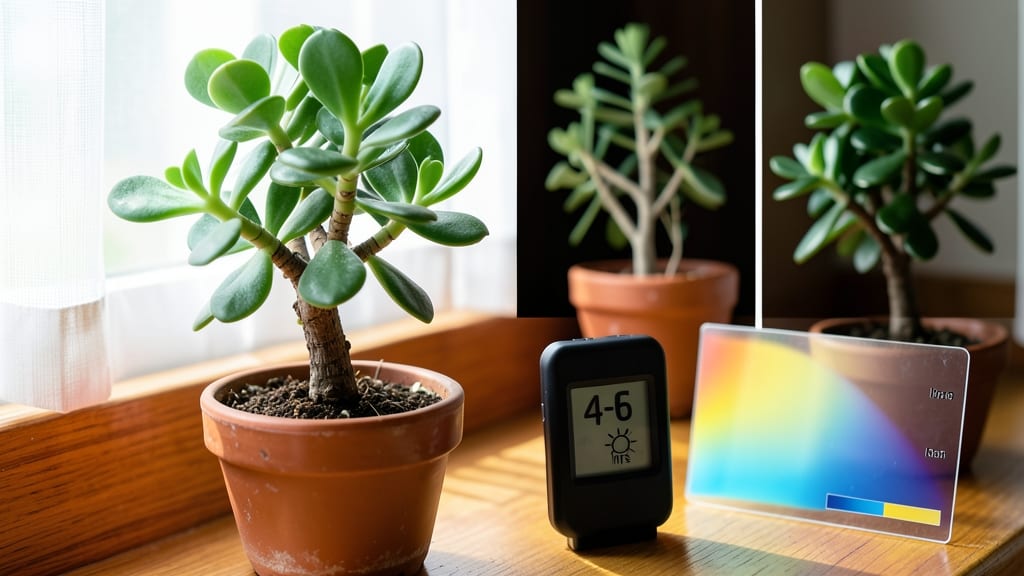
If you’re wondering how much light does a jade plant require, your leggy, pale, or crispy-edged succulent is probably giving you clues. The truth? These drought-loving plants thrive in conditions that surprise most plant parents—neither dim corners nor scorching desert sun will do.
Jade plants crave bright, indirect light for 4-6 hours daily, but they’ll also tolerate a few hours of gentle morning sun. Too little light? Your plant stretches desperately toward the window. Too much? Those glossy leaves turn dull and brittle. Let’s fix that with the perfect balance.
Whether you’re dealing with a south-facing window or a cozy indoor setup, I’ll show you exactly where to place your Jade Plant for those coveted thick, vibrant leaves. No more guesswork—just science-backed tips to keep your succulent happy year-round.
From spotting light stress to adjusting seasonal exposure, you’ll learn how to give your Jade Plant the ideal conditions. Ready to transform those sad stems into a lush, healthy beauty?

Ideal light requirements for jade plants: sunlight needs by season
Jade plants (Crassula ovata) thrive under bright, indirect light with 4-6 hours of direct sunlight daily. This succulent is native to South Africa’s arid regions, where it evolved to handle intense sunlight—just like its desert-dwelling cousins.
The key is balancing enough light for photosynthesis without causing leaf scorch from overexposure.
In spring and summer, aim for morning sun (9 AM–12 PM) and afternoon shade (2 PM–5 PM). Jade plants can tolerate up to 6 hours of direct sun, but avoid the harsh midday heat (12–3 PM), which can bleach leaves.
If outdoors, place them in partial shade during peak summer months to prevent stress.
During fall and winter, reduce direct sunlight to 2-4 hours daily as daylight shortens. Jade plants enter a dormant phase in cooler months, so dimmer light is ideal. A north-facing window or east-facing spot works well indoors during these seasons.
Here’s how to match your jade plant’s light needs by season:
| Season | Direct Sunlight (Hours/Day) | Indoor Placement | Outdoor Placement | Signs of Stress |
|---|---|---|---|---|
| Spring | 4-6 hours | South/west window, 3 ft away | Partial shade (morning sun) | Yellowing leaves (too much sun) |
| Summer | 2-4 hours (morning only) | East window or filtered light | Dappled shade (avoid noon sun) | Brown patches (sunburn) |
| Fall | 3-5 hours | South window, closer to glass | Morning sun, afternoon shade | Stretching (etiolation) |
| Winter | 2-3 hours (bright indirect) | West window or grow light | Greenhouse or sheltered spot | Pale leaves (light deficiency) |
Jade plants photosynthesize most efficiently under cool, bright light (like early morning or late afternoon sun). In summer, their leaves may develop a reddish tint—this isn’t a problem but a sign of high light intensity.
If your plant starts stretching (elongated stems), it’s craving more light; if leaves turn yellow or brown, it’s getting too much.
For indoor growers, a south-facing window is ideal, but rotate your plant weekly to ensure even growth. If your home lacks natural light, grow lights (LED or fluorescent) can supplement with 12-14 hours of light daily. Place the bulb 6-12 inches above the plant for optimal results.
Outdoors, jade plants handle full sun in USDA Zones 9-11, but in colder climates (Zones 6-8), they’re best as container plants moved indoors in winter. Always acclimate them gradually to avoid sun shock—start with 1 hour of sun/day, then increase by 1 hour weekly.
Pro tip: Use a light meter (or your phone’s lux app) to check intensity. Jade plants thrive at 10,000–20,000 lux—about the brightness of a
Signs your jade plant isn’t getting enough (or too much) light
Jade plants are masters of survival, but even they’ll send you clear distress signals when their light requirements aren’t met. Watch for stretched, leggy growth—this is your plant’s way of reaching for more sunlight.
Leaves may also turn pale or yellowish, losing their signature thick, glossy texture. In extreme cases, you might notice soft, mushy stems, a sign of etiolation (weak growth from insufficient light).
On the flip side, too much direct sun causes sunburn symptoms like crispy, brown patches on leaves. The edges may curl or develop white, chalky spots as cells dry out.
If you see red or purple hues on leaves, this could indicate heat stress or intense light exposure during hot summer months. Both scenarios require immediate adjustments to save your plant.
🌱
Too Little Light: Leaves stretch, yellow, or develop weak stems. Rotate your plant to find a brighter spot and consider a grow light if natural light is limited.
Too Much Light: Leaves scorch, crisp, or turn white. Move to indirect light or use a sheer curtain to filter harsh afternoon sun.
For quick troubleshooting, perform a simple shadow test. Place your hand near the plant during peak sunlight hours—if the plant’s leaves are smaller than your shadow, it’s likely getting enough light.
If leaves are larger or stretched, it’s time to relocate. Jade plants thrive in bright, indirect light, so a spot near an east or west-facing window is ideal.
Pay attention to leaf angles too. Healthy jade leaves grow upright and compact. If they’re spreading outward or leaning toward a window, your plant is phototropic—actively seeking more light. Address this by rotating the pot weekly to ensure even growth.
Seasonal changes also affect light needs. In winter months, shorter daylight hours may require supplemental grow lights (12-14 hours/day). Conversely, summer’s intense rays might need afternoon shade to prevent damage. Adjust your care routine monthly to match your plant’s evolving needs.
💧