
How To
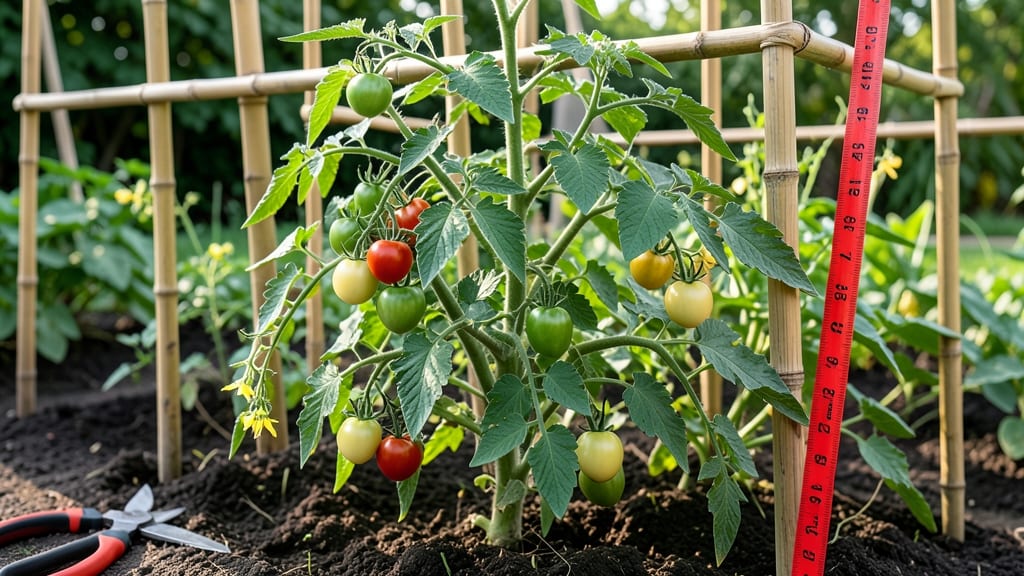
If you've ever wondered "how tall will a tomato plant grow" in your garden, the answer might surprise you—especially when you factor in the right variety and care.
Some 🍅 varieties stay neatly contained at just 1-3 feet, while others can climb to 6 feet or taller if given the right support. The difference often comes down to whether you're growing determinate (bush) or indeterminate (vining) types, and how you train them.
Picking the wrong support—or skipping it entirely—can turn a manageable plant into a sprawling mess. I’ve seen cherry tomatoes cascade over cages like waterfalls and beefsteak varieties reach for the sky if left unchecked.
The key is understanding your plant’s growth habit early so you can set it up for success from day one.
In this guide, I’ll break down the height ranges for common tomato varieties, show you how to choose the perfect support system, and share pro tips to keep your plants healthy—no matter how tall they get.
Whether you’re a first-time gardener or a seasoned grower, you’ll leave here with a clear plan to manage your 🍅 plants like a pro.
Let’s dive into the details so you can stop guessing and start growing with confidence!


Tomato plant height by variety: dwarf to vining types explained
Tomato plants come in a stunning variety of heights, from compact dwarf varieties that fit neatly in containers to towering indeterminate vines that need serious support.
The height of your tomato plants isn't just about aesthetics—it directly impacts your harvest, space planning, and even the type of support structures you'll need. Let's break down the key categories so you can choose the perfect fit for your garden space.
First, there are two main growth habits to understand: determinate (bush) tomatoes and indeterminate (vining) tomatoes. Determinate varieties grow to a specific height and produce fruit all at once, while indeterminate varieties keep growing and produce fruit continuously throughout the season.
This fundamental difference affects not only height but also your harvesting strategy and garden layout.
For gardeners with limited space, dwarf tomato varieties are a game-changer. These compact plants typically reach 1-3 feet tall and are perfect for containers, small gardens, or even windowsill growing. Varieties like 'Tiny Tim' or 'Micro Tom' prove that you don't need a large garden to enjoy fresh tomatoes.
Their smaller stature also means they require less intensive support, making them ideal for beginners.
Moving up in size, semi-dwarf varieties strike a balance with heights between 3-4 feet tall. These are excellent for gardeners who want a manageable size without sacrificing yield. Popular choices like 'Patio Princess' or 'Bush Early Girl' offer the convenience of determinate growth patterns with slightly taller stature.
They're perfect for raised beds or small backyard gardens where you want some height without the commitment of full-sized vines.
Now, let's talk about the heavy hitters—the standard and indeterminate varieties that can reach 6-10 feet tall with proper care. These are the classic vining tomatoes that many gardeners dream about, producing an abundance of fruit throughout the growing season.
Varieties like 'Sungold' (cherry tomato), 'Brandywine' (heirloom), or 'Beefsteak' can become towering plants if left unsupported, often requiring trellises or cages that reach 8 feet or more.
| Variety Type | Height Range | Growth Habit | Best For | Support Needed |
|---|---|---|---|---|
| Dwarf | 1-3 ft | Determinate | Containers, small spaces | Small stakes or none |
| Semi-Dwarf | 3-4 ft | Determinate | Raised beds, small gardens | Medium stakes or cages |
| Standard (Determinate) | 4-5 ft | Determinate | Traditional gardens | Cages or tall stakes |
| Indeterminate | 6-10+ ft | Indeterminate | Large gardens, trellises | Tall trellises or stakes |
| Cherry Tomatoes | 4-8 ft | Indeterminate (often) | Vertical gardens, balconies | Trellis or strong support |
When selecting tomato varieties, consider your garden layout and how much vertical space you're willing to dedicate. Indeterminate varieties like 'Sungold' cherry tomatoes or 'Celebrity' can become 10-foot vines if given the right conditions, while determinate varieties like 'Roma' or 'Better Boy' typically max out around 5 feet tall.
The key is matching the plant's natural growth habit to your available space and support capabilities.
One common misconception is that all tomato plants need the same type of support. In reality, the support structure should match the plant's expected height and growth habit.
A 3-foot dwarf tomato doesn't need an 8-foot cage, just as a 10-foot indeterminate vine won't thrive in a small pot without proper trellising. Understanding these height differences helps you plan your garden more efficiently and prevents common growing mistakes.
For those with limited vertical space, consider patio or container varieties specifically bred for smaller growing areas. These often come with built-in compact growth habits and don't require extensive support.
On the other hand, if you have a sunny fence or trellis, indeterminate varieties can create a stunning vertical display while producing an abundance of fruit throughout the season.
How to choose the right support for your tomato plant height
Support isn’t just an afterthought—it’s the backbone of your tomato plant’s growth. Without the right structure, even determinate varieties (which stay compact) can flop over under the weight of fruit, while indeterminate types (the vining giants) will sprawl uncontrollably.
I’ve learned the hard way that skipping support leads to broken stems, sun-scalded fruit, and a messy garden. The good news? With the right system, you can grow tomatoes vertically, save space, and even extend your harvest season.
Your support choice depends on two key factors: plant height and growth habit. Dwarf varieties like ‘Tiny Tim’ (1-2 feet) need minimal support—a few stakes or a small cage will do.
But if you’re growing ‘Sungold’ cherry tomatoes or ‘Brandywine’ heirlooms (which can hit 6+ feet), you’ll need something sturdy like a trellis or tomato tower. Let’s break down the best options for every height range so you can pick the perfect fit for your garden.
| Support Type | Best For | Height Range | Pros | Cons |
|---|---|---|---|---|
| Stakes (Wood/Bamboo) | Indeterminate varieties | 3–10+ ft | Simple, inexpensive, good airflow | Requires tying stems |
| Cages (Metal/Wire) | Determinate & semi-dwarf | 2–5 ft | Easy to install, no tying needed | Can rust, may not support heavy fruit |
| Trellis (DIY/Store-bought) | Indeterminate & heirlooms | 4–12 ft | Space-saving, great airflow | Requires strong structure |
| Espalier System | Dwarf & patio varieties | 1–4 ft (trained) | Aesthetic, space-efficient | Time-consuming to train |
For tall indeterminate varieties, I recommend a trellis or sturdy stake—think of it like a ladder for your plant. Use soft ties (like old T-shirts or horticultural tape) to gently secure the main stem every 12–18 inches.
This prevents wind damage and keeps the plant upright. Pro tip: If you’re growing in containers, opt for a tomato tower—it’s a game-changer for small spaces and keeps roots contained while supporting height.
Don’t overlook the soil and root health when choosing support. Weak roots from poor soil or overcrowding can’t anchor even the sturdiest structure. Always amend your soil with compost before planting, and avoid planting too deeply—burying the stem too much can lead to rot.
I’ve seen 6-foot ‘Cherokee Purple’ plants topple because their roots were smothered in heavy clay. A little prep goes a long way!
Finally, think about harvesting ease. If you’re growing cherry tomatoes or small varieties, a low cage or espalier keeps fruit at eye level. For larger tomatoes, a taller trellis or stake lets you reach without bending over—my back thanks me every harvest season.
The right support isn’t just about height; it’s about making your garden work for you, not against you.
Ready to set up your support system? Start by measuring your space and matching it to your tomato’s mature height. With the right setup, you’ll have a thriving, space-saving harvest—no tangled vines in sight! 🌱