
Plants
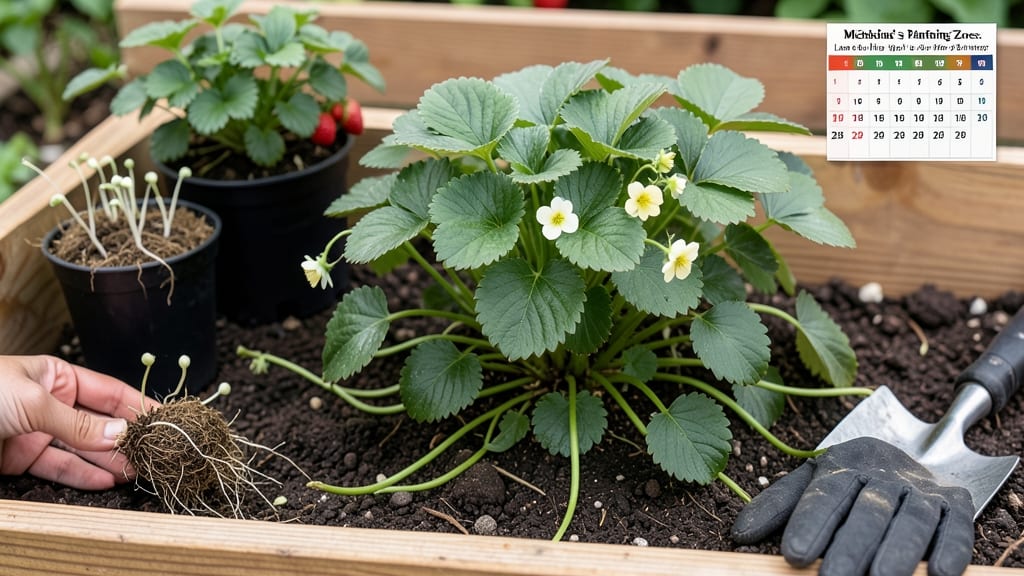
Planting strawberries in Michigan isn’t just about tossing seeds into the dirt—it’s about timing them perfectly to beat frost and maximize your 🍓 harvest. Whether you’re a seasoned gardener or a first-timer, getting the window wrong can mean the difference between a bumper crop and wasted effort.
With Michigan’s unpredictable Zone 5b-6b climate, knowing whether to plant in early spring or late summer is the key to success.
Most gardeners swear by spring planting, but fall can actually work better in certain conditions. The challenge? Michigan’s last frost typically arrives around mid-April, leaving a tight window between freezing nights and scorching summer heat.
I’ll break down the exact deadlines for both seasons—and why some varieties thrive better in one over the other.
You’ll also discover how to prepare your soil for Michigan’s clay-heavy conditions, which strawberry type (bare-root or potted) performs best in your area, and the one mistake that kills more strawberry plants than anything else. Let’s get your garden set up for a harvest that’ll make your neighbors jealous.
Ready to turn your backyard into a sweet, berry-filled paradise? The clock’s ticking—here’s how to plant strawberries in Michigan without a second thought.
Michigan strawberry planting deadlines: spring vs fall schedule for zones 5-6
Michigan’s Zone 5-6 climate creates a tight window for planting strawberries, where timing separates success from failure. The last spring frost typically arrives in mid-April, but unpredictable weather means you can’t rely on averages alone.
For June-bearing varieties, planting too early risks frost damage, while waiting too long delays your harvest. Meanwhile, everbearing and day-neutral types offer more flexibility but still demand precision.
Most Michigan gardeners choose between two planting strategies: early spring (March-April) or late summer (July-August). Each has distinct advantages.
Spring planting aligns with natural growth cycles but requires careful frost monitoring, while fall planting gives plants a head start before winter—but only if done 6-8 weeks before first frost. Let’s break down the exact deadlines and conditions for each approach.
⚠️ CRITICAL FACTOR: Soil temperature must reach 40°F (4°C) for roots to establish. Use a soil thermometer to verify—cold soil stalls growth. In southern Michigan (Zone 6), this happens by late March, while northern areas (Zone 5b) may wait until mid-April. Planting too soon in cold soil leads to root rot and poor survival rates.
| Planting Window | Ideal Months | Soil Temp Requirement | Frost Risk | Harvest Window |
|---|---|---|---|---|
| Spring Planting | Late March–Early May | 40°F (4°C) minimum | High (last frost: mid-April) | June–August (June-bearing) |
| Fall Planting | Late July–Early September | 50°F (10°C) minimum | Low (6-8 weeks before first frost) | May–July (everbearing/day-neutral) |
For spring planting, aim to get strawberries in the ground 2-3 weeks before your average last frost date. In Detroit (Zone 6a), this means mid-April, while in Traverse City (Zone 6b), you can start as early as late March.
Use row covers or cold frames to protect young plants if frost threatens. Bare-root plants are ideal for spring—soak roots in water for 1 hour before planting to revive them.
Fall planting offers a 30-50% larger yield the following year because plants establish roots before winter. The key deadline is 6-8 weeks before first frost, which in Michigan falls around mid-October.
For northern Michigan (Zone 5b), this translates to late July–early August, while southern regions (Zone 6) can extend until early September. Choose potted strawberries for fall planting—they’re less stressed than bare-root and adapt better to transplanting.
One common misconception is that fall planting is risk-free. In reality, late-fall warmth can trick strawberries into growing new leaves, which freeze and die when winter arrives. To prevent this, avoid planting if daytime temperatures exceed 70°F (21°C) in late summer.
Instead, opt for June-bearing varieties in spring or everbearing types in fall for a staggered harvest.
Michigan’s clay-heavy soils also play a role in timing. Cold, wet springs delay planting, while dry summers can stress fall-planted berries. Always amend soil with compost 2-3 weeks before planting to improve drainage and warmth.
In containers, use a well-draining mix like 60% potting soil and 40% perlite to maintain ideal moisture levels year-round.
Pro tip: Mark your calendar for Michigan State University’s frost date maps (updated annually) to adjust your schedule. For example, the 2023 late frost in Grand Rapids pushed planting back by 2 weeks—a delay that cost some gardeners their entire harvest.
When in doubt, plant potted strawberries in spring and move them to the ground after soil warms.
Finally, everbearing and day-neutral varieties (like ‘Albion’ or ‘Seascape’) are more forgiving with timing. They produce fruit twice a year—once in early summer and again in fall—making them perfect for extended harvests.
For these types, fall planting in August often yields larger berries the following spring due to early root establishment.
Michigan strawberry planting deadlines: spring vs fall schedule for zones 5-6
Michigan’s Zone 5b-6b climate creates a tight window for planting strawberries, where one wrong move can mean frost damage or missed harvests. The key is understanding soil temperature thresholds—strawberries need soil at 40°F or warmer to establish roots.
In Michigan, this usually aligns with late April to early May for spring planting, but fall offers a hidden advantage if timed right.
Most gardeners default to spring planting, but fall (specifically late July to early August) can actually reduce early-season pests and give plants a head start. The trick? Planting 6-8 weeks before your first frost (typically mid-October in Michigan) ensures roots establish before winter dormancy.
Let’s break down the exact deadlines and why one season might work better for your location.
| Season | Ideal Planting Window | Soil Temp Requirement | Key Advantage |
|---|---|---|---|
| Spring | Late April - Early May | 40°F+ (consistently) | Longer harvest season |
| Fall | Late July - Early August | 50°F+ (for root growth) | Fewer early pests |
For spring planting, aim for after your last frost date (typically mid-April in southern Michigan, later in the UP). Use bare-root plants if purchasing from nurseries—they establish faster in cool soil.
If you choose potted strawberries, wait until soil warms to 50°F to avoid root shock. Pro tip: Soak bare-root plants for 30 minutes before planting to jumpstart hydration.
Fall planting requires more precision. Plant 6-8 weeks before first frost (usually by August 15th in most of Michigan). This gives roots time to anchor before winter. Everbearing varieties (like 'Seascape') perform best in fall—they produce fruit the following spring and summer.
June-bearing types (like 'Honeyoye') may not yield as heavily if planted in fall, but their roots will be stronger for next year’s harvest.
Regional variations matter: Southern Michigan (Zone 6b) can push spring planting into early May, while northern areas (Zone 5b) should stick to late April. Check your local frost dates using the Michigan State University Extension maps—this is non-negotiable.
If you’re unsure, err on the side of fall planting; established roots handle winter better than fresh spring transplants.
Don’t forget: Michigan’s clay-heavy soils can delay warming. Amend beds with compost or peat moss 2-3 weeks before planting to improve drainage and heat absorption. And if you’re planting in containers, use a lightweight potting mix—strawberries hate soggy roots.
With these deadlines locked in, you’re ready to choose your season and get planting!
🌱