
Plants
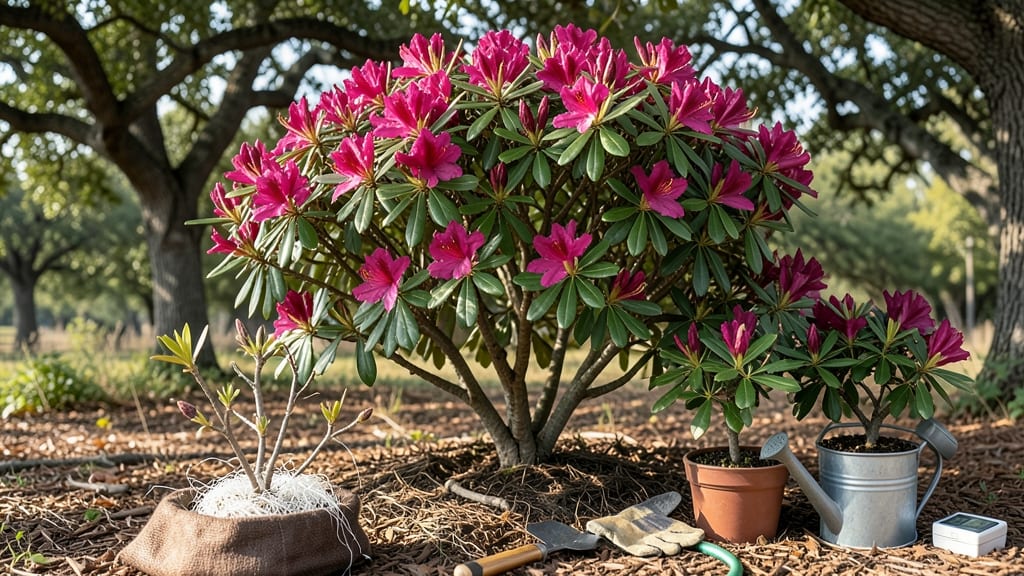
If you’ve ever watched your azaleas 🌸 wilt under Texas’s brutal sun or freeze in an unexpected cold snap, you know when to plant azaleas in Texas is everything. Planting these stunning shrubs at the wrong time can mean the difference between vibrant blooms and a sad, struggling plant.
The key to success lies in matching Texas’s 8a-10a climate zones with the right chill-hour requirements for your azalea variety. Whether you’re in North Texas or the Gulf Coast, understanding when to plant—fall or early spring—will help you avoid common pitfalls and set your azaleas up for long-term survival.
In this guide, I’ll break down the optimal planting windows for Texas, including how to adjust for regional microclimates and what to watch for if you’re transplanting container-grown plants. Let’s get those azaleas thriving!
From soil prep to post-planting care, you’ll learn exactly how to give your azaleas the best shot at flourishing in Texas’s unpredictable weather. Ready to transform your garden?
Texas azalea planting calendar by chill-hour requirements
Texas azaleas thrive when planted during their dormant season, but the exact timing depends on their chill-hour needs. Southern Highbush varieties (300-500 chill hours) handle Texas’ mild winters, while Semi-Dwarf types (500-700 chill hours) need cooler North Texas climates.
Native Texas azaleas (100-300 chill hours) are the most heat-tolerant and adaptable.
Fall planting (October-November) gives roots time to establish before winter, while early spring (February-March) avoids summer heat stress. However, Texas’ unpredictable frost dates mean timing varies by region—North Texas (Zone 8) has later last frosts than South Texas (Zone 10).
Here’s how to match azalea varieties to Texas’ microclimates using chill hours as your guide. The key is planting when soil temps drop below 70°F but before hard freezes hit.
🌸 Azalea Planting Calendar by Chill-Hour Needs
| Variety Type | Chill-Hour Range | Best Planting Window | Texas Region Fit | Key Tip |
|---|---|---|---|---|
| Southern Highbush | 300-500 | Oct 15 - Nov 15 | Zones 9-10 (Central/South TX) | Use mulch to retain moisture |
| Semi-Dwarf | 500-700 | Nov 1 - Dec 15 | Zones 8-9 (North/Central TX) | Avoid summer heat exposure |
| Native Texas | 100-300 | Sep 15 - Oct 31 | All Zones (heat-tolerant) | Plant earlier in Zone 10 |
| Evergreen Azaleas | 400-600 | Feb 1 - Mar 15 | Zones 8-9 (spring only) | Water deeply after planting |
🌡️ Pro Tip: Check your local last frost date (e.g., Feb 15 in North TX) and plant 6 weeks before.
For North Texas gardeners (Zone 8), aim for November planting to avoid winter freezes, while South Texas gardeners (Zone 10) can extend planting into early December. Container-grown azaleas offer flexibility—plant them anytime soil temps stay below 80°F, but prioritize fall for root establishment.
Always test your soil’s acidity (pH 4.5-6.0) before planting. Texas’ alkaline soils often need peat moss or sulfur amendments. Mix 2-3 inches of organic matter into planting holes to improve drainage and moisture retention.
After planting, water deeply once a week for the first month, then taper to bi-weekly watering. Mulch with pine straw or wood chips to protect roots from temperature swings—a critical step in Texas’ extreme climate.
Remember: Native Texas azaleas (like Rhododendron viburnifolium) are your best bet for low-chill areas. They bloom reliably in South Texas and require minimal winter care compared to their highbush cousins.
If you’re unsure about chill hours, check the tag or nursery notes—most Texas-friendly varieties list their requirements. For example, ‘George L. Taber’ (600 chill hours) thrives in North Texas but may struggle in Zone 10 without winter protection.
🌱 Start with container-grown azaleas if your soil isn’t ideal—they establish faster and let you adjust planting timing based on weather forecasts.
How to adjust planting timing for Texas’ microclimates
Texas isn’t one-size-fits-all when it comes to azalea planting. North Texas (Zone 8a) has cooler winters and later frosts, while South Texas (Zone 10a) bakes in summer and rarely drops below freezing. Even Central Texas (Zones 8b-9a) can swing wildly between regions just 50 miles apart.
For North Texas gardeners, aim to plant between mid-October and November to avoid early frosts. The last frost date here is often around February 15, so early spring plantings in February also work if you choose chill-hour-hardy varieties like ‘Caddo’ or ‘George L. Tabb.’
In Central Texas, where Zone 8b-9a dominates, extend your planting window slightly later—late October to December. The first frost usually hits by November 15, so container-grown azaleas can often survive a light freeze if mulched properly.
Varieties like ‘Dr. T. M. Manley’ thrive here with 300-500 chill hours.
South Texas (Zone 10a) is the trickiest. The mild winters mean you can plant year-round, but summer heat (often 95°F+) makes fall (September-November) your only safe bet. Opt for heat-tolerant varieties like ‘Bow Bells’ or ‘Southern Charm’, which need only 100-300 chill hours.
Here’s how to adapt for container gardening in heat-sensitive areas: Use self-watering pots and move containers to shadier spots during peak afternoon sun. For frost protection, cover young plants with frost cloth or burlap sacks if temps dip below 30°F.
Pro tip: Test your soil pH (aim for 4.5-6.0) and amend with sulfur or peat moss—Texas’s alkaline soils can stunt azalea growth. In drought-prone areas, group azaleas with mulch rings to retain moisture.
🌿
🌱 North Texas (Zone 8a) Planting Adjustments
- Plant October-November
- Choose 500+ chill-hour varieties
- Use mulch 3-4 inches deep
- Plant in summer heat
- Skip acid soil prep
- Ignore late frost warnings
🌵 Central Texas (Zones 8b-9a) Planting Adjustments
- Plant late Oct-December
- Use container growing for flexibility
- Water deeply 2x/week
- Plant after November 15
- Overlook afternoon shade
- Use alkaline soil
🌞 South Texas (Zone 10a) Planting Adjustments
- Plant September-November
- Select 100-300 chill-hour types
- Use drip irrigation
- Plant March-May
- Skip shade cloth in summer
- Ignore humidity spikes
Understanding these regional tweaks ensures your azaleas bloom reliably and survive Texas’s extremes. For example, in East Texas (Zone 8a), where humidity is high, space plants 3-4 feet apart to improve airflow and reduce fungal risks.
In West Texas (Zone 9a), where water is scarce, group azaleas with native shrubs to create a microclimate that retains moisture.
🪴
Remember: container-grown azaleas adapt better to microclimates than bare-root plants. If you’re in a warmer microclimate (like Austin’s urban heat islands), opt for potted varieties and move them to cooler spots during summer. For