
Plants
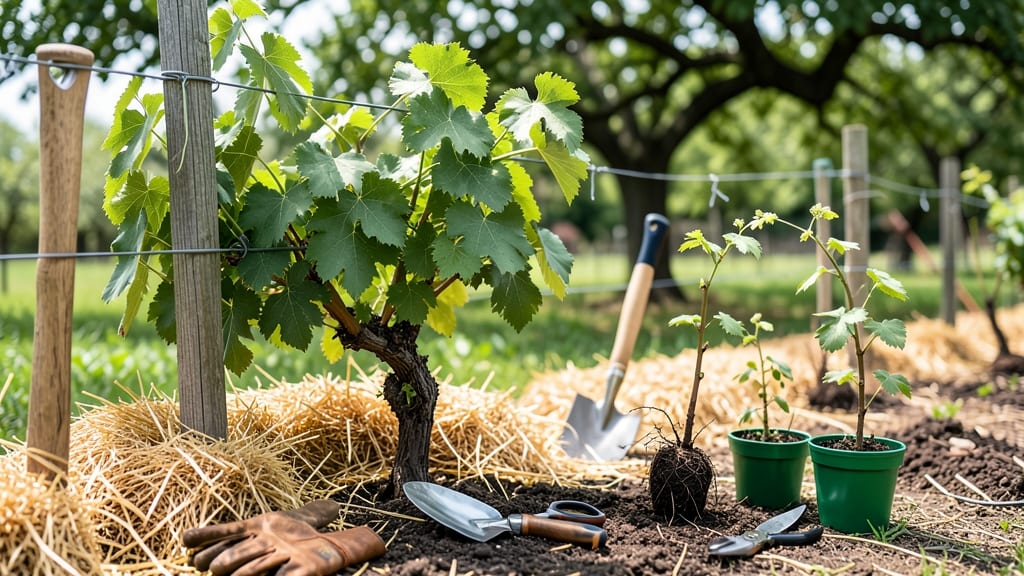
If you're dreaming of lush 🍇 vines heavy with juicy grapes in your North Carolina garden, timing your planting is the most important factor for success.
Planting too early risks frost damage to tender roots, while waiting too late can leave your vines struggling to establish before winter—both scenarios mean lost harvests.
North Carolina's 7a-8b zones offer unique opportunities for grape growers, but the key lies in matching varieties to your local chill hours. Muscadines thrive in the Coastal Plain's heat, while Norton grapes handle the Piedmont's cooler nights—getting this right means the difference between thriving vines and disappointed gardeners.
I'll walk you through the exact planting windows that work best for NC's climate, from late winter dormancy to early spring's ideal soil temperatures.
You'll discover how to prepare your soil, choose the right varieties for your microclimate, and give your grapes the best possible start—so you can enjoy that first harvest in late summer or fall.
Whether you're a first-time gardener or a seasoned grower, these insights will help you avoid common mistakes and set your grapevines up for years of productive growth. Let's get those roots in the ground at the perfect time!
NC chill-hour zones explained: how to match grapes to your region
North Carolina’s grape-growing success hinges on chill-hour requirements, a measure of winter cold needed to break grapevine dormancy. Most NC varieties need 400-1,200 chill hours—too few, and grapes won’t flower; too many, and they’ll struggle.
The state spans USDA zones 7a-8b, creating microclimates where Norton grapes thrive in the Piedmont’s cooler zones, while Muscadines dominate the Coastal Plain’s heat.
Your first step? Identify your local chill-hour zone using the NC State Climate Office’s frost maps. For example, Asheville (Zone 7a) averages 1,000+ chill hours, perfect for cold-hardy Catawba grapes, while Wilmington (Zone 8a) sees just 500-600 hours, ideal for heat-tolerant Scuppernong Muscadines.
Here’s how chill hours translate to planting windows: Low-chill varieties (400-600 hours) like Black Spanish can be planted as late as May in the Coastal Plain, while high-chill types (800+ hours), such as Cabernet Franc, must go in by March in the Mountains to avoid winter dieback.
🌱
| NC Region | USDA Zone | Chill Hours | Best Varieties | Planting Window |
|---|---|---|---|---|
| Mountains (Asheville) | 7a-7b | 1,000-1,200+ | Norton, Cabernet Franc | Feb 15 - Mar 15 |
| Piedmont (Raleigh) | 7b-8a | 800-1,000 | Catawba, Chambourcin | Mar 1 - Apr 1 |
| Coastal Plain (Wilmington) | 8a-8b | 400-600 | Scuppernong, Black Spanish | Mar 15 - May 1 |
If you’re unsure of your chill hours, use the NC State Extension’s chill calculator or check with your local Cooperative Extension office. For example, Charlotte (Zone 7b) sits right on the cusp—planting Norton grapes in late February ensures they’ll flower, while Muscadines can wait until April.
Pro tip: Hybrid varieties like Brianna (600-800 hours) bridge the gap between chill zones, making them ideal for transition areas like the Sandhills region. Always buy region-specific vines from NC nurseries like J. Fields Grapes or Baldwin Grapes to guarantee compatibility.
Soil temperature matters just as much as chill hours. Wait until the ground warms to 50°F (10°C)—use a soil thermometer to check. In the Piedmont, this typically aligns with late March, while the Coastal Plain may be ready by early April.
Planting too soon risks root rot in cold, wet soil.
🌿
Once planted, mulch heavily with straw to protect roots from temperature swings. In Zone 7a, young vines need winter protection—wrap trellises with burlap or use grape blankets to prevent frost damage. Remember: Muscadines are more frost-tolerant than Vinifera varieties, so adjust your expectations based on your zone.
For organic growers, consider compost tea in early spring to boost soil microbes before planting. This is especially critical in NC’s clay-heavy soils, which drain poorly when saturated. Amend with sand or compost to improve aeration—your vines will thank you with healthier roots and better fruit set.
🪴
Best grapes to plant in NC by season: month-by-month planting guide
North Carolina's spring planting window (March-May) is ideal for most grape varieties, but the exact timing depends on whether you're planting bare-root vines or potted plants. For dormant bare-root grapes, aim to plant 4-6 weeks before your last frost date—typically mid-March to early April in most of NC.
This gives roots time to establish before summer heat arrives.
If you're using potted grape plants, wait until soil temperatures reach 60°F or warmer, usually late April to early May. Potted plants have an established root ball, so they can handle slightly warmer conditions than bare-root vines.
Always check your local NC State Extension frost dates to adjust for your specific microclimate.
For fall planting (October-November), focus on hardy varieties like Norton or Catawba, which can handle cooler temperatures. Plant 6-8 weeks before your first frost—usually mid-October in the Piedmont and late October in the Coastal Plain.
Fall-planted vines establish roots before winter dormancy, giving them a head start in spring.
📌 Month-by-Month Planting Highlights for NC Grapes
- February: ⚠️ Avoid planting—soil too cold for root growth.
- March: ✅ Ideal for bare-root vines in Piedmont (600+ chill hours).
- April: ✅ Best for potted grapes and Coastal Plain plantings (400-600 chill hours).
- May: ⚠️ Risky for bare-root—soil may be too warm; stick to potted plants.
- October: ✅ Perfect for hardy varieties like Muscadines in Coastal Plain.
- November: ⚠️ Too late—vines won’t establish before winter.
Adjust your planting timeline based on grape variety chill-hour needs. For example, Cabernet Franc (600-800 chill hours) thrives in the Piedmont, while Scuppernong Muscadines (300-500 chill hours) are perfect for the Coastal Plain.
Always choose varieties matched to your local chill-hour zone to ensure proper dormancy and fruit set.
Pro tip: If you miss the spring window, fall planting is your next best option—but avoid planting after October 15th in most of NC. Young vines need time to harden off before winter.
For container-grown grapes, you can extend your planting window by 2-3 weeks in either direction, as pots insulate roots better.
Remember, soil temperature matters more than air temperature. Use a soil thermometer to confirm 55°F minimum for bare-root vines and 60°F+ for potted plants. This ensures roots grow actively rather than sitting dormant in cold soil.
With the right timing, your grapes will establish strong roots and reward you with bountiful harvests in late summer or fall.