
Plants
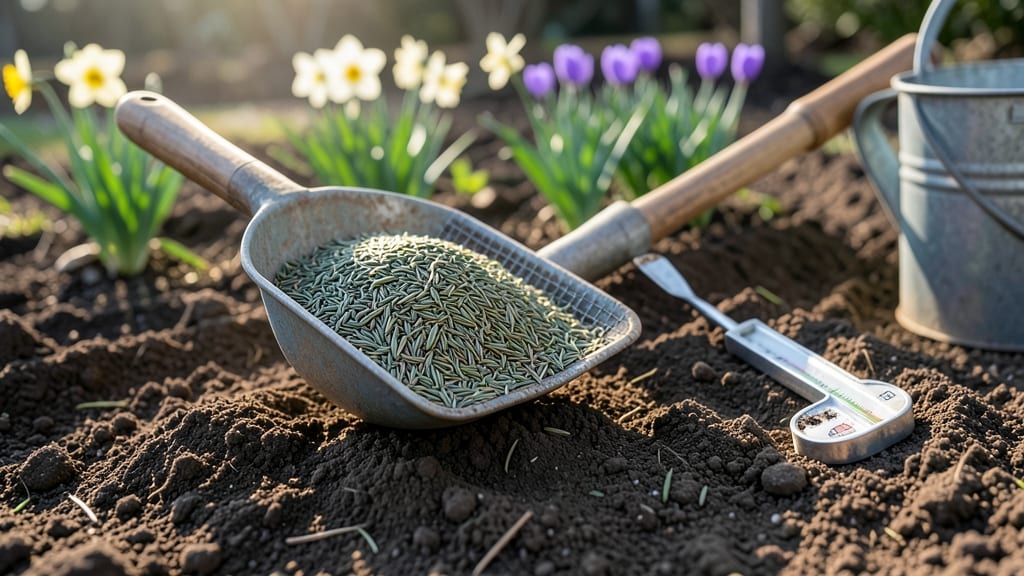
Timing your grass seed planting in spring could make or break your lawn’s health—so guessing the perfect week isn’t just risky, it’s a recipe for disappointment.
Whether you’re in Zone 6a or another region, the difference between a thick, vibrant lawn and a patchy mess often comes down to one critical factor: soil temperature.
Plant too early, and frost will wipe out your hard work; too late, and summer heat can stress young grass before it takes root.
I’ve seen firsthand how a just-right window transforms a lawn from bare dirt to lush green in weeks. The key? Waiting until after the last frost—typically mid-April in Zone 6a—but also ensuring the soil stays consistently warm enough to support germination.
That means checking for soil temps between 55°F and 65°F and avoiding those unpredictable spring showers that can wash away fresh seed.
In this guide, I’ll break down the exact week-by-week schedule for planting grass seed in spring, tailored to your zone, plus the 5 signs your soil is truly ready.
You’ll also learn the common mistakes that derail even the best-laid plans—so you can skip the frustration and get straight to the results you’re after.
Ready to turn your lawn dreams into reality? Let’s dive into the perfect planting strategy so you can enjoy that green carpet all season long.
Optimal spring planting weeks for grass seed by USDA hardiness zones
Spring is the perfect time to plant grass seed, but the exact week depends on your USDA hardiness zone. Planting too early risks frost damage, while waiting too long may lead to drought stress or weed competition.
Most regions aim for 4-6 weeks before the last frost date, when soil temperatures hit 55–65°F.
Northern zones (3–6) have shorter growing seasons, so focus on late April to early May. Southern zones (7–10) can start earlier, often in March or early April, but avoid summer heat. Let’s break it down by zone to pinpoint your ideal window.
| USDA Zone | Best Planting Window | Soil Temp (°F) | Key Risks |
|---|---|---|---|
| 3–5 | Late April–Early May | 55–60°F | Late frosts, slow germination |
| 6–7 | Mid-April–Late May | 60–65°F | Weed competition, drought |
| 8–9 | Early March–Early April | 65–70°F | Summer heat stress |
| 10 | February–March | 70–75°F | Pests, fungal growth |
For example, if you’re in Zone 6a (like much of the Midwest), aim for mid-April when daytime highs hit 65°F. In Zone 9a (Southern California), early March works best to avoid summer’s 100°F+ heat.
Always check your local last frost date—planting too soon can bury seeds under frost heave.
Rainfall also plays a role. A 1-inch soaking right after planting is ideal, but avoid planting before predictable rain if your area is dry. Use a soil moisture meter ($15–$25) to confirm readiness—soil should feel like a wrung-out sponge.
Pro tip: Cool-season grasses (like Kentucky Bluegrass) thrive in spring, while warm-season grasses (like Bermuda) prefer late spring/early summer. Match your grass type to your climate zone for best results.
If you’re unsure about your zone, use the USDA Plant Hardiness Zone Map (USDA.gov) to find your exact location. Even a 1-zone difference can shift your planting window by 2–3 weeks.
Once you’ve nailed the timing, prep your soil by removing debris and loosening the top 2–3 inches. Level the area and roll it lightly to create good seed-to-soil contact. This ensures even germination and fewer bare spots.
After planting, keep the soil consistently moist (not soggy) for the first 3–4 weeks. Use a light mulch layer (like straw) to retain moisture and block weeds. Avoid walking on new seed until it’s 2–3 inches tall.
Finally, resist the urge to fertilize right away—wait 6–8 weeks after germination to avoid burning tender roots. A light feeding of 10-10-10 fertilizer (1 lb per 100 sqft) will give your lawn the boost it needs.
5 Critical signs your soil is ready for grass seed planting (before the calendar says so)
Checking your soil’s readiness goes beyond just the calendar date. Cold soil or uneven moisture can stall germination, while warm, damp soil gives seeds the perfect start.
I’ve learned the hard way that planting too early—even if the weather looks promising—can leave your grass vulnerable to frost heave or drought stress.
Instead of guessing, focus on these 5 key indicators that your soil is truly ready. These signs work across USDA Zones 3-10 and account for regional differences, like Northern climates needing warmer soil than Southern regions. Grab a soil thermometer and let’s dig in!
| Sign | What It Means | Action to Take |
|---|---|---|
| 🌡️ Soil Temperature | Consistently 55–65°F (13–18°C) at 2-inch depth | Use a soil thermometer for 3+ days. Cool-season grasses (e.g., fescue) can tolerate 45°F. |
| 💧 Moisture Test | Soil holds moisture like a wrung-out sponge (not soggy or dry) | Squeeze a handful—water should drip slowly. Add compost if too dry. |
| 🌱 Weed Control | No active weeds sprouting (dormant is okay) | Apply pre-emergent herbicide 2 weeks before planting if weeds are present. |
| ☀️ Sunlight Hours | 6+ hours of direct sun daily | Shade afternoon sun if your area gets intense heat (e.g., Zones 8–10). |
| 🔄 Soil pH | 6.0–7.5 (test with a kit) | Adjust with lime (raise pH) or sulfur (lower pH) 4–6 weeks before planting. |
Pro tip: Clay soil drains poorly, while sandy soil dries out fast. Amend clay with organic matter (like compost or peat moss) to improve drainage, and mix sandy soil with topsoil to retain moisture. I once planted grass in pure sand—it germinated, but the seedlings wilted within days!
Once you’ve confirmed these signs, plant within 24–48 hours of ideal conditions. Delaying even a day can let soil dry out or cool down, setting your grass back. For warm-season grasses (like Bermuda or Zoysia), wait until soil hits 65–75°F—usually late spring to early summer.
Remember: Consistency is key. Monitor soil moisture daily after planting—new grass roots need steady hydration to establish. A light mulch (like straw) can help retain moisture and protect seeds from bird scatter or wind erosion.
🌱