
Trees
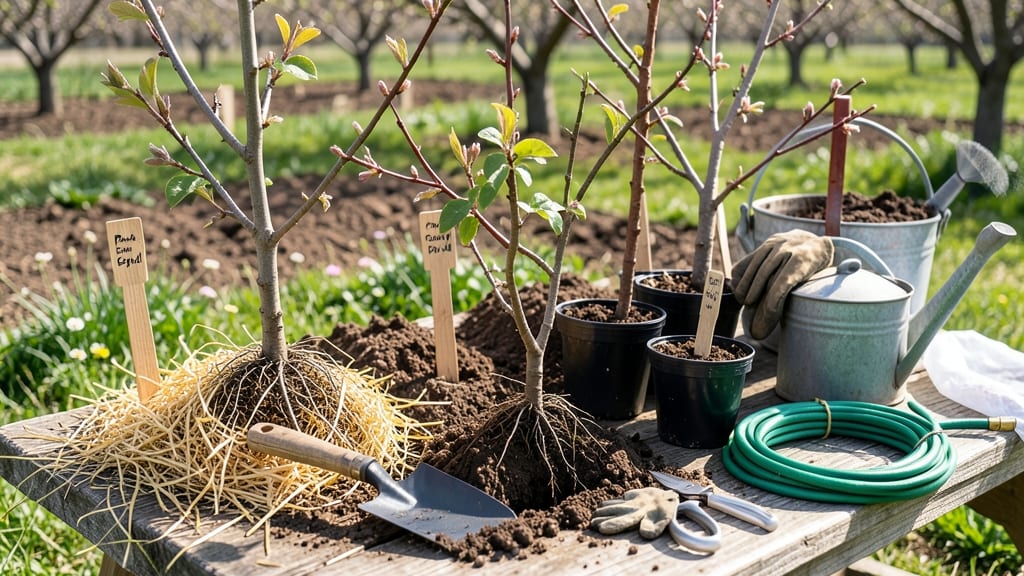
Timing is everything when it comes to planting fruit trees in Utah—get it wrong, and you might end up with frost-nipped buds or stunted growth instead of a 🍎-filled harvest.
The late winter to early spring window (February through April) gives your trees the best shot at establishing roots before summer heat sets in, especially in Utah’s 5-9 zones.
But here’s the catch: Utah’s climate isn’t one-size-fits-all. Whether you’re in the high desert, mountain valleys, or warmer southern regions, your planting schedule should account for local frost dates and chill-hour needs.
For example, apples and cherries need more cold exposure than peaches, so timing matters even more for these varieties.
I’ve broken down the exact planting windows you need to know, including when to plant bare-root versus container-grown trees. You’ll also discover how to adjust for microclimates—because what works in St. George won’t cut it in Park City. Let’s get your fruit trees off to the right start.
Ready to avoid common mistakes and maximize your harvest? Stick around—I’ll walk you through everything from soil prep to the best varieties for Utah’s unique growing conditions. Your future orchard is waiting!
Utah fruit tree planting calendar by chill-hour requirements
Utah’s diverse microclimates demand precise timing for fruit tree planting. Most varieties thrive when planted during dormant season—late winter to early spring—before buds break.
This timing ensures roots establish before active growth begins. Chill hours (the number of hours below 45°F a tree needs to fruit) dictate which varieties suit your Utah zone.
For example, apple trees in Utah County (Zone 6) need 500-800 chill hours, while peaches in St. George (Zone 8) require only 300-500. Planting at the wrong time can stunt growth or prevent fruiting entirely.
Let’s break down the best windows for Utah’s most popular fruit trees by variety and region.
| Variety | Chill-Hour Needs | Best Planting Window | Utah Zones | Notes |
|---|---|---|---|---|
| Apples | 500-800 hrs | Late Feb–March | 4-7 | Dwarf varieties like 'Honeycrisp' adapt to Zones 5-7. |
| Peaches/Nectarines | 300-500 hrs | March–early April | 6-9 | Avoid late planting in Zone 9 (risk of heat stress). |
| Cherries | 600-900 hrs | Late Feb–March | 4-6 | Sweet cherries need more chill hours; sour cherries tolerate Zone 7. |
| Pears | 400-600 hrs | March–April | 5-8 | Dwarf 'Bartlett' pears work well in Zones 6-8. |
| Plums | 200-500 hrs | March–early April | 5-9 | Japanese plums (e.g., 'Santa Rosa') thrive in Zones 7-9. |
In northern Utah (e.g., Ogden, Park City), aim for late February to March planting to avoid late frosts. Southern Utah (e.g., St. George, Cedar City) can plant as early as February due to milder winters.
Always check your last frost date—Salt Lake City’s average is March 20, while Moab’s is February 15.
For bare-root trees, plant immediately after purchase to prevent root desiccation. Container-grown trees offer more flexibility and can be planted through April in cooler zones. Amend Utah’s alkaline soil (pH 7.5-8.5) with compost or sulfur to create ideal growing conditions for your new trees.
Pro tip: Use mulch (wood chips or straw) to retain moisture and regulate soil temperature. This is especially critical in Utah’s dry climates, where water conservation is key during the establishment phase.
If you’re in Zone 4 or 5 (e.g., Logan, Heber), prioritize high-chill varieties like 'Granny Smith' apples or 'Montmorency' cherries. In Zone 8 or 9 (e.g., St. George, Hurricane), opt for low-chill varieties such as 'Elberta' peaches or 'Lemon Twist' plums to avoid winter damage.
Remember: Early spring planting (March-April) gives roots time to establish before Utah’s summer heat peaks. Avoid planting in fall unless you’re in Zone 9, where mild winters allow for November planting.
🌱
How to adjust planting times for Utah’s microclimates (Zone 4-9)
Utah’s climate isn’t uniform—what works in St. George’s Zone 8 (hot desert) fails in Park City’s Zone 5 (mountain chill). Microclimates shift planting windows by weeks, even miles apart.
For example, high-elevation areas like Cache Valley (Zone 6) can plant 2-3 weeks later than Utah County (Zone 7) to avoid late frosts.
Elevation plays a huge role. Every 1,000 feet gain drops temps by ~5°F, delaying bud break. In Zone 4 areas (e.g., Logan Canyon), wait until mid-April to plant peaches—earlier risks frost damage.
Meanwhile, Zone 9’s southern Utah (e.g., Hurricane) can plant as early as February for low-chill varieties like ‘Bonanza’ peaches.
Urban heat islands also matter. Cities like Salt Lake City trap warmth, making March the sweet spot for apples. But rural areas may need to wait until late March or early April to sync with natural frost cycles.
🌡️ Pro Tip: Check your local last frost date (e.g., March 20 for SLC, Feb 15 for St. George) and plant 4-6 weeks before to ensure roots establish before summer heat.
Warning: Microclimate Missteps
Planting in Zone 7 but using Zone 4 chill-hour varieties? Your tree will struggle. Conversely, low-chill varieties in Zone 4 may not set fruit. Always match your planting time to your local chill hours and frost dates.
- High Elevation (Zones 4-5): Delay until late March/April to avoid frost.
- Desert Lowlands (Zones 8-9): Plant February-March for early blooms.
- Urban Areas: Expect 1-2 weeks earlier than rural zones due to heat islands.
For bare-root trees, Utah’s dry climate means planting immediately after purchase (even in winter) to prevent root desiccation. Container-grown trees offer more flexibility—plant them year-round in Zones 7-9, but avoid summer heat stress in Zones 4-6.
Always test your soil’s drainage and pH (Utah’s alkaline soils often need sulfur amendmentscompost or peat moss to improve moisture retention in desert zones, while high-elevation areas may need windbreaks to protect young trees.
🌳 Key Takeaway: Adjust your planting window by 1-3 weeks based on your microclimate. Use local Cooperative Extension Service data or weather station records to fine-tune your schedule—your future harvest depends on it!